Most drivers share the same goal: getting as many years as possible out of their vehicle. The challenge is knowing where to begin.
To point you in the right direction, we've put together a short list of straightforward steps that can extend your car's lifespan, preserve its performance, and keep it running safely as the kilometers pile up.
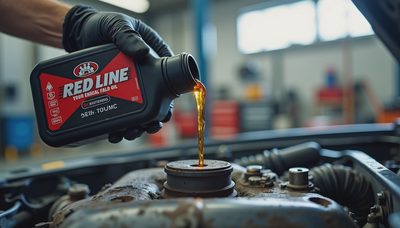
When essential fluids come to mind, engine oil is usually the first thing people think of. Selecting the right one depends on several factors, including the car manufacturer, make, and model.
A commonly accepted guideline is to change engine oil every 5,000 km. That said, many modern vehicles call for advanced engine oil formulations with extended service intervals. Always refer to your OEM specifications before making any choice.
Beyond engine oil, your vehicle also needs regular changes of:
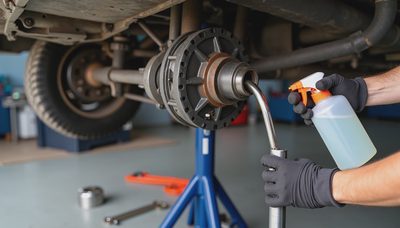
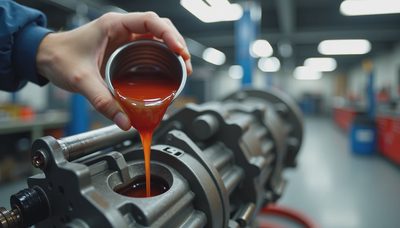
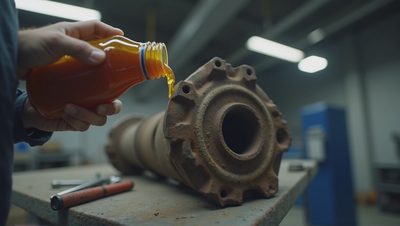
Transmission fluids fall into two categories based on your transmission type: manual and automatic — the latter covering ATF, CVT, DCT, and axle fluids. Service intervals differ considerably across formulations, and some are even filled-for-life. Check with your mechanic to find the appropriate solution for your vehicle.
Brake fluids are categorized by chemical composition into glycol-based types (DOT 3, DOT 4, and DOT 5.1) and synthetic (DOT 5).
Certain glycol-based brake fluids can be blended without bleeding the system, whereas synthetic fluids cannot. Before selecting a product, consult your mechanic to ensure you're using the correct one.
Industry professionals generally recommend replacing brake fluid every 2-3 years or every 30,000-40,000 km. Even so, make a habit of checking fluid levels on a regular basis.
Coolants are grouped according to inhibitor technology into IAT, OAT, HOAT, Hybrid OAT, P-HOAT, and Si-OAT categories, each with a service life tied to its chemical makeup.
As a reference point, IAT coolants require replacement every two years or at 72,000 km, while more advanced P-OAT or Si-OAT formulas can remain effective for up to five years or 240,000 km. Since each vehicle manufacturer specifies a particular coolant formula, always follow your OEM guidelines.
Car owners frequently dismiss performance issues that don't seem urgent. Yet even minor problems — a faulty sensor or wiring irregularities — can compound into something far more serious over time.
Dashboard warning lights are among the most commonly overlooked indicators. Various symbols illuminate on your instrument panel each time you start the engine, but when one remains lit, it typically signals that a specific vehicle system needs attention. Red warning lights represent the most critical issues and demand immediate action. Yellow lights, though often brushed aside, deserve equal urgency. Treating them with the same seriousness as red alerts is the most effective way to prevent greater damage and control repair costs.
Drivers also have a tendency to overlook small irregularities that emerge while on the road — a subtle vibration slowly intensifying, or an unusual odor coming from the engine compartment. Certain vehicle components are inherently subject to wear and have a defined service life. Whenever something feels off about your vehicle, bring it to your mechanic for a thorough inspection.
Keeping up with scheduled servicing is one of the most reliable ways to extend your vehicle's life. Service intervals are generally determined by kilometers driven, so consult your owner's handbook to know when your next service is due and what it should include.
As a general guideline, plan for a minor service once a year and a major service every two to three years.
A minor service typically covers an oil and oil filter change, along with attention to other fluids as needed. The mechanic will inspect additional fluids and top them off or replace them where necessary, and will also evaluate lights, belts, hoses, filters, and brakes. Most workshops include a tire pressure check and tire rotation as part of this visit.
A major service involves a thorough inspection from front to rear, covering all components and systems. The engine and vehicle body are cleaned, and hinges are properly lubricated.
Should the inspection or computer diagnostics reveal any significant issues, the mechanic will provide a quote for any additional repair work required.
Keeping your vehicle on the road for longer comes down to consistent, attentive care. That's the only way to sustain its performance, reliability, and efficiency. Begin by selecting the highest-quality lubricants suited to your vehicle. Browse our full product range today!
Above all, never take your car's health for granted. Stick to your service schedule, and the moment you detect even the smallest performance issue, reach out to your mechanic without delay.