Can you mix pink and blue antifreeze? This is an important question because the wrong coolant combination can reduce corrosion protection, damage seals, and contribute to an overheating repair that costs hundreds or thousands of dollars. Let’s start with the basics and build from there. Coolant color is a clue, not a guaranteed chemical specification.
What antifreeze and coolant actually do
Antifreeze is the concentrated fluid added to water to help prevent freezing and raise the boiling point. In a running engine, the complete mixture is usually called engine coolant. A 50/50 mixture of antifreeze and distilled water is common, although the vehicle manufacturer may specify a different ratio for severe climates or particular engines.
The coolant travels through passages in the engine and cylinder head, absorbs heat, and releases that heat through the radiator. It also contains additives that protect aluminum, iron, steel, rubber, and other cooling-system materials. Those additives are the reason compatibility matters.
A coolant formula may use inorganic additive technology, organic acid technology, or a hybrid of the two. These terms describe the inhibitor package, not simply the fluid’s color. Inorganic additive technology, often called IAT, is common in some older vehicles. Organic acid technology, or OAT, is used in many newer applications. Hybrid organic acid technology, or HOAT, combines features of both.
The chemistry can differ even when two products look similar. It can also be similar when the colors are different. Manufacturers use dyes for identification, but there is no universal automotive color standard in the United States.
Quick Quiz: Does pink automatically mean one universal coolant formula? No. Read the product label and vehicle manual before treating color as proof of compatibility.

Can you mix pink and blue antifreeze safely?
Can you mix pink and blue antifreeze? Sometimes, but color alone cannot provide the answer. Some universal coolants are designed to mix with many conventional products, while other formulas should remain separate. A pink European-style coolant and a blue product intended for a different manufacturer can have different additive packages, even if both claim long service life.
The safest approach is to identify the exact product specifications. Look for the vehicle manual, the coolant reservoir label, or the service information for your year, make, model, engine, and market. Then compare the specification printed on the bottle. Words such as “meets,” “approved for,” or “recommended for” are more useful than the color on the front of the jug.
For example, a bottle might list compatibility with a manufacturer specification or identify itself as IAT, OAT, HOAT, or a phosphate-free formula. Do not choose based only on statements such as “all colors” unless the product clearly explains its testing and application range. If the information is unclear, a dealership parts counter or an established retailer such as NAPA, O’Reilly Auto Parts, or AutoZone can help match the specification.
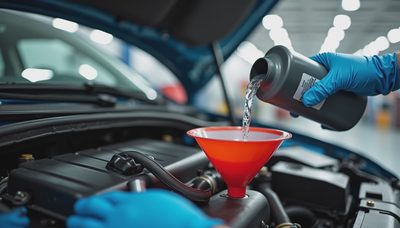
A small emergency top-off is different from filling an empty system with an unknown mixture. Adding a few ounces of compatible or universal coolant to reach a safe level is often less risky than driving with a low reservoir, but you still should schedule a proper inspection. Never open a hot radiator cap; pressurized coolant can cause severe burns.
Why an incompatible mixture can cause trouble
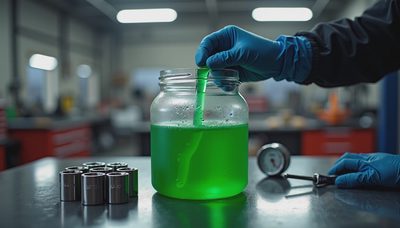
Incompatible coolant does not always create an immediate dramatic reaction. The problem can develop gradually. Additives may become less effective, and some mixtures can form suspended particles, sludge, or deposits. Those deposits can restrict narrow passages in the radiator, heater core, or thermostat housing.
Corrosion is another concern. Corrosion means a chemical attack on metal surfaces. In a cooling system, it can damage aluminum radiator tubes, water-pump components, or engine passages. A weakened water-pump seal can lead to a leak, while restricted flow can produce hot spots inside the engine.
Mixing also complicates maintenance. A technician may not be able to identify the remaining chemistry by looking at the drained fluid. If the mixture is unknown, the correct repair is often a drain and refill or a complete cooling-system flush using the vehicle maker’s procedure. A flush typically costs more than a top-off, but it is far less expensive than repairing an overheated engine.
If the coolant looks rusty, oily, cloudy, or gelatinous, stop treating the issue as a simple color question. Those appearances can indicate contamination, neglected service, an internal engine leak, or a failing component. The cooling system needs diagnosis before more fluid is added.
Quick Quiz: What is more important than coolant color? The product’s chemical specification and approval for your specific vehicle.

How to check your car before adding coolant
First, park on a level surface and let the engine cool completely. Locate the translucent expansion tank or coolant reservoir. The side usually has low and full marks. Do not remove a radiator cap while the engine is hot, and do not rely on reservoir level alone if the vehicle has a separate radiator fill point.
Next, photograph the existing coolant and read the label on the bottle you plan to use. Record the brand, product name, technology, and stated specifications. If the reservoir has a label, compare that information with the bottle. Your owner’s manual may call for a premixed 50/50 product or a concentrate that must be diluted with distilled water.
Inspect for signs of a leak, including wet spots, white or colored crust near hose connections, a sweet smell, steam, or a temperature gauge that climbs above normal. A low level usually has a cause. Adding fluid without finding the leak can leave you stranded and can allow air into the system.
If you already added a small amount of the wrong color, do not panic. Write down what was added, avoid mixing in several more products, and arrange a cooling-system service. A shop can test the coolant, inspect freeze protection, and determine whether draining and flushing is appropriate.
What to do if the colors are already mixed
If the engine is overheating, the temperature warning light is on, or steam is escaping, pull over safely and shut the engine off. Do not continue driving to “burn off” the mixture. Let the system cool and arrange roadside assistance if necessary. Driving with insufficient coolant can warp cylinder-head components or damage the head gasket.
If the car is running normally and only a small amount was added, check the manual and contact a qualified parts specialist. For an unknown or clearly incompatible combination, a complete drain and refill with the correct coolant is the cleanest solution. Some vehicles require a special bleeding procedure to remove trapped air, so follow the service instructions rather than simply refilling the reservoir.
Used coolant is toxic to people and animals. Collect it in a sealed container and take it to a participating recycling or hazardous-waste facility. Never pour it onto the ground or into a storm drain.
The instructor’s bottom line
Can you mix pink and blue antifreeze? Only when the product specifications confirm compatibility; the colors themselves are not enough. If you remember one concept from this post, make it this one: match coolant chemistry to the vehicle specification, not to a visual shade.
System Diagram reference: Picture the cooling circuit as a loop containing the engine passages, thermostat, radiator, water pump, heater core, and reservoir. The correct coolant protects every part of that loop. The wrong mixture can compromise protection throughout the system, even if the car seems normal today.
Can you mix pink and blue antifreeze in an emergency? A limited top-off with a clearly compatible universal product can be a practical temporary measure, but it should not replace verification. When the label is confusing, stop at the parts counter or repair shop before buying another jug. Spending a few minutes confirming the specification can prevent a $50 service from becoming a multi-thousand-dollar engine repair.

No letters yet — be the first to write.