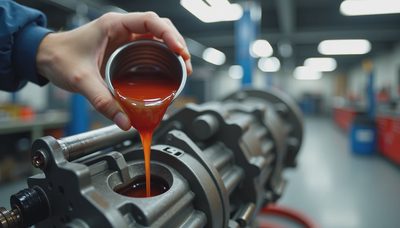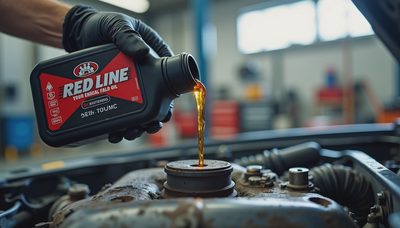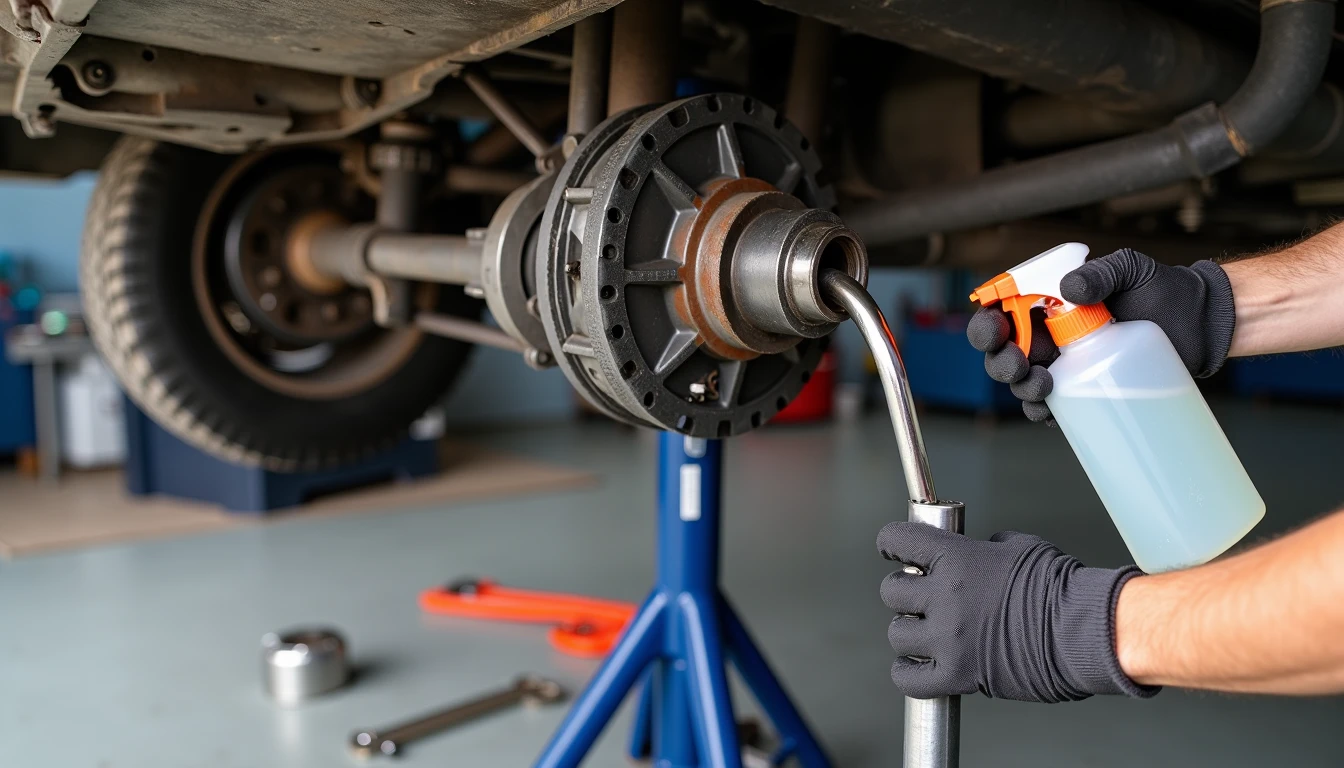
Choosing the right rear differential gear oil can cut gear whine and extend axle life
Why This Matters (cost/safety/longevity payoff)
Rear differential service is one of those “cheap now or expensive later” items. The differential (the gear set in the axle that lets your left and right wheels turn at different speeds) relies on gear oil to prevent metal-to-metal contact. When the oil is wrong for the application, worn out, or simply not a good match for your specific axle, you can end up with noise (“gear whine”), heat, and accelerated wear.
Here’s the practical payoff: the right gear oil choice can reduce noise and improve durability, while the wrong choice can make a healthy axle sound worn out. In the source discussion, one member reports certain oils were “whiney,” while another oil was “silent,” showing that real-world results can vary by formulation even when the label looks similar.
What You Need to Know (specs, types, intervals)
Let’s define the terms you’ll see on the bottle and in this thread:
- Viscosity (how thick the oil is at a given temperature): Examples from the source include 75W-140, 74W-140, 80W-90, and 75W-110.
- The first number with the “W” relates to cold-flow behavior.
- The second number relates to thickness at operating temperature.
- Base oil (the underlying oil before additives): The thread starter notes Redline, Maxima, and Motul are “made with ester base synthetics.” An ester is a type of synthetic base oil often valued for strong film strength and high-temperature stability.
- The same poster emailed Amsoil and says Amsoil would not confirm whether theirs is ester-based.
- Additive package (“add pack” in the thread): the chemistry blended into the base oil to handle extreme pressure, wear, and foam control in gear sets. One member directly pushes back on “gear oil is gear oil” and says add packs differ between brands.
- The axle’s required viscosity (“spec”): One poster states, “Spec is 80W-90,” and that they used Amsoil Severe Gear 75W-110 instead.
What the source does *not* provide: vehicle model, differential type (open vs limited slip), capacity, drain/fill plug torque, or a mileage interval. So I won’t invent those. Use your owner’s manual or service manual for your axle’s required viscosity and any limited-slip friction modifier requirements.
System Diagram (mental model)
Think of the rear axle like this:
Driveshaft torque → pinion gear → ring gear → differential case → axle shafts → wheels
Gear oil’s job is to keep a protective film between the ring-and-pinion teeth and the bearings while handling sliding contact under load.
How It Works (how to choose using the thread’s logic)
Let’s start with the basics and build up.
Step 1: Start with the viscosity spec
In the thread, one real spec is called out: 80W-90. That’s the baseline target viscosity for that axle.
Then we see a deviation: Severe Gear 75W-110 used in a differential that “spec’d” 80W-90. That’s a thicker hot viscosity than 80W-90, and slightly different cold behavior. The user reports good results—“hands down the best”—but that does not automatically mean it’s correct for every axle.
Quick Quiz: If your axle “spec is 80W-90,” what should be your default first choice?
Answer: An oil that matches 80W-90, unless you have a specific reason (and evidence) to deviate.
Step 2: Understand what “quality” may mean in real life
The original question asks whether Valvoline SynPower 75W-140 compares in quality to Redline/Maxima/Motul in 74W-140.
From the discussion, “quality” isn’t just marketing terms like “synthetic.” Owners often judge it by:
- Noise (gear whine)
- Cold behavior (how it feels/sounds when cold)
- Hot behavior (noise changes after long drives)
One member says:
- Mobil 1: “really whiney”
- Redline: “whined as well”
- RP (Royal Purple): “really good cold, but got a little whiney when hot”
- Severe Gear: “silent”
- Amsoil AGL 80W-90: reported as similar (the sentence is cut off in the source, but it’s presented as another data point)
The key lesson: even within the same viscosity range, formulation differences (add packs) can change noise and subjective feel.
Step 3: Don’t over-focus on ester vs non-ester
Yes, the thread starter prefers oils said to be ester base synthetics (Redline, Maxima, Motul per the source). But another member’s experience suggests that *overall formulation* (base oil + additives) can matter more than one label detail.
So if your goal is reduced whine, the thread supports this practical approach:
1. Match your axle’s viscosity spec first (example given: 80W-90).
2. If you’re chasing noise reduction, consider that users reported different noise levels with different brands even at similar viscosity.
3. Track results: noise cold vs hot.
Pro Tip: If your main complaint is gear whine, document it before changing oil. Note speed, throttle load, and temperature (cold vs hot). That way you can tell if the oil change actually helped—or if the noise is mechanical wear that oil won’t cure.
Common Mistakes (myths, pitfalls, warnings)
Myth: “Gear oil is gear oil is gear oil”
One member claims there’s “not enough of a difference,” but another counters directly: “Gear oil is definitely not gear oil. Add packs differ between brands.” The thread’s brand-by-brand noise reports back that up.
Mistake: Using a different viscosity without a reason
In the source, someone used 75W-110 where the spec was 80W-90. It worked well for them, but this is still a change from spec. If you deviate, do it intentionally (temperature, load, noise diagnosis) and understand you’re experimenting.
Quick Quiz: If an oil is “silent” for one person, does that guarantee it will be silent in your axle?
Answer: No—axle design, wear level, and operating conditions vary.
Mistake: Judging only by “synthetic” or “ester”
The thread starter is focused on ester base oils, but the replies emphasize additive package differences and real-world noise outcomes. Don’t let one feature dominate your decision.
Bottom Line (summary, recommended action)
Start with your axle’s required viscosity (the source gives an example spec: 80W-90). Then, if your goal is noise reduction or better feel across temperatures, recognize the thread’s core takeaway: different brands and formulations—Mobil 1, Redline, RP, and Amsoil Severe Gear—were reported to behave differently, especially in gear whine cold vs hot.
If you’re comparing Valvoline SynPower 75W-140 to Redline/Maxima/Motul 74W-140, the most honest answer from this source is: base oil type (ester vs unknown) is only part of the story, and real-world results can vary by additive package and your specific axle. Choose the correct viscosity first, then evaluate performance like an experiment.