Let's start with the basics and build from there. Almost every new driver asks the same thing at some point: do you check engine oil hot or cold? It's a fair question, because the wrong answer can give you a false reading, and a false reading can lead to overfilling or underfilling your engine. Overfilling can cause foaming and leaks; underfilling can cause wear that costs you an engine. This matters for your wallet, so let's get it right.
The Short Answer: It Depends on What You're Measuring
If you're checking the oil level on a dipstick, the standard procedure for most modern gasoline engines is to check it warm, after the engine has reached operating temperature and then sits for a few minutes. But if you're measuring oil for a lab analysis, or checking an engine that hasn't run for hours, cold readings have their place. So the honest answer to "do you check engine oil hot or cold" is: both, but for different purposes. For a routine dipstick reading, warm is your default. Let me explain why. The difference comes down to oil behavior inside the crankcase, and once you understand that, the procedure makes sense.
Why Hot Oil Reads Different Than Cold Oil
Here's the engineering. Engine oil has a viscosity that changes with temperature. When cold, oil is thick and slow-moving. It clings to every surface inside the crankcase, so a cold dipstick reading often shows a lower level than reality. That's because some oil is still clinging to the upper parts of the engine. After the engine runs and the oil warms up, it thins out and drains back down into the oil pan more quickly. That's why the owner's manual for most cars tells you to warm up the engine, shut it off, wait a few minutes, then pull the dipstick. The wait is critical: it lets the oil settle into the pan so you get an honest reading. Think of cold oil as honey: it pours slowly and sticks to the jar.
System Diagram reference: imagine the crankcase as a bathtub. Hot oil flows quickly to the drain; cold oil sticks to the sides. Same amount of oil, but the water level looks different depending on how long you wait.

The Right Way to Check Engine Oil (Step by Step)
Here's a procedure you can use on most cars. First, park on level ground and set the parking brake. Warm the engine by driving it for about ten minutes or letting it idle for five. Then shut it off and wait three to five minutes. Pop the hood, find the dipstick—usually a yellow or orange loop handle—and pull it out. Wipe it clean with a lint-free cloth, reinsert it fully, and pull it out again. Look at the level: it should be between the low and full marks. If it's below the low mark, add oil in small increments, a half-quart at a time. Wait a few minutes and recheck. Do not overfill. Make sure the engine is off before you reach anywhere near the fan or belts.
When to Check Cold Instead
There are times when a cold check is actually better. If you're about to change your oil, for example, you don't need a hot dipstick reading to decide how much oil to buy. You can also check cold first thing in the morning, as long as you know the engine has been off for more than eight hours. A cold reading is consistent, but remember that the oil is still draining, so the level may read slightly lower. The key is consistency: check at the same temperature each time to spot trends. If you're relying on a cold check, write down your base reading so you can compare.
Common Mistakes That Throw Off the Reading
One mistake is checking the oil while the engine is running. The pump is pushing oil through the engine, so the dipstick will read low or even empty. Another is checking immediately after a hot drive, before the oil has drained back. Heat also expands the oil, so an immediate reading can show a falsely high level. Many drivers also pull the dipstick, read it, and reinsert without wiping it first—that transfers oil from the tube onto the dipstick, giving you a smeared reading. Avoid these, and you'll trust what you see. When you're done, push the dipstick all the way back in; a loose dipstick can let dirt in.
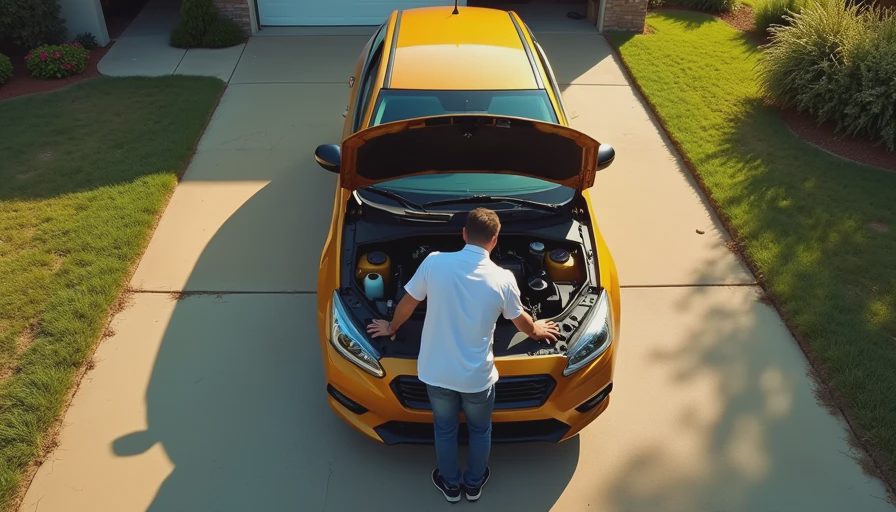
If you're still asking do you check engine oil hot or cold, here's the rule: warm engine, three to five minutes of rest, level ground. That works for the vast majority of cars.
Quick Quiz: Test Yourself
Quick Quiz: You drove to the store, parked, and want to check oil. Should you pop the hood immediately? No. Wait three to five minutes. You check oil and it's slightly above the full mark. Should you drain some out? If it's only slightly above, it's usually fine, but if you added too much, you might need to drain the excess. Many quick-lube shops charge around $50 to $70 for an oil change, but checking your oil yourself costs nothing and takes two minutes.
When in Doubt, Check the Owner's Manual
Every car is different. Some European models specify a cold check because of how their oil systems are designed. Some cars have no dipstick at all—they use an electronic oil level sensor. So open your owner's manual or check the manufacturer's website for your exact model. For a typical Honda, Toyota, or Chevrolet, the warm-check method I described is standard. For a BMW or some Mercedes models, you might see an electronic reading on the dash.
If you remember one concept from this post, make it this one: do you check engine oil hot or cold? Warm it up, let it rest, then read. Cold checks have their place, but warm is the dependable default.


No letters yet — be the first to write.