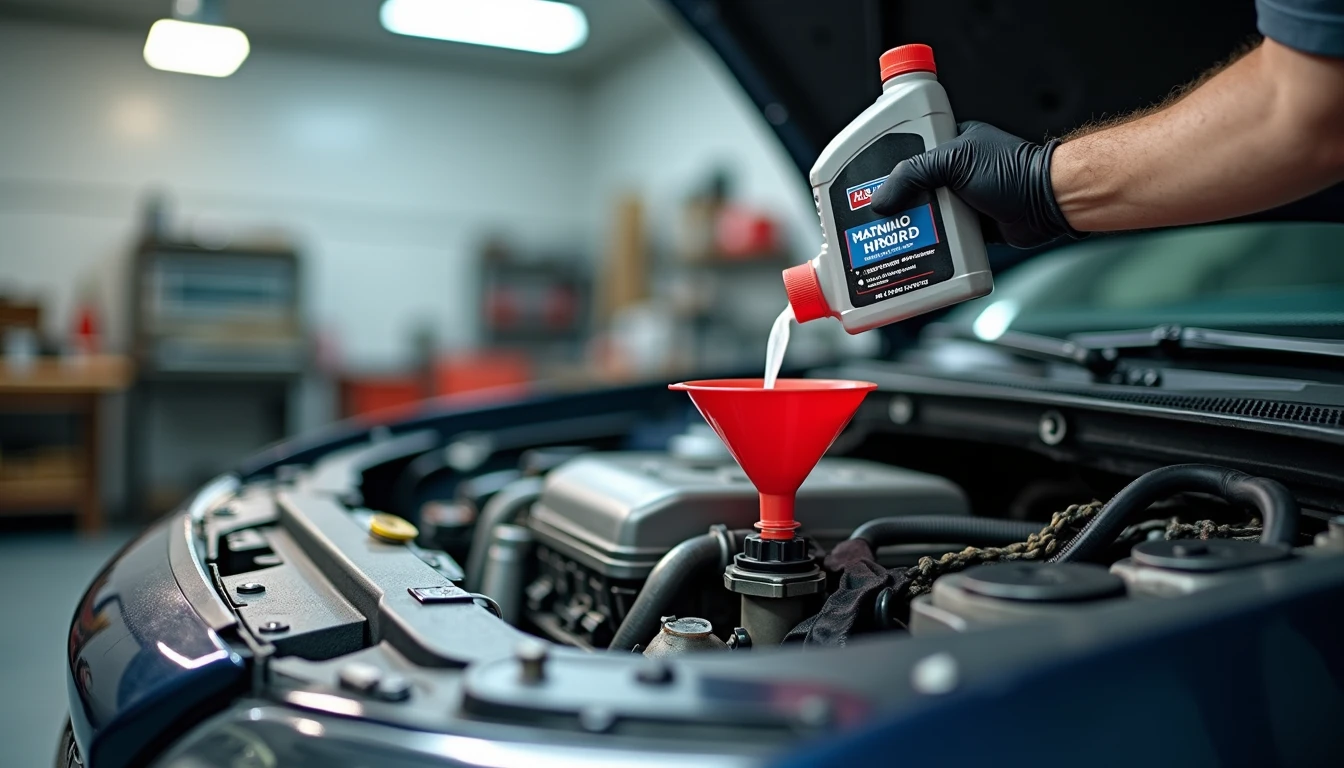
Using the right transmission fluid can prevent poor shifting and a costly transmission failure
Why This Matters (cost/safety/longevity payoff)
Transmission fluid is one of those “small” maintenance choices that can turn into a big repair bill. The wrong fluid can cause harsh shifting, slipping, overheating, and accelerated wear inside the transmission (the gearbox that transfers engine power to the wheels). In the worst cases, using an incorrect fluid type can cause severe damage—especially in a CVT (Continuously Variable Transmission) or a DCT (Dual-Clutch Transmission), where the fluid’s friction behavior is part of how the unit functions.
Let’s start with the basics and build from there: your transmission fluid isn’t “just oil.” It’s a carefully engineered chemical package designed to lubricate, cool, protect, and—depending on transmission type—control friction and hydraulics.
Quick Quiz:
1) True or False: CVT fluid is interchangeable with regular ATF.
2) Which gear oil type can damage some manual transmission synchronizers: GL-4 or GL-5?
What You Need to Know (specs, types, intervals)
The source breaks transmission fluid into practical categories you’ll actually encounter:
1) Automatic Transmission Fluid (ATF)
Automatic Transmission Fluid (ATF) is designed for vehicles with automatic transmissions. It performs multiple roles:
- Lubricates gears and internal components
- Cools transmission parts
- Acts as a hydraulic fluid (a fluid used to transmit force/pressure)
- Helps transfer power
- Prevents corrosion and wear
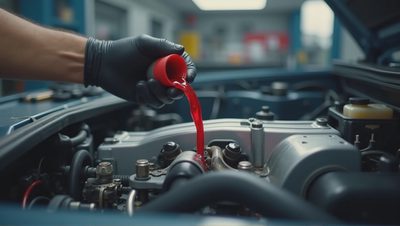
Identification tip from the source: ATF is usually red when new, which helps distinguish it from engine oil and other fluids.
Common ATF specifications mentioned:
- Dexron (General Motors): Dexron II, Dexron III, and Dexron VI
- The source notes Dexron VI is widely used in modern GM vehicles and offers improved oxidation resistance (resistance to breaking down from oxygen and heat) and longer service life.
- Mercon (Ford): Mercon V, Mercon LV, and others
- The source emphasizes that each version is designed for specific transmission models—follow your owner’s manual.
- ATF+4 (Chrysler: including Dodge and Jeep)
- The source notes ATF+4 offers excellent friction stability (consistent friction behavior for smooth operation) and thermal resistance (resistance to heat breakdown).
2) Manual Transmission Fluid (MTF)
Manual Transmission Fluid (MTF) is used in many manual gearboxes, though the source notes some manuals use ATF while others require MTF or gear oil.
MTF typically:
- Has a higher viscosity (how thick the oil is at a given temperature) than ATF
- Provides strong gear protection
- Handles extreme pressure
- Improves smooth shifting
Color cue from the source: Manual transmission fluids are often clear or amber (unlike red ATF).
3) Gear Oil (GL-4 and GL-5)
Gear oil is commonly used in manual transmissions, differentials, and transfer cases. The source notes it’s thicker than ATF and contains extreme pressure (EP) additives (chemicals that protect gear surfaces under very high loads).
- GL-4 gear oil: commonly recommended for manual transmissions; protects without damaging synchronizers made of brass or soft metals.
- GL-5 gear oil: higher EP additive levels; typically used in differentials. The source warns it may not be suitable for some manual transmissions and can damage certain internal components. Using GL-5 instead of GL-4 in the wrong transmission can lead to poor shifting and long-term damage.
4) CVT Fluid
CVTs (Continuously Variable Transmissions) use pulleys and a belt system instead of fixed gears. The source states CVT fluid is specially formulated to:
- Maintain proper friction characteristics
- Prevent belt slippage
- Handle high temperatures
- Protect metal surfaces
Critical warning from the source: CVT fluid is not interchangeable with regular ATF. Using standard ATF in a CVT can cause severe damage. The source also notes manufacturers including Nissan and Toyota require proprietary CVT fluids designed specifically for their vehicles.
5) DCT Fluid
DCTs (Dual-Clutch Transmissions) combine features of manual and automatic transmissions and use two clutches—one for odd gears and one for even gears—for fast, smooth shifting.
DCT fluid must:
- Provide precise friction control
- Withstand high heat
- Lubricate gears effectively
- Protect clutch packs
The source is blunt: DCT fluids are highly specialized and should never be replaced with standard ATF or gear oil. It also notes many European brands, such as Volkswagen and BMW, use DCT systems requiring specific factory-approved fluids.
System Diagram (mental model):
Engine → Torque transfer mechanism (varies by type) → Transmission internals (gears/belts/clutches) → Differential/axles → Wheels
Fluid’s job is to keep the “transmission internals” alive: lubricate + cool + control friction/pressure where required.
How It Works (how to choose the right fluid, step-by-step)
Here’s a systematic selection process you can follow:
Step 1: Identify your transmission type
- If your vehicle has a traditional automatic transmission: you’re in ATF territory (Dexron/Mercon/ATF+4 are examples the source lists).
- If it’s a manual: you may need ATF, MTF, or gear oil (GL-4/GL-5).
- If it’s a CVT: you need CVT-specific fluid.
- If it’s a DCT: you need DCT-specific, factory-approved fluid.
Pro Tip: Don’t guess based on brand alone. The source makes it clear: manufacturers require specific formulations, and versions matter (example: Mercon V vs Mercon LV).
Step 2: Match the exact specification family
Use the fluid spec your vehicle calls for (owner’s manual is the authority). The source provides examples of spec families:
- GM: Dexron (including Dexron II/III/VI)
- Ford: Mercon (including Mercon V/LV)
- Chrysler/Dodge/Jeep: ATF+4
Step 3: Understand why “close enough” is risky
This is where DIYers get burned:
- CVT fluid must provide the correct friction characteristics to prevent belt slippage.
- DCT fluid must protect clutch packs and manage heat while delivering precise friction control.
- GL-4 vs GL-5 matters because EP additives in GL-5 may harm certain synchronizers and internal parts in some manual transmissions.
Quick Quiz (answers):
1) False. The source states CVT fluid is not interchangeable with regular ATF, and ATF in a CVT can cause severe damage.
2) GL-5. The source warns it may damage some manual transmission components and lead to poor shifting and long-term damage.
Common Mistakes (myths, pitfalls, warnings)
Mistake 1: Treating CVT fluid like ATF
The source explicitly warns against this: using standard ATF in a CVT can cause severe damage. CVTs rely on a belt-and-pulley system, and the fluid’s friction behavior is part of the design.
Mistake 2: Pouring GL-5 into a manual transmission that calls for GL-4
GL-5 is often used in differentials, but the source notes it can damage certain internal components in some manual transmissions, causing poor shifting and long-term damage.
Mistake 3: Assuming “any Mercon” or “any Dexron” is fine
The source lists multiple versions (Dexron II/III/VI; Mercon V/LV) and emphasizes version-to-transmission matching. Different versions are designed for specific transmission models.
Mistake 4: Using standard ATF or gear oil in a DCT
The source states DCT fluids are highly specialized and should never be replaced with standard ATF or gear oil. DCTs have clutch packs that need precise friction control and heat protection.
Bottom Line (summary, recommended action)
Pick transmission fluid by transmission design first (automatic/manual/CVT/DCT), then by the exact specification family and version (Dexron II/III/VI, Mercon V/LV, ATF+4, GL-4 vs GL-5). The source’s biggest takeaways are simple: CVT fluid and DCT fluid are not interchangeable with ATF, and GL-4 vs GL-5 matters for manual transmissions. When you match the correct fluid to the correct system, you protect shift quality, reduce wear, and avoid preventable transmission damage.