Do You Hav e Toput Dielectric Grease on Battery Terminals?
A student in last Saturday's battery basics workshop raised a hand and asked, 'do you hav e toput dielectric grease on battery terminals?' It's a fair question, and one that comes up every semester. The short answer is: you don't have to, but you probably should. Let's start with the basics and build from there.
Your battery cables carry hundreds of amps to the starter. If corrosion builds up at the terminal, that current has to squeeze through a crust of lead sulfate and copper oxide. The result is a voltage drop that can make the starter crank slowly, or not at all. A tow to a shop runs anywhere from 75 to 200 dollars depending on your location. Spending five minutes and a few cents on dielectric grease can prevent that headache.
What Is Dielectric Grease?
Dielectric grease is a silicone-based compound that does not conduct electricity. The word dielectric means it's an insulator. It's used on spark plug boots, light bulb sockets, and trailer hitches. On battery terminals, its job is to keep moisture and oxygen away from the metal-to-metal contact. Corrosion needs both water and oxygen to form. Block those two, and the lead posts stay clean.
But note: because it's non-conductive, you never want to apply it between the mating surfaces of the terminal and the cable clamp. That would create a thin insulating layer. Instead, the grease goes on after the connection is made, coating the exposed metal and the outside of the clamp.
Some automotive stores sell small packets for less than a dollar, while a tube costs around six dollars. The most common name brands are Permatex, CRC, and 3M. Any silicone-based dielectric grease will work; no special formula needed. The key is to buy one labeled 'dielectric' rather than a general-purpose grease, because general greases can contain metallic additives that might conduct.

Do You Hav e Toput Dielectric Grease on Battery Terminals? Let's Settle This
Strictly speaking, no. Your car will start without it, as long as the terminals are clean and tight. Many factory batteries ship with no grease at all. So if you're asking "do you hav e toput dielectric grease on battery terminals?" in the sense of being mandatory — the answer is no.
However, once you've seen what corrosion does to a five-year-old battery, you'll understand the value. In humid climates like the Southeast, where I teach in Atlanta, battery terminal corrosion is a leading cause of no-start complaints. The white and blue crust you see on terminals is a mix of lead sulfate, copper chloride, and other compounds. It creeps up the cable, increases resistance, and eventually eats through the clamp. A thin layer of dielectric grease dramatically slows this process.
The cost of a small tube is about 4 to 8 dollars at any auto parts store. A tube lasts years. Compare that to the 150 dollar service call when your battery fails at the grocery store parking lot. To me, it's a no-brainer.
How Corrosion Forms on Battery Terminals
Understanding why corrosion happens makes the fix easier. A lead-acid battery releases small amounts of hydrogen gas while charging. That gas mixes with sulfur compounds and moisture in the air, creating sulfuric acid droplets on the terminals. Add the constant vibration of driving and the heat under the hood, and you have the perfect recipe for a conductive crust.
This crust creates resistance. Resistance generates heat. Heat accelerates chemical reactions. So corrosion leads to more corrosion. A battery that cranks fine in May can leave you stranded in January because the voltage drop crosses a threshold. The grease interrupts this cycle by sealing the surface from air and water.
How to Apply Dielectric Grease the Right Way
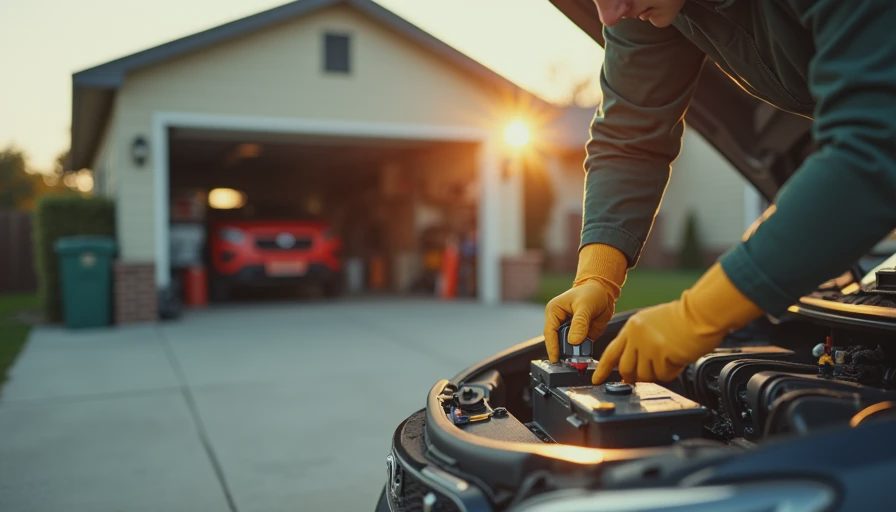
If you decide to add grease, here's the step-by-step process I teach in class. First, disconnect the negative cable, then the positive. Use a wire brush or a battery terminal cleaner to remove any existing corrosion from both the post and the inside of the clamp. Wipe away the loose dust. Reattach the positive cable first, then the negative, and tighten them until snug. Now take a small brush or your finger and apply a thin layer of dielectric grease over the exposed post, the clamp, and the joint. You don't need a thick blob; a thin coating is enough. That's it.
One tip: use a dedicated brush or an old toothbrush so the grease doesn't get on your hands. It's sticky and hard to wash off. Also, keep the vent caps on the battery dry. Grease won't hurt them, but it can trap dirt.
When Should You Skip the Grease?
There are a few cases where dielectric grease is unnecessary or even a bad idea. Top-post batteries with sealed connections and no exposed metal may not need it. If your car has a battery management system with a sensor on the negative terminal, be careful not to coat the sensor connection. And if you're about to replace the battery anyway, just wait and apply the grease to the new one. The grease does not rejuvenate corroded terminals; it only prevents future corrosion. So if you already have crusty buildup, clean it off first.
Quick Quiz: Test Your Battery Terminal Knowledge
Here's a three-question check to see if you've absorbed the lesson. One: does dielectric grease conduct electricity? Answer: no, it's an insulator. Two: where should you apply it? Answer: over the finished connection, not between the metal surfaces. Three: is this grease mandatory for every car? Answer: no, but it's a cheap insurance policy against corrosion. If you remembered that the grease goes on after the clamp, you've got it.
So the next time a friend asks you "do you hav e toput dielectric grease on battery terminals?" you can tell them: not for the car to run, but for the terminals to live a long, clean life. It's one of the cheapest preventive maintenance steps in your garage.


No letters yet — be the first to write.