
Every vehicle depends on routine maintenance and regular tune-ups to operate without a hitch. That is precisely where lubricants come into play. They boost your vehicle's performance, prolong its service life, and help you avoid expensive repairs.
Among the lubricants critical to your car's operation are engine oils, coolants and antifreeze, brake fluids, transmission fluids, power steering fluids, and windshield washer fluids.
Curious about the technology, applications, and advantages of your vehicle's essential fluids?
To answer that question, we have put together this comprehensive guide covering the fluids your vehicle simply cannot do without.
Beyond lubrication alone, motor oil delivers a broad spectrum of benefits to the car's engine. These include:
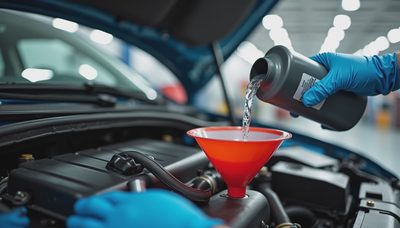
For this very reason, servicing your engine oil on a consistent schedule is absolutely critical. Neglecting this can lead to various engine performance issues, up to and including costly engine failure. Always replace your engine oil at the appropriate interval, as specified in the original equipment manufacturer's manual.
Price alone should never be the deciding factor when selecting engine oil. To ensure your engine operates flawlessly, opt for a dependable, high-quality lubricating solution suited to your engine's demands.
When it comes to selecting the right motor oil, here are several key factors to keep in mind:
First and foremost, confirm that the engine oil is suited to your specific engine type. Begin by consulting the original engine manufacturer's manual and reviewing their recommendations. Modern high-performance engines, for instance, are built to maximize driving efficiency, so the oil formula must be engineered to meet the demands of those advanced engine designs.
Your driving conditions should also influence your engine oil selection. Variables such as climate, operating environment, and road quality all place different stresses on your vehicle. Vehicles operating in different climates, for example, require oils with viscosity grades matched to those temperature ranges.
Every engine oil is composed of a base oil — accounting for up to 90% of the formula — along with additives. Depending on the base oil used, engine oils fall into two broad categories: synthetic and mineral.
Synthetic oil is a premium lubrication solution formulated for modern vehicles. It may be derived from refined petroleum or produced through chemical synthesis in a laboratory. This oil type offers outstanding thermal stability, superior viscosity consistency, and excellent flowability at low temperatures, making it suitable for a wide variety of applications.
Mineral oils, by contrast, are refined from crude petroleum. Although they deliver solid lubrication and are available at a lower price point, they carry notable drawbacks. They are more prone to containing impurities that lead to sludge buildup, they are less thermally stable and degrade more quickly under high heat, and they generally have a shorter usable lifespan.
Viscosity is among the most critical characteristics of any engine oil, and its grading system can be bewildering to those outside the automotive world.
The first number in a viscosity grade indicates how the oil flows at cold temperatures, followed by the letter W, which stands for winter. The second number describes the oil's behavior at elevated operating temperatures.
Lower viscosity indicates a thinner oil that flows more readily in cold conditions. Thicker oils, on the other hand, offer stronger protection against wear at high temperatures by maintaining film thickness and structural integrity.
Browse our lineup of high-viscosity HD oils, including Valvoline Heavy Duty engine oil and Valvoline All-Fleet Heavy Duty Engine Oil.
Your vehicle's engine generates intense heat during operation, and that is where coolants prove their worth. They absorb the heat generated by the engine and transfer it to the radiator, where it is dissipated.
The function of coolants, however, extends well beyond preventing overheating or freezing. They also:
Although the terms car coolant and antifreeze are frequently used interchangeably, they are not identical. Antifreeze is a concentrate that must be diluted with water prior to use, while coolant refers to the finished mixture of antifreeze and water. Alongside concentrated formulas, ready-to-use solutions are also available.
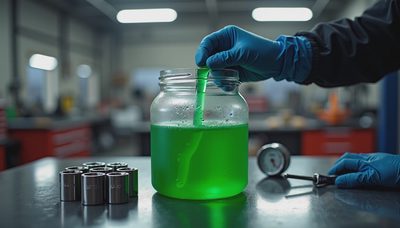
Like other lubricant categories, coolants are composed of a base fluid — typically propylene glycol or ethylene glycol — combined with performance-enhancing additives. They are color-coded to help users distinguish between different coolant types and identify which is compatible with their vehicle. Available colors include blue, pink, turquoise, green, orange, yellow, and purple.
Based on their formulation and underlying technology, coolants are classified as IAT, OAT, HOAT, Hybrid OAT, and Si-OAT.
It is important to note that these coolant types rely on different inhibitor technologies. For this reason, mixing different coolant formulas is not recommended. When incompatible inhibitor systems are combined, the resulting blend can cause significant performance issues in the cooling system and elevate the risk of corrosion. Always flush your cooling system thoroughly before introducing a new coolant formula.
Unsure which coolant is right for your vehicle? Valvoline is here to help!
Brakes govern the vehicle's ability to regulate speed, decelerate, and come to a complete stop when necessary. In short, they are fundamental to the safety of the driver and every other person on the road.
For this reason, selecting a high-quality brake fluid is non-negotiable. Brake fluid is a specialized fluid that amplifies stopping power by converting brake pedal force into pressure at the brake pads.
It is a low-viscosity fluid, meaning it travels through the braking system without resistance. Without it, bringing the car to a stop would require far more than a press of your foot.
Beyond this core function, brake fluid fulfills a number of additional critical roles within the braking system. Some of these include:
Brake fluids fall into two primary categories: glycol-based and synthetic.
Glycol-based brake fluids encompass DOT 3, DOT 4, and DOT 5.1 ratings. They are formulated with a glycol base oil, lubricating agents, and additives. All glycol-based fluids are hygroscopic, meaning they absorb moisture, and must be handled with care as they can damage vehicle paintwork. Glycol-based fluids are compatible with one another and can be blended without bleeding the system. For instance, a braking system designed for DOT 3 fluid can be topped up with DOT 4 or DOT 5.1, and a system using DOT 4 is also compatible with DOT 5.1.
In search of a high-performance, non-mineral brake fluid? Valvoline Brake & Clutch Fluid DOT 3, DOT 4, and DOT 5.1 deliver advanced performance and dependable system protection!
Synthetic brake fluids carry the DOT 5 designation. They are built on a synthetic base combined with lubricating agents and additives. In contrast to glycol-based fluids, DOT 5 fluids do not absorb water and will not harm vehicle paintwork. However, they must not be blended with other brake fluid types, so always consult the manufacturer's guidelines before use.
Most vehicle manufacturers recommend replacing brake fluid every 2–3 years or 30,000–40,000 km.
Regardless of this schedule, it is equally important to monitor your brake fluid levels on a regular basis.
The earliest indicator of low brake fluid is a soft pedal feel. When fluid levels drop too low, the pedal tends to sink toward the floor and demands greater foot pressure to generate the expected braking force.
Another warning sign of low brake fluid is an oily puddle forming beneath the vehicle. Brake fluid may escape from deteriorating rubber hoses or from the master cylinder.
Transmission fluid lubricates the bearings and metallic components within the vehicle's manual gearbox, reducing friction and shielding them from damage during operation. It also dissipates heat to keep the transmission at a safe operating temperature, and its cleaning properties help prevent deposit formation and buildup.
Transmission fluids come in two varieties: manual and automatic.
Manual transmission fluid has been around since the earliest automobiles were manufactured. It remains a common solution for older manual transmission vehicles.
Manual transmission fluid is denser and more viscous than its automatic equivalent and is never suitable for use in automatic transmissions. Notably, even most modern vehicles with manual transmissions rely on automatic transmission fluid. Manual transmission fluid typically presents as brown to amber in color.
Automatic transmission fluid was developed in the 1940s and has since become an indispensable part of the automotive industry. As noted above, it is not confined to automatic transmissions — it is also widely used in modern manual transmissions.
Automatic transmission fluids are thinner than manual variants, allowing them to circulate through the system more rapidly. They are dyed red for easy identification.
These fluids serve multiple functions within the transmission system, including gear lubrication, torque converter operation, valve body operation, brake band friction, and transmission cooling, among others. Here at Valvoline, we have spent decades engineering and refining our automatic transmission fluids. We offer the most comprehensive selection of transmission fluids for every component of your automatic transmission, covering ATF oils, CVT oils, Axle oils, and DCT oils.
Conventional transmission fluids are refined from crude petroleum.
Synthetic transmission fluid is produced through controlled chemical processes and is built on a synthetic oil base. It is significantly more resistant to breakdown, oxidation, and viscosity loss at elevated temperatures.
At Valvoline, we offer the broadest range of synthetic transmission oils available. We take particular pride in our hybrid driveline oils, engineered to deliver exceptional performance, superior lubrication, and maximum protection for hybrid vehicles.
The power steering system harnesses engine power to reduce the steering effort needed to turn the vehicle's front wheels.
Power steering systems are available in two configurations: hydraulic and electric. Hydraulic systems rely on fluid to generate hydraulic pressure within the system, while electric systems are driven by an electric motor.
As one of the most vital systems in your vehicle, power steering requires consistent maintenance — and that is where timely replacement of power steering fluid becomes essential.
Power steering fluid is a specialty fluid that plays a central role in keeping vehicles operational. Its primary function is to establish a hydraulic connection between the steering wheel and the front wheels, reducing the physical effort required to steer.
Power steering fluid serves a wide range of additional purposes, including friction reduction and lubrication of steering system components. It also suppresses foaming, guards against rust buildup in the power steering pump and gear, and helps maintain a stable operating temperature within the power steering system.
Based on their formulation, power steering fluids are divided into two main types: synthetic and universal.
Synthetic power steering fluids are non-oil-based products engineered entirely in the laboratory. Their advanced performance characteristics make them well suited to newer vehicle models.
Valvoline SynPower Power Steering Fluid, for example, is a multi-purpose fluid compatible with passenger cars, trucks, power steering units, leveling systems, and shock absorbers. It delivers oxidation stability, enhances flow characteristics, and safeguards the system against wear, corrosion, and sludge accumulation.
Conventional mineral-based power steering fluids are designed for power steering systems that accept ATF.
Although windshield washer fluid may not have a direct effect on your vehicle's mechanical performance, it is vital to the safety of everyone sharing the road.
It is also one of the most straightforward fluids to manage. Simply pour it into the reservoir, secure the cap, and you are ready to continue on your way.
Keep in mind that not all windshield washer fluids are created equal. Using a summer-formula washer fluid in colder conditions, for instance, can damage your wiper blades and lead to expensive repairs. Even when a screen washer solution is marketed as all-season, take the time to read the product specifications and confirm that it performs reliably at extreme temperatures, such as -40 or -45°C.
Valvoline Screenwasher AntiFreeze is an excellent example of a purpose-built winter screen washer fluid. This premium product delivers maximum freeze protection for your windscreen and screenwash reservoir at sub-zero temperatures as low as -60°C, while also removing frost and reducing the risk of dangerous refreezing.
When essential fluids come to mind, engine oil is likely the first thing you think of. And while engine oil is undeniably central to your engine's performance, it is not sufficient on its own to keep your vehicle roadworthy. A full complement of fluids is required, including coolant and antifreeze products, transmission fluids, power steering fluids, brake fluids, and windshield washer fluid.
You can explore detailed information on each essential fluid in our blog and product catalog. For further assistance, locate your nearest Valvoline distributor in Europe or reach out to us through our website!

No letters yet — be the first to write.