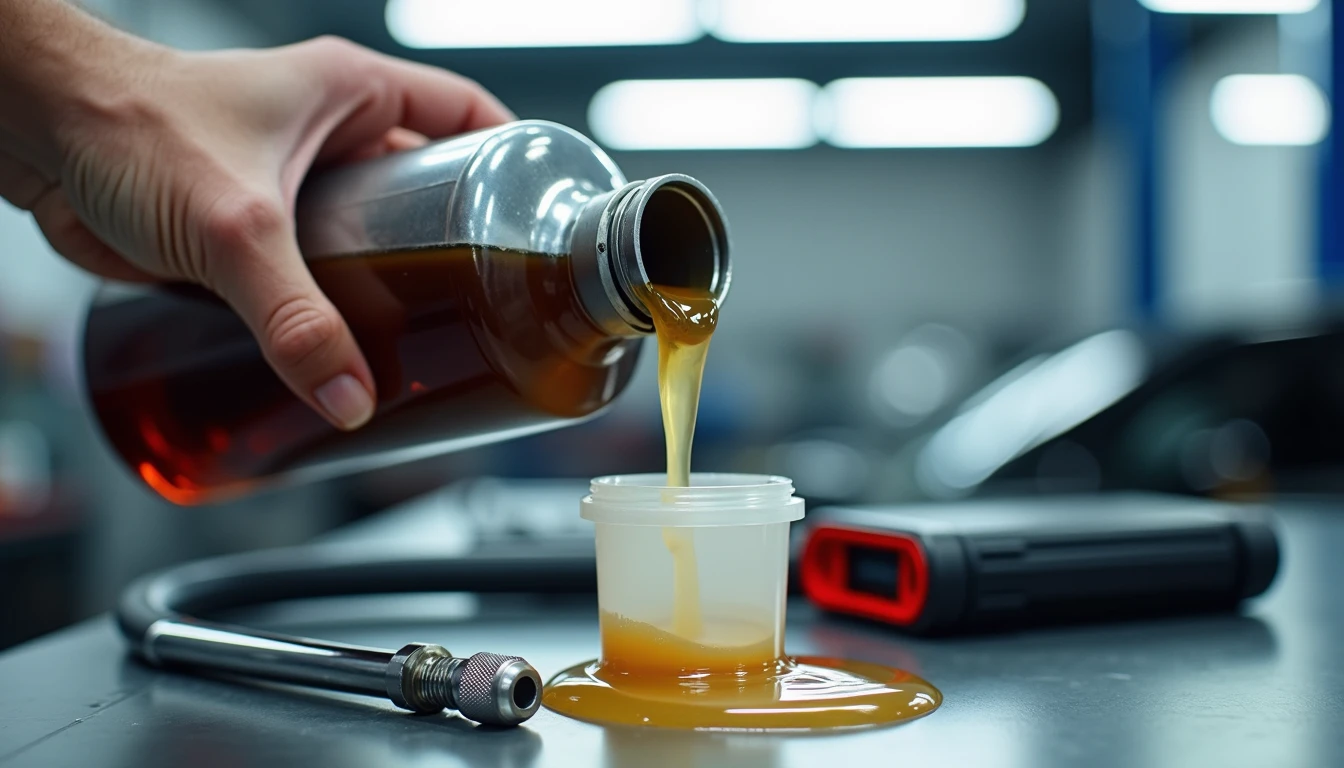
A $4,000 ABS Replacement vs. A $180 Flush: Why Brake Fluid Maintenance Saves Your Wallet and Your Life
Why This Matters
Let’s start with the basics and build from there. Your vehicle’s braking system is a closed hydraulic circuit, meaning it uses pressurized liquid to transfer the physical force of your foot directly to the wheels. When you press the pedal, you are not mechanically clamping the brakes; you are pushing a specialized messenger through a network of steel lines and rubber hoses. This entire process relies on brake fluid, which must remain non-compressible (unable to be squeezed into a smaller volume) to deliver instant stopping power. Over time, however, this fluid degrades. A neglected brake fluid flush typically costs between $173 and $205, but ignoring it can lead to corroded calipers (hydraulic pistons that squeeze brake pads), ruined wheel cylinders (brake components that push shoes outward in drum brakes), or a damaged ABS module (anti-lock braking system control unit), easily pushing repair bills past $4,000. More importantly, contaminated fluid compromises your ability to stop safely in an emergency.
> System Diagram Reference: Visualize a flow chart starting at the brake pedal, moving through the master cylinder, branching into four independent hydraulic circuits, and terminating at each wheel’s caliper or drum. The fluid is the only physical link transmitting your input to the stopping force.
What You Need to Know
Before we address the service procedure, let’s establish the baseline specifications. Brake fluid is hygroscopic, a technical term meaning it actively absorbs moisture from the surrounding air. Even though your brake system is sealed, microscopic amounts of water seep through rubber hoses and internal seals over time. This moisture is the primary enemy. Fresh fluid typically handles operating temperatures between 400°F and 500°F, but during aggressive braking, temperatures can spike near 550°F. Water, by contrast, boils at just 212°F. When contamination occurs, the fluid’s effective boiling point drops dramatically, creating vapor bubbles that compress under pedal pressure and cause brake fade (a temporary loss of stopping power due to fluid overheating).
Service Intervals: Replace the fluid every 2 to 3 years or every 40,000 to 45,000 miles.
Fluid Composition: The source specifies a glycol-ether based hydraulic formulation. Always verify your owner’s manual for the exact DOT rating, as these are the standard glycol-ether variants used in modern vehicles.
Warning Signs: Spongy brake pedal, dark fluid color, reduced stopping power.
> Quick Quiz: Why does water in brake fluid cause a spongy pedal feel? (Answer: Water vaporizes into compressible gas bubbles when heated, unlike pure fluid which remains non-compressible.)
How It Works
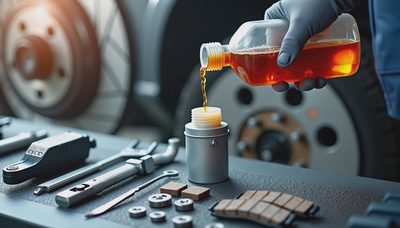
A proper brake fluid flush is a complete system exchange, not a simple reservoir top-off. The process follows a strict sequence to purge old fluid and trapped air.
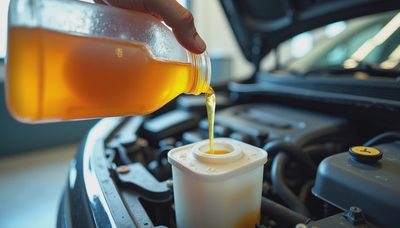
1. Preparation: Locate the master cylinder reservoir under the hood. Clean the cap thoroughly before opening it. Brake fluid is highly corrosive to paint and sensitive to new moisture, so work quickly and keep the container closed when not pouring.
2. Bleeding Sequence: Starting at the wheel farthest from the master cylinder, attach a clear hose to the bleeder valve. Have an assistant press the brake pedal slowly while you open the valve to let old fluid drain, then close it before the pedal returns. Repeat this cycle until fresh, clear fluid flows through the hose.
3. System Purge: Move to the next farthest wheel and repeat. Continue until all four circuits are flushed and the master cylinder reservoir remains at the correct fill line.
4. Verification: Pump the pedal several times with the engine off. It should feel firm and resist travel. A soft or sinking pedal indicates trapped air or incomplete flushing.
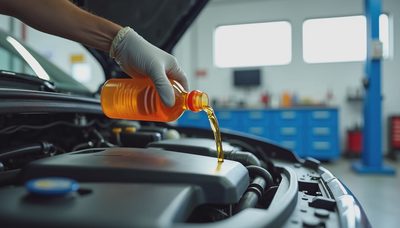
> Pro Tip: Always use fresh, unopened fluid. Once a bottle is cracked, it begins absorbing atmospheric moisture immediately. Pouring in fluid that has been sitting open for weeks defeats the entire purpose of the service.
Common Mistakes
Let’s address what goes wrong in the garage. The most persistent myth is that brake fluid lasts forever because the system is sealed. It does not. The hygroscopic nature of glycol-ether fluid guarantees moisture accumulation regardless of mileage. Another frequent error is mixing fluid types. Silicone-based DOT 5 will destroy glycol-ether seals if accidentally mixed. Always stick to the manufacturer’s specified variant. Some DIYers also attempt to simply siphon the reservoir and refill it. This only replaces about 20% of the fluid. The old, water-logged fluid remains trapped in the calipers, wheel cylinders, and ABS modulator, leaving corrosion and fade risks intact. Finally, never ignore the warning signs: a spongy pedal feel, noticeably dark or cloudy fluid color, or reduced stopping power all indicate immediate service is required.
Bottom Line
Brake fluid maintenance is one of the highest-return investments you can make for your vehicle’s safety and longevity. By following the 2 to 3 year or 40,000 to 45,000 mile interval, you preserve the non-compressible hydraulic pressure needed for reliable stopping, protect expensive anti-lock and caliper components from internal rust, and avoid catastrophic fluid boil during heavy use. Treat your brake system like the precision hydraulic network it is, flush the fluid on schedule, and you will keep your stopping power predictable and your repair bills predictable too.