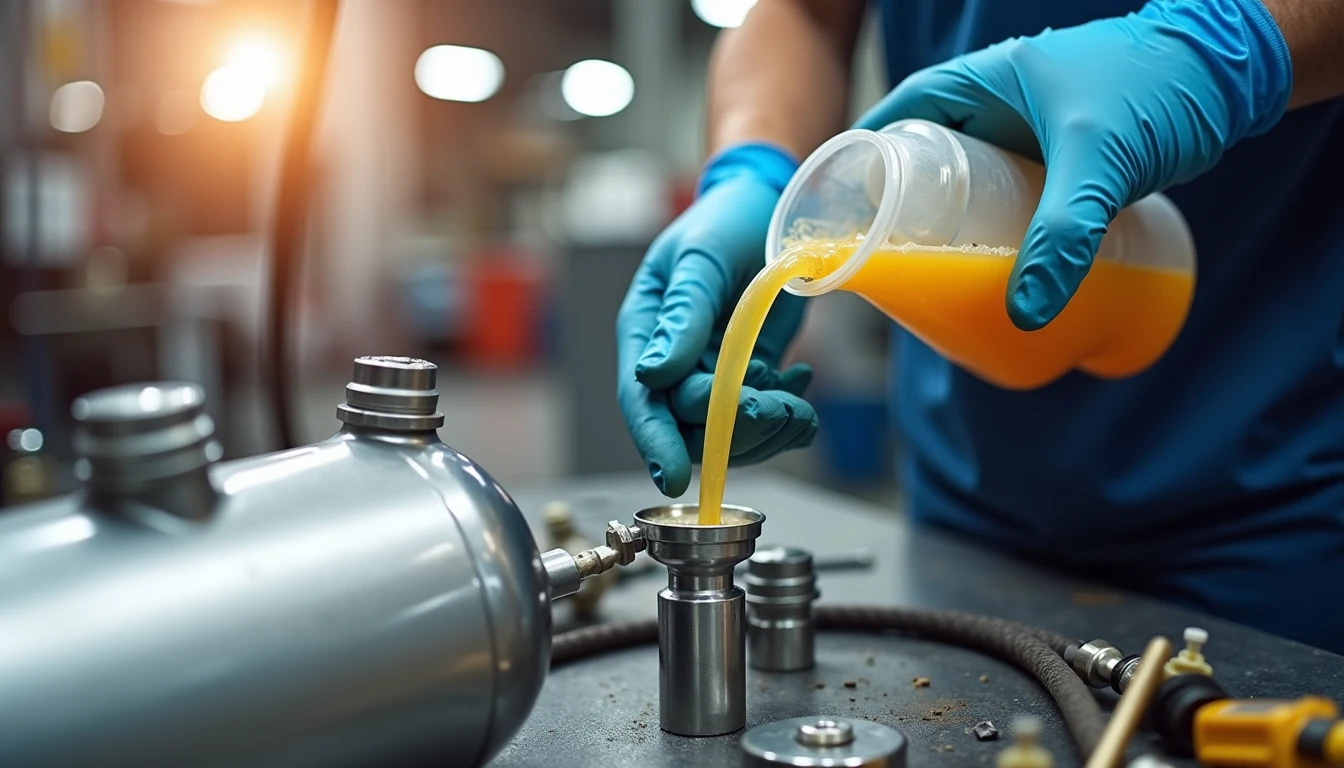
Hydraulic fluid contamination can turn a small leak into a system-killing failure and expensive downtime
Why This Matters (cost/safety/longevity payoff)
Hydraulic fluid isn’t just “oil.” It’s the working medium that transfers force, lubricates moving parts, and helps manage heat inside a hydraulic system. When that fluid gets contaminated, the system may still “work” for a while—but efficiency drops, heat rises, wear accelerates, and failures show up later as blown seals, noisy pumps, sticking valves, or sudden loss of function.
From a practical, wallet-saving standpoint: contamination is the quiet cause behind a lot of hydraulic component replacements that people blame on “bad luck” or “cheap parts.” If you understand the common contamination types, you can stop problems early—before they become breakdowns and downtime.
System Diagram (in your head):
Reservoir (tank) → pump → control valves → actuators (cylinders/motors) → return line → filter(s) → reservoir.
Contamination can enter at *any* point in that loop, then circulate everywhere.
What You Need to Know (definitions + the big idea)
Hydraulic fluid is the liquid used to transmit power in hydraulic systems. Think of it as both a “power transfer fluid” and a “lubricant.”
Contamination means anything in the hydraulic fluid that shouldn’t be there—or anything that changes the fluid’s intended condition. Contamination can be:
- Solid (particles like dirt or metal)
- Liquid (water or other fluids that mix in)
- Gas (air bubbles or dissolved gases)
- Chemical/condition-based (oxidation or degradation products)
- Biological (microbial growth in some applications)
The source emphasizes a key reality: hydraulic fluid has a “complex composition,” and it’s constantly threatened by contamination that “quietly undermines efficiency and longevity.” Your job as an owner/operator is to treat contamination control as routine maintenance—not emergency repair.
Quick Quiz:
Which is more dangerous: contamination you can see (cloudy fluid) or contamination you can’t see (microscopic particles)?
Answer: The contamination you *can’t see* often does the most damage because it circulates for a long time before symptoms show up.
How It Works (6 types of hydraulic fluid contamination and what they do)
Below are six broad contamination categories you need to recognize in real life. Even if you don’t have lab testing, you can still use symptoms, inspection habits, and maintenance discipline to reduce risk.
1) Particulate contamination (dirt, dust, grit, metal particles)
What it is: Solid particles suspended in the fluid—anything from shop dust to wear metals.
Why it matters: Hydraulic systems have tight clearances (very small gaps) in pumps and valves. Particles can:
- Scratch surfaces (abrasive wear)
- Jam spool valves (a spool valve is a sliding valve element that controls flow direction/pressure)
- Accelerate pump wear
Where it comes from: Dirty fill practices, open ports during repair, poor filtration, or normal component wear.
Pro Tip: Treat every open hydraulic line like an open surgery site—cap it immediately. Most “mystery contamination” is actually technician-installed.
2) Water contamination (moisture in the fluid)
What it is: Water mixed into hydraulic fluid, either dissolved, emulsified (milky), or free water.
Why it matters: Water reduces lubricity (how well the fluid prevents metal-to-metal contact), promotes rust/corrosion, and can contribute to additive depletion and accelerated wear.
Common entry points: Condensation in reservoirs, leaking coolers/heat exchangers, poor storage of fluid containers, or wash-down environments.
Quick Quiz:
If your reservoir “breathes” (air in/out as level changes), what else can it inhale?
Answer: Moisture and dust—especially if breathers and seals are neglected.
3) Air contamination (aeration and foam)
What it is: Air bubbles mixed into the fluid (aeration) or stable foam on top.
Why it matters: Air compresses; hydraulic fluid is meant to be effectively incompressible. Air in the fluid causes:
- Spongy or inconsistent actuator movement
- Noise (especially pump whine)
- Heat from compression and fluid churning
- Reduced lubrication at critical surfaces
Typical causes: Low fluid level, suction leaks, return line dumping above fluid level, poor reservoir design, or high agitation.
System Diagram reference: If air enters on the pump suction side, it gets chopped up and distributed everywhere—fast.
4) Chemical contamination (wrong fluid, mixed fluids, incompatible additives)
What it is: The wrong chemical makeup in the system—often from topping off with an incorrect fluid or mixing fluids that don’t play well together.
Why it matters: Hydraulic fluids rely on additive packages (anti-wear, anti-foam, corrosion inhibitors). Mixing incompatible fluids can reduce performance, attack seals, or cause deposits.
Real-world example (no guessing specs): “It was just a little top-off” is how a lot of systems end up with mismatched fluid chemistry.
Pro Tip: Label fill points and storage containers clearly, and keep dedicated transfer equipment (funnels, pumps) for each fluid type to avoid accidental mixing.
5) Oxidation and fluid degradation (aged, overheated fluid)
What it is: Fluid that has broken down from heat, oxygen exposure, and time. Oxidation creates acids and varnish-like deposits.
Why it matters: Degraded fluid can:
- Thicken or form deposits that stick valves
- Increase operating temperatures
- Reduce component life
What drives it: Heat is the big accelerator. A hot-running system often turns into a self-feeding problem: heat speeds oxidation, oxidation worsens efficiency, and inefficiency creates more heat.
Quick Quiz:
What’s the simplest “early warning” that a hydraulic system is unhappy?
Answer: Heat. Excessive operating temperature is often the first visible symptom of contamination or inefficiency.
6) Biological contamination (microbial growth)
What it is: In certain environments, microbial growth can occur, especially where water contamination is present.
Why it matters: Microbes can produce byproducts that contribute to corrosion, odor, and fluid condition issues. It’s less common than dirt/water/air, but when it appears, it usually signals a bigger moisture-control problem.
Pro Tip: If you’re repeatedly fighting “mystery sludge,” stop treating it like a filter-only problem and start treating it like a moisture-ingress problem.
Common Mistakes (myths, pitfalls, and what to do instead)
1) Myth: “If it still moves, the fluid is fine.”
Hydraulic systems can operate while damage accumulates. Contamination often “quietly undermines efficiency and longevity” until failure becomes unavoidable.
2) Mistake: Dirty top-offs and open containers.
A clean system can be contaminated in minutes during filling. Store fluid sealed, use clean transfer tools, and keep fill areas wiped down.
3) Myth: “Filters fix everything.”
Filters help, but they don’t remove all water, they don’t reverse oxidation, and they can be bypassed if clogged or incorrectly installed.
4) Mistake: Ignoring the reservoir breather.
The breather is the system’s mouth. If it’s missing, clogged, or low quality, your system breathes contamination.
5) Myth: “A little foam is normal.”
Foam and aeration are symptoms. Find the source (low level, suction leak, return turbulence) instead of living with it.
Bottom Line (what to do next)
Hydraulic fluid is the lifeblood of the system—and contamination is the slow killer. Treat contamination control as a maintenance routine: keep fill practices clean, prevent moisture and air ingress, avoid mixing fluids, and watch for heat and performance changes as early warning signs. If you build the habit of thinking in the “system diagram loop,” you’ll catch contamination sources before they circulate into expensive failures.