
Let's start with the basics and build from there. If you own a car with an internal combustion engine, you've heard the term **coolant flush** thrown around at the shop or in the owner's manual. But what exactly is it, and why does your car need it? In this guide, I'll walk you through the science, the economics, and the step-by-step procedure so you can decide whether to DIY or hand it off. By the end, you'll understand why a regular **coolant flush** isn't just a upsell—it's preventive medicine for your engine.
What Is a Coolant Flush?
A coolant flush is the process of draining the old antifreeze/coolant from your vehicle's cooling system, flushing out contaminants and old fluid, and refilling it with fresh coolant mixed to the proper ratio. It's more thorough than a simple drain-and-refill because the flush step uses water or a chemical cleaner to dislodge sediment, rust, and scale that accumulate over time.
**System Diagram reference:** Imagine your cooling system as a closed loop: radiator, water pump, thermostat, heater core, and engine passages. Coolant flows through these components, absorbing heat from the engine and releasing it in the radiator. Over miles, the coolant breaks down and the additive package (corrosion inhibitors, anti-foam agents) gets depleted. A **coolant flush** resets that chemical protection.
Why Is a Coolant Flush Important?
First, let's talk about what happens if you skip it. Coolant doesn't last forever. Even the long-life formulations (OAT, HOAT) lose their buffering ability after a few years. As the pH drops, the coolant becomes acidic, which can corrode aluminum radiator cores, water pump seals, and heater cores. That's a $500–$1,500 repair waiting to happen.
Second, contaminants build up. Particles of rust, plastic, and even stop-leak products can clog the narrow passages in your heater core or radiator tubes. A **coolant flush** removes that sludge before it causes overheating or poor cabin heat.
If you remember one concept from this post, make it this one: **coolant protects by chemistry, not just by fluid volume.** The additive package is what prevents corrosion, lubricates the water pump, and raises the boiling point. A flush renews that chemistry.

How Often Should You Flush Your Coolant?
This depends on the type of coolant your car uses and the manufacturer's recommendation. For most modern vehicles with extended-life coolant (OAT or HOAT), the interval is often 5 years or 100,000 miles, then every 2–3 years after that. For older cars using conventional green IAT coolant, it's typically every 2 years or 30,000 miles.
Always check your owner's manual. If you drive a high-mileage car or live in an extreme climate (very hot or very cold), you might want to err on the shorter side. A **coolant flush** every 30,000–60,000 miles is a safe bet for most drivers.
Signs You Need a Coolant Flush Now
Your car will give you clues. Look for:
- **Discolored coolant** – Should be bright green, orange, pink, or blue (depending on type). If it looks rusty, milky, or has particles, it's time.
- **Overheating** – If your temp gauge creeps up on the highway, contaminated coolant could be the culprit.
- **Sweet smell** – A coolant leak might be accompanied by a sweet odor. But even without a leak, degraded coolant loses its heat-transfer ability.
- **Low freeze protection** – You can test the freeze point with a simple hydrometer. If it's off, a **coolant flush** will restore proper protection.
Think of these symptoms as the patient's report. Don't ignore them.
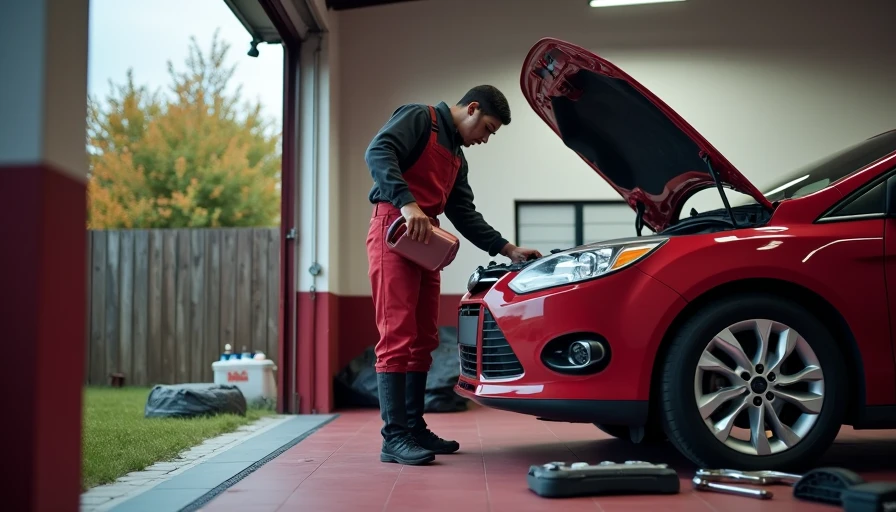
How to Do a Coolant Flush (Step by Step)
**Safety first:** Never open a hot radiator cap. Coolant is toxic—keep away from pets and children. Dispose of old coolant at a recycling center.
- **Ensure engine is cold.** Park on level ground.
- **Locate the radiator or coolant reservoir drain.** Place a catch pan underneath.
- **Open the drain valve or remove the lower radiator hose.** Let the coolant drain.
- **Close the drain** and fill the system with water (distilled is best). Add a flush chemical if desired.
- **Run the engine** with the heater on full hot for 10–15 minutes.
- **Drain again.** Repeat until draining water is clear.
- **Refill with fresh coolant concentrate and distilled water** at the correct ratio (usually 50/50). Use manufacturer-specified type.
- **Bleed air** from the system per your car's instructions. Check for leaks.
That's the procedure. A shop might charge $100–$200 for a **coolant flush**, but the DIY cost is about $20–$40 for coolant and distilled water.
Quick Quiz
Test your knowledge:
- Why does coolant become acidic over time? (Answer: The additive package breaks down, causing pH to drop.)
- What's the typical interval for an extended-life coolant flush? (Answer: 5 years or 100,000 miles initially.)
- Name one sign of degraded coolant. (Answer: Discoloration, overheating, sweet smell, or low freeze protection.)
Leave your score in the comments! If you got all three, you're ready to tackle your own **coolant flush**.
Keep your cooling system healthy, and it will keep your engine running. Next time, we'll cover how to choose the right coolant type for your car. Until then, happy flushing.


No letters yet — be the first to write.