If you want your transmission to last, a cvt fluid change is one of the cheapest ways to protect a very expensive part of the car. A CVT, or continuously variable transmission, does not shift through fixed gears the way a traditional automatic does. Instead, it uses pulleys and a belt or chain to vary the ratio smoothly, and the fluid has to lubricate, cool, and help control friction at the same time. Let's start with the basics and build from there.
That is why I tell students to think of the fluid as part lubricant, part hydraulic working fluid, and part heat carrier. When it ages, the transmission can start to shudder, make noise, or feel lazy pulling away from a stop. Ignoring that change is how a routine maintenance item turns into a repair bill that can run into the thousands.
Why a cvt fluid change protects the transmission
The easiest way to picture a CVT is with a simple system diagram. System Diagram reference: engine torque enters the transmission, the input pulley changes effective diameter, the belt or chain transfers force, the output pulley sends power to the wheels, and the fluid carries heat to the cooler while keeping moving parts separated. That fluid also has a specific friction profile, which means it is designed to behave a certain way under pressure. Regular automatic transmission fluid is not a safe substitute.
As fluid breaks down, heat and shear reduce its ability to protect the pulley faces and belt surfaces. Oxidation darkens the fluid, varnish can form on internal passages, and tiny wear particles start circulating through the unit. You may not notice the damage on day one, but the transmission often gives clues: a slight hesitation from a stop, a whine at low speed, or a rubber-band feeling when you ask for more throttle.
The lesson is simple. A cvt fluid change is not just about topping off a low level. It is about restoring the fluid's chemistry before heat and contamination start eating into the parts that are hardest to replace.
When to schedule a cvt fluid change
There is no single mileage that fits every car, which is why the owner's manual matters more than internet folklore. Some manufacturers list longer intervals under ideal driving, while others are more conservative. In real-world use, many drivers should think in the 30,000 to 60,000 mile range for severe service, especially if the car sees city traffic, mountain grades, hot weather, towing, or frequent short trips. For easier duty, some schedules stretch farther, but the fluid still ages with time.
A few brand examples help show why the exact spec matters. Nissan CVTs have used NS-2 and NS-3 fluids on different models. Subaru uses CVTF formulas for many of its units. Honda, Toyota, and Mitsubishi each have their own CVT fluid requirements on specific platforms. Those labels are not marketing fluff; they describe friction behavior and viscosity targets that the transmission was designed around.
If your service record is missing, do not guess. Look up the exact fluid spec by VIN or model year before buying parts. A correct cvt fluid change is not the place to save ten dollars on a generic bottle and risk a far bigger failure later.
What a proper service looks like
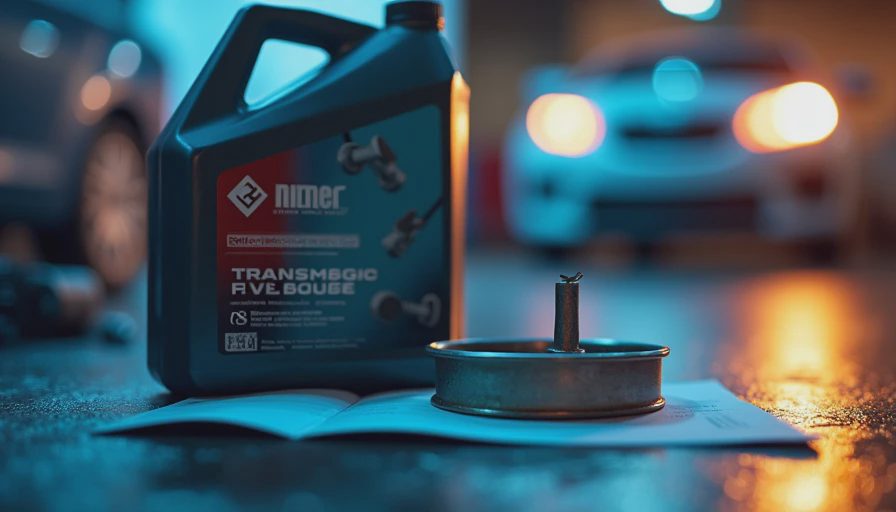
A good shop usually starts with a drain-and-fill, not a universal power flush. That matters because many CVTs do not tolerate aggressive flushing the way some conventional automatics might. The technician should drain the old fluid, inspect the magnet for metal paste, check for debris, refill with the correct spec, and then verify level and temperature the way that transmission calls for. Some units have a filter or screen that can be serviced too, but not all of them are easy to access.
A proper cvt fluid change often costs about $150 to $300 at an independent shop and $250 to $450 at a dealership, depending on fluid price and labor time. Those numbers are usually much easier to swallow than a transmission replacement that can cost $4,000 to $8,000 or more. The math is not subtle.
When the shop says it used a CVT-specific fluid, ask which spec went in and how the level was set. That one question tells you a lot about whether the service was done by the book or by guesswork.
Signs the fluid is overdue
A CVT usually starts speaking before it fails. The first clues are often small: a shudder as you pull away, a delayed creep when you release the brake, a high-pitched whine that gets louder with speed, or engine rpm that rises without the matching push you expect. Burnt-smelling fluid is another clue, especially if the dipstick or sample looks dark brown instead of transparent amber.
One important distinction: not every drivability complaint means the transmission is ruined. Sometimes the issue is low fluid, a sensor problem, or a software update that the dealer should address. But if the symptoms show up together with overdue maintenance, the odds point back to the fluid. That is why a cvt fluid change belongs on the same checklist as brakes, tires, and coolant, not in the category of optional extras.
If you are comparing quotes, ask whether the estimate includes the exact fluid spec, a new crush washer if needed, and a level check at the proper temperature. Those details separate a real service from a quick drain-and-refill.
What to ask before you buy the service
Before you approve a cvt fluid change, ask four plain questions in normal language: what fluid spec will you use, how many quarts are included, will you inspect the pan magnet or filter, and how will you verify the final level. If the advisor cannot answer those without reading from a script, keep shopping. A good service writer should know whether the car needs a dealer fluid, an OE-equivalent fluid, or a model-specific product such as Honda HCF-2, Toyota CVT FE, or Nissan NS-3.
This is also where a little homework saves money. An independent shop with the right fluid on hand can often beat the dealer by $75 to $150. The dealer may still be the better choice for a newer vehicle under powertrain warranty or a CVT with a known service bulletin, but the quote should explain why.
If you remember one concept from this post, make it this one: the right fluid spec matters as much as the interval. That is the difference between maintenance and damage control.
Quick Quiz: check your understanding
Quick Quiz: Is regular automatic transmission fluid interchangeable with CVT fluid? No. Does a lower mileage car still need service if the fluid is old and the car sees heavy traffic? Yes, because heat ages fluid over time. Should you trust the cheapest quote if it does not name the fluid spec? Not unless you enjoy gambling with a transmission.
A timely cvt fluid change is one of the smartest ownership habits you can build. If your manual is vague or the service history is missing, pull the exact fluid specification first, then compare estimates based on the same job, not just the same price.



No letters yet — be the first to write.