What Is Honda DW 1 ATF Fluid and Why Your Honda Needs It
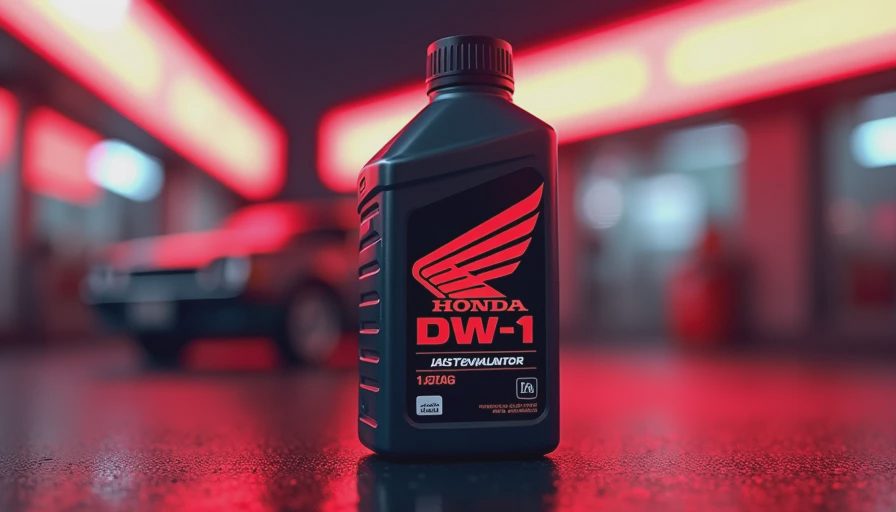
If you own a Honda or Acura, you've probably seen the phrase honda dw 1 atf fluid on a bottle or in your owner's manual. But what exactly is it, and why does your transmission care so much about this specific fluid? Let's start with the basics and build from there.
Transmission fluid is the lifeblood of your automatic transmission. It lubricates gears, cools internal parts, and transmits hydraulic pressure to shift smoothly. Honda's DW 1 (which stands for Dual Weight 1) is a special blend that Honda engineers designed specifically for their own transmissions. Using the wrong fluid can lead to rough shifts, slipping, or even premature transmission failure. In this post, we'll cover what DW 1 is, how it works, and when to change it.
What Makes Honda DW 1 ATF Fluid Different
Unlike a universal ATF (Automatic Transmission Fluid) that tries to work across many makes and models, honda dw 1 atf fluid is a proprietary formulation. It was introduced around 2010 to replace the older Z1 fluid. DW 1 has a unique viscosity profile that stays thin enough when cold for easy pump flow and thick enough when hot to maintain pressure. That dual viscosity is where the "DW" name comes from.
Honda transmissions are sensitive to fluid friction characteristics. DW 1 includes specific friction modifiers that help clutch packs engage smoothly. If you pour a generic ATF into a Honda transmission, you might notice harsh engagement or shuddering. That's because the friction properties don't match what the transmission expects. Even among Honda fluids, DW 1 is different from the previous Z1 — it's more shear-stable and resists thermal breakdown better.
How to Check Your Honda's ATF Level
Before you add or change fluid, you need to check the level correctly. On most Hondas, you check the transmission fluid with the engine running at operating temperature, parked on level ground. Pull the dipstick (usually yellow with a red loop), wipe it clean, reinsert it fully, then pull it out again. The fluid should be between the upper and lower marks. If it's low, top off with genuine honda dw 1 atf fluid. Do not overfill — that causes foaming and poor shifting.
Some newer Hondas have a sealed transmission without a dipstick. Those require a pump or scan tool to check fluid temperature and level. In that case, it's best to have a dealer or independent shop with proper equipment perform the check.
When to Change Honda DW 1 ATF Fluid
Honda's official maintenance schedule varies by model and driving conditions. For most vehicles, Honda recommends changing the ATF every 30,000 to 60,000 miles. If you drive in severe conditions — stop-and-go traffic, towing, or mountain roads — err on the shorter side. I tell my students: at 30,000 miles, do a simple drain-and-fill. That replaces about a third of the total fluid. Repeat at 60,000 miles, and again at 90,000. Full flushes are debated; I prefer drain-and-fill multiple times to avoid loosening deposits that could clog a filter.
If your transmission is already slipping or has high mileage on old fluid, a drain-and-fill is safer than a power flush. A flush can dislodge debris that then blocks passages. Stick with genuine honda dw 1 atf fluid — it's not that expensive compared to a transmission rebuild.
Can You Use a Substitute for Honda DW 1 ATF Fluid?
Some aftermarket brands offer fluids labeled "Honda-compatible" or "DW-1 equivalent." Examples include Idemitsu, Aisin, and Valvoline's MaxLife Multi-Vehicle ATF (which claims to meet DW-1 specs). Are they safe? For many drivers, yes. But I recommend using genuine Honda fluid if your car is still under warranty or if you want zero risk. Aftermarket fluids may not have the exact same friction modifiers.
If you do use an alternative, ensure it lists "Honda DW-1" on the bottle's specifications. And if you're doing a transmission repair or rebuilding, always use OEM fluid. Remember: the cost of genuine fluid is a fraction of the cost of a new transmission.

Step-by-Step: How to Change Honda DW 1 ATF Fluid (Drain-and-Fill)
Here's the procedure for most Honda models with a dipstick. Always consult your owner's manual for specific steps.
- Warm up the engine by driving a few miles. Park on level ground, then turn off the engine.
- Locate the transmission drain plug (under the car, usually on the bottom of the transmission pan). Place a drain pan under it.
- Remove the drain plug and let the old fluid drain completely. Reinstall the plug with a new washer if recommended.
- Find the dipstick tube. Using a funnel, pour in the new honda dw 1 atf fluid. Add about 3 quarts (check your manual for exact capacity).
- Start the engine and let it idle. With the parking brake on, move the shifter through each gear, pausing a few seconds. Then check the dipstick while the engine is running. Add fluid as needed to reach the "HOT" range.
- Repeat step 2-3 more times over the next few weeks if you want a complete flush, but each drain-and-fill is adequate for maintenance.
Quick Quiz: Test Your Knowledge
- What does "DW" stand for in Honda DW-1? (Answer: Dual Weight)
- How often should you drain-and-fill your Honda's transmission fluid? (Every 30,000 miles under normal driving)
- True or False: Any ATF fluid works fine in a Honda. (False — friction additives differ)
If you remember one concept from this post, make it this one: use the correct honda dw 1 atf fluid for your Honda or Acura. It's a small investment that protects a major component. Your transmission will thank you.

No letters yet — be the first to write.