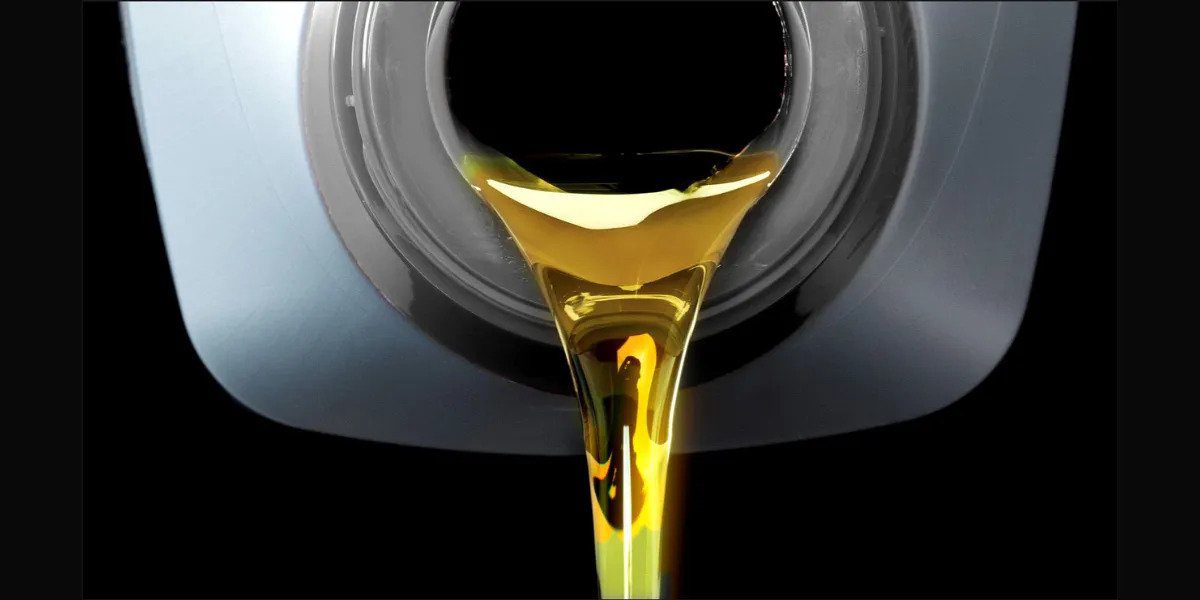
The introduction of Diesel Particulate Filters (DPFs) and Gasoline Particulate Filters (GPFs) has driven a significant surge in demand for low-SAPS oils.
Conventional engine lubricants rely on performance-enhancing additives like phosphorus and sulfur, which deliver outstanding anti-wear and antioxidant capabilities. The drawback, however, is that phosphorus and sulfur can compromise the depolluting after-treatment system responsible for eliminating harmful pollutant emissions.
This concern prompted oil manufacturers to develop a new category of lubricants with reduced phosphorus and sulfur concentrations. Within the automotive lubricants industry, these products are referred to as low-emission or low-SAPS oils.
As the name directly implies, low-SAPS oils are formulated with reduced levels of SAPS — sulfated ash, phosphorus, and sulfur. By optimizing the performance of the depolluting post-treatment system, these engine lubricants simultaneously help minimize a vehicle's overall environmental footprint.
If low-emission oils are still unfamiliar territory for you, we have put together this comprehensive guide to low-ash oils to walk you through everything you need to know.
Regardless of whether it is mineral or synthetic, every engine oil is built from a foundation of quality base oil combined with performance-enhancing additives.
The additive types incorporated into the base oil include antioxidants, corrosion inhibitors, viscosity index improvers, anti-wear agents, extreme pressure additives, and others.
These additives serve to strengthen the base oil's existing performance characteristics while introducing entirely new functional properties.
Among the most widely used additives are phosphorus and sulfur — substances recognized for their exceptional antioxidant and anti-wear capabilities.
Nevertheless, incorporating these additives results in elevated SAPS content, which can create engine performance problems, diminish fuel efficiency, and increase exhaust emissions.
SAPS is an acronym standing for sulfated ash, phosphorus, and sulfur.
Below is an overview of what each component represents:
Sulfated ash refers to an analytical measurement of the metallic residue that forms and accumulates during engine oil combustion. Its primary sources are the anti-wear and detergent additives present in engine oil.
This residue ash is produced when phosphorus- and sulfur-based additives are introduced into the engine oil and subsequently burned.
Because this metallic content is non-combustible, it cannot be eliminated through burning. As the engine oil combusts, the resulting particles collect within the pores of the diesel particulate filter, drastically shortening its service life. These particles can equally damage catalytic converters by preventing the catalyst from neutralizing toxic compounds in exhaust gases.
Phosphorus functions as a potent additive that curtails friction and limits wear on the engine's moving components.
It appears most frequently in zinc ester formulas, with Zinc Diakyldiphosphosphate (ZDDP) serving as the dominant additive. ZDDP deposits a protective film over metal surfaces, shielding engine components from friction-induced damage and wear.
Additional sources of phosphorus in engine oil include corrosion inhibitors, friction modifiers, antioxidants, and extreme pressure additives.
Upon combustion, phosphorus causes blockages in the DPF and can poison the GPF in petrol-engined vehicles.
Sulfur is an antioxidant additive that also exhibits exceptional anti-wear and antioxidant characteristics.
When sulfur burns, it generates sulfur oxides. Much like phosphorus, the resulting ash particles obstruct the DPF as the oil thickens over time.
The primary contributors of sulfur content in engine oil are corrosion inhibitors, friction modifiers, antioxidants, and anti-wear ZDDP additives.
Despite the formidable anti-wear, antioxidant, and anti-friction qualities these additives provide, elevated concentrations of phosphorus and sulfur can poison a vehicle's catalytic converter. Of even greater concern, the metallic content can migrate into the engine itself, causing significant internal damage.
For this reason, the European Automobile Manufacturers' Association (ACEA) establishes guidelines governing the permissible levels of phosphorus and sulfur in engine oil formulations.
The harmful effects of SAPS on exhaust after-treatment systems have generated considerable interest in finding substitute engine oil additives. Lubricant manufacturers are actively pursuing ashless anti-wear additives capable of partially or completely replacing ZDDP in engine oils. The objective is to engineer a balanced oil formulation that delivers comparable protection while extending the working life of the exhaust after-treatment system.
This is precisely where low-SAPS oils come into play.
Low-SAPS engine oil is defined by its reduced concentrations of sulfated ash, phosphorus, and sulfur.
These products are also referred to as low-ash engine oils owing to their minimal tendency toward ash formation. Formulated with advanced, low-emission additives, they are engineered specifically for vehicles equipped with diesel particulate filters (DPFs) and three-way catalytic converters (TWCs).
Thanks to their low ash-forming characteristics and the reduction of sulfur and phosphorus content, low-SAPS engine oils contribute to a longer engine service life. Perhaps most significantly, they boost the efficiency of the exhaust gas purification system while reducing overall pollutant emissions.
ACEA serves as the European classification system, functioning as the equivalent of the API classification used in the United States.
The principal distinction between these two systems is that the ACEA standard applies more rigorous criteria.
The ACEA classification is organized into several distinct engine oil grades:
Low-SAPS and mid-SAPS oils are categorized under the C grade, indicating compatibility with catalytic converters and DPFs.
Within the ACEA framework, C-grade oils are further subdivided using a numerical system into C1, C2, C3, C4, and C5 grades.
C1 and C4 are classified as low-SAPS oils, whereas C2, C3, and C5 fall into the mid-SAPS category.
Mid-SAPS oils carry a reduced level of ash content, making them superior to conventional lubricants and more compatible with after-treatment systems. Low-SAPS oils contain even less ash than mid-SAPS alternatives and are specifically formulated to meet the requirements of sensitive after-treatment devices.
Each C-grade oil type is characterized by a distinct chemical composition, set of properties, and performance benchmarks.
ACEA C2, C3, and C5 oils share comparable formulations and chemical characteristics, yet differ in their High Temperature/High Shear (HT/HS) ratings. A lower HT/HS value translates to improved fuel economy, though it is not universally compatible across all engine types.
The defining properties of each oil type are outlined below:
C1 are stable lubricants suited for vehicles fitted with DPFs and TWCs. They are likewise compatible with high-performance diesel and petrol engines that call for low friction and low SAPS content (sulfated ash below 0.5%), along with a minimum HT/HS viscosity of 2.9 cP. C1 oils are available exclusively in the 5W-30 viscosity grade.
One representative product is Valvoline Synpower Env C1/C2 SAE 5W-30, a formula developed for passenger cars and light-duty vehicles. It is blended with the most advanced additive technology to deliver maximum protection while causing no harm to DPFs or TWCs.
Like C1 engine oils, C2 lubricants are stable and suitable for vehicles with DPFs and TWCs as well as high-performance diesel and petrol engines. They target engines requiring mid-SAPS content (sulfated ash below 0.8%) with a minimum HT/HS viscosity of 2.9 cP. These oils are offered in either 0W-30 or 5W-30 viscosity grades.
Valvoline offers an extensive range of C2 engine oils across multiple viscosity grades, including Valvoline Synpower ENV C2 SAE 0W-30, Synpower ENV C2 SAE 5W-30, Synpower DT 0W-30, and Hybrid C2 5W-30 engine oils.
C3 are stable oils serving a broad range of DPFs and TWCs, as well as high-performance diesel and petrol engines requiring low friction. The applicable engines need mid-SAPS content (sulfated ash below 0.8%) and a minimum HT/HS viscosity of 3.5 cP. C3 oil is available in 5W-30, 5W-40, or 0W-30 viscosity grades.
Valvoline's lineup of C3 low-SAPS lubricants includes the following options:
C4 oils are stable lubricants with close similarities to ACEA C1 products. The key difference is that C4 oils carry no upper limit on phosphorus content and require a minimum HT/HS viscosity of 3.5 cP. These oils are available in the 5W-30 viscosity grade.
Valvoline Europe delivers an extensive selection of high-performing C4 engine oils, among them the Valvoline Synpower MST C4 SAE 5W-30. This advanced formulation is designed for EURO 4, 5, and 6 engines with extended oil drain intervals that demand ACEA C4 quality. Its cutting-edge additives keep the emission control system functioning at peak performance.
C5 oils are stable lubricants bearing similarities to both C2 and C3 products, with the key distinction being a reduced HT/HS viscosity ceiling of 2.9 cP. C5 lubricants span a viscosity range from 0W-20 to 5W-20.
The Valvoline C5 engine oil lineup includes the following products:
ACEA C-grade oils are not mutually interchangeable.
As an example, substituting C1 oil in an engine specified for C3 is not permissible, since C1 carries lower sulfated ash requirements than C3.
Using an incorrect ACEA C-grade oil can trigger a range of engine performance problems and accelerate wear, ultimately reducing the engine's usable lifespan.
The majority of original equipment manufacturers enforce precise specifications. Always consult the OEM guide before selecting an ACEA C-grade engine oil.
HT/HS stands for High Temperature/High Shear, and it represents the viscosity of multi-grade engine oils measured at 150°C.
HT/HS quantifies the lubricant's capacity to flow continuously between rapidly moving engine components such as piston rings, valve trains, gearwheel contact points, the liner, and similar parts.
This dimensionless parameter indicates how effectively a lubricant shields the engine under the most extreme operating conditions. It also conveys important information about the fuel efficiency potential of a given engine oil — in practical terms, how much fuel a specific lubricant formula can help conserve.
Predictably, heavier engine oils with elevated HT/HS viscosity deliver stronger anti-wear protection, while lower HT/HS viscosity improves fuel economy at the expense of some protective capacity.
High Temperature/High Shear is measured in millipascal seconds (mPas). Values exceeding 3.6 mPas are considered normal HT/HS viscosity, while any reading below 3.6 mPas is classified as reduced viscosity.
HT/HS viscosity plays a critical role in the ACEA classification system.
The required HT/HS viscosity values differ across ACEA grades. For instance, classes A2, A3, B2, B3, E2, E3, E4, and E5 all require HT/HS values above 3.6 mPas, which falls within the normal viscosity range.
By contrast, low-SAPS and mid-SAPS lubricants are formulated for specialized engine configurations, which is why their HT/HS viscosity values are correspondingly lower.
Per the ACEA European Oil Sequences 2016, C1 and C2 class oils must maintain HT/HS viscosity values above 2.9 mPas. C3 and C4 oils are held to higher HT/HS viscosity values of 3.6 mPas, while C5 engine oils carry the lowest threshold at a minimum of 2.6 mPas.
This is why selecting the oil grade specified by your original equipment manufacturer is of paramount importance.
Although lubricant manufacturers work continually to reduce sulfur and phosphorus levels, these additives remain difficult to eliminate entirely given the critical wear protection and antioxidation they provide.
This reality underscores the need to develop entirely new additive chemistries capable of partially or fully replacing sulfur and phosphorus — formulations that are more environmentally responsible without sacrificing anti-friction and anti-wear performance.
Low-SAPS or C-grade engine oils represent the current answer to this challenge. These low-emission lubricants combine premium base oils with state-of-the-art additives that support extended oil change intervals.
Choosing these oils means protecting your engine while simultaneously reducing your vehicle's emissions output.
When selecting a low-SAPS engine oil, several factors deserve careful attention, including the appropriate ACEA grade, viscosity rating, and HT/HS viscosity value.
If you remain uncertain about which low-emission oil is the right fit for your vehicle, reach out to our knowledgeable professionals for personalized guidance.



No letters yet — be the first to write.