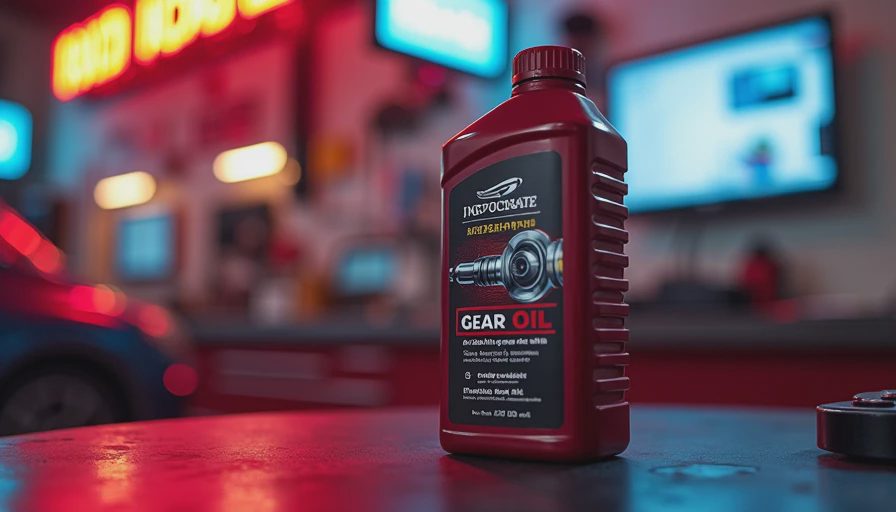
Choosing the best gear oil for differential service protects an expensive part of your drivetrain and can prevent a repair bill that reaches well into four figures. The differential transfers engine torque to the drive wheels while allowing the left and right wheels to turn at different speeds in a corner. Its gears operate under heavy pressure, so the correct lubricant is not a cosmetic upgrade; it is a working mechanical component.
Let's start with the basics and build from there. Gear oil is a lubricant formulated for gears, bearings, and axles. It is usually thicker than engine oil and contains extreme-pressure additives, which create a protective chemical film when gear teeth squeeze together. That film helps prevent scoring, pitting, heat damage, and metal-to-metal contact.
What differential oil actually does
A differential contains ring and pinion gears. The ring gear is the large driven gear attached to the differential case, while the pinion gear transfers power from the driveshaft. Many differentials also contain spider gears that let the axle shafts rotate at different speeds. In a limited-slip differential, clutch packs or special gear designs control how much wheel-speed difference is allowed.
The best gear oil for differential use must maintain a strong film between these moving surfaces across a wide temperature range. During highway driving, the housing can become hot. During towing, steep climbs, mud driving, or repeated launches, heat and gear pressure rise further. A fluid that is too thin can reduce protection, while one that is too thick can increase drag and make cold operation difficult.
Viscosity describes how readily a fluid flows. Common axle grades include 75W-90, 80W-90, and 75W-140. The first number describes cold-temperature behavior, and the second describes viscosity at operating temperature. Always treat the vehicle owner's manual or axle identification label as the starting point rather than choosing by bottle color or price.
Quick Quiz: Why does a differential need special gear oil instead of ordinary motor oil? The answer is that hypoid gears, which have offset tooth engagement, create sliding pressure that demands a specialized extreme-pressure additive package.

75W-90 versus 75W-140
For many passenger cars, crossovers, and light-duty pickups, 75W-90 is a practical starting point when the manufacturer specifies it. It flows well during cold starts and provides solid high-temperature protection. Products such as Valvoline Full Synthetic 75W-90, Mobil 1 Synthetic Gear Lubricant 75W-90, and Red Line 75W-90 are widely recognized examples, but the specification on the label matters more than the brand name.
75W-140 is thicker at operating temperature and is commonly specified for heavy-duty truck axles, towing applications, high-output vehicles, and some limited-slip differentials. A thicker oil is not automatically better. Substituting 75W-140 for a required 75W-90 can increase heat and churning losses, and it can affect lubrication passages designed for a different viscosity.
Synthetic gear oils generally offer better low-temperature flow and oxidation resistance than conventional oils. That can be useful in a vehicle driven through cold winters or under heavy loads. However, synthetic does not override the required viscosity, performance rating, or friction-modifier requirement. The best gear oil for differential protection is the one that matches all three.
System Diagram reference: Picture the flow path as engine, transmission, driveshaft, pinion gear, ring gear, axle shafts, and wheels. The differential oil stays in the final-drive housing, not in the engine or transmission. This simple separation prevents many fluid-selection mistakes.
Read the specification, not just the marketing
Look for the viscosity grade and the service classification specified by the vehicle maker. API GL-5 is common for modern hypoid differentials because it is designed for severe gear-contact pressure. API GL-4 and GL-5 are not interchangeable in every application, especially in manual transmissions that contain yellow-metal synchronizers. A bottle labeled for axles is not automatically suitable for a manual gearbox.
Limited-slip differentials deserve special attention. Some require a fluid labeled limited-slip compatible, while others need a separate friction modifier added to conventional gear oil. Friction modifier changes how clutch packs engage and can reduce chatter during slow, tight turns. If the manual calls for an additive, use the specified amount; adding extra is not a shortcut to better performance.
When shopping, compare the product data sheet if the label is unclear. Confirm viscosity, API classification, OEM approvals or compatibility statements, and whether the product already contains limited-slip friction modifier. For a typical axle, two quarts may be enough, but larger truck differentials can require more. A fluid pump, drain pan, replacement fill plug washer, and gloves usually add less than $25 to a do-it-yourself service.
A careful differential fluid change
Begin with the vehicle parked on a level surface and safely supported by rated jack stands if lifting is necessary. The fill plug should be loosened before draining. This step matters because draining the housing first is frustrating if a seized fill plug prevents refilling.
Place a drain pan beneath the differential, remove the drain plug if equipped, and inspect the fluid. Dark oil is expected, but a strong burnt smell, heavy metallic paste, or visible gear fragments suggests abnormal wear. A small amount of fine gray paste on a magnetic plug can be normal; large chips deserve professional diagnosis.
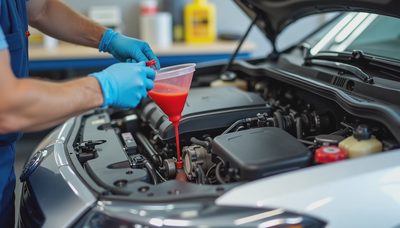
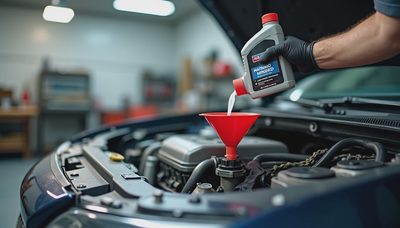
Clean the plug, replace its sealing washer when required, and reinstall it to the manufacturer’s torque specification. Pump in the correct oil until it reaches the bottom of the fill opening or the specified level. Do not overfill simply to gain protection. Excess fluid can aerate, leak past seals, or raise operating pressure. Dispose of used oil through an approved recycling location.
After a short drive, inspect the housing and plugs for leaks. A whining sound that changes with acceleration or deceleration, repeated clunking, or persistent cornering chatter is not fixed by pouring in a random lubricant. Those symptoms can involve bearings, backlash, worn clutch packs, or incorrect setup.
Common mistakes and a smart buying decision
One common mistake is assuming every four-wheel-drive vehicle uses the same fluid in every housing. The front differential, rear differential, and transfer case can require different products. Another is overlooking axle capacity after installing larger tires or using a trailer. Added load increases heat, but the correct response is still the manufacturer-approved viscosity and service strategy.
Do not use an oil marked only for motorcycles, chains, or engine applications unless its specifications explicitly match the axle requirement. Do not mix unknown fluids during an emergency top-off without checking compatibility. If the level is dangerously low, preventing continued operation is more important than defending a perfect brand match; top up with a compatible product, then service the housing properly.
For many street-driven vehicles, a quality synthetic 75W-90 is an excellent choice when the manual calls for that grade. A truck that regularly tows in hot weather may need synthetic 75W-140. Products from Valvoline, Mobil 1, Red Line, Royal Purple, and Amsoil can all be reasonable candidates when their label specifications match the vehicle. Price commonly ranges from about $12 to $30 per quart, with specialty products costing more.
Quick Quiz: What should you verify before buying the best gear oil for differential service? Verify viscosity, GL classification, limited-slip requirements, capacity, and the vehicle manufacturer's instructions. If you remember one concept from this post, make it this one: the correct specification beats the most expensive bottle on the shelf.
A careful selection and clean fluid change can keep gear teeth protected, reduce noise, and extend axle life. Read the manual, inspect the old oil, use the correct fill level, and treat unusual sounds as diagnostic clues rather than invitations to add thicker oil.

No letters yet — be the first to write.