An older engine can run beautifully for years, but it needs the right lubrication strategy. Choosing the best high mileage oil can reduce oil consumption, support aging seals, and help protect expensive internal parts. The wrong product, however, can create confusion if its viscosity does not match your owner's manual. Let's start with the basics and build from there.
High mileage oil is motor oil formulated for vehicles that have accumulated roughly 75,000 miles or more. The mileage number is a useful guide, not a mandatory switch point. A well-maintained car with 60,000 miles may benefit from it, while a neglected vehicle with 140,000 miles may need leak diagnosis before any oil can solve the problem.
What High Mileage Oil Actually Does
Motor oil performs several jobs at once. It reduces friction between moving metal parts, carries heat away from components, suspends contaminants, and helps prevent corrosion. Viscosity describes how easily the oil flows at different temperatures. In a 5W-30 label, the 5W describes cold-flow behavior and the 30 describes thickness at operating temperature.
The best high mileage oil usually includes seal conditioners. These additives help aging rubber seals remain flexible, which can reduce minor seepage around areas such as the valve cover, crankshaft, or camshaft. High mileage formulas also commonly include detergents, dispersants, and anti-wear additives. Detergents help clean deposits, while dispersants keep suspended particles from clumping together until the oil filter captures them.
These additives do not rebuild a damaged seal or repair a cracked gasket. A few drops on a driveway might respond well to a high mileage formulation, but a steady drip, blue exhaust smoke, or a rapidly falling dipstick level requires mechanical inspection. Oil that disappears through worn piston rings or a turbocharger problem needs a diagnosis, not just a different bottle.
System Diagram reference: Picture oil leaving the pan, passing through the pickup tube and filter, entering the engine's galleries, and reaching bearings, camshafts, and timing components. That circulation path explains why the correct viscosity and a clean filter matter together.
Match the Oil to the Engine
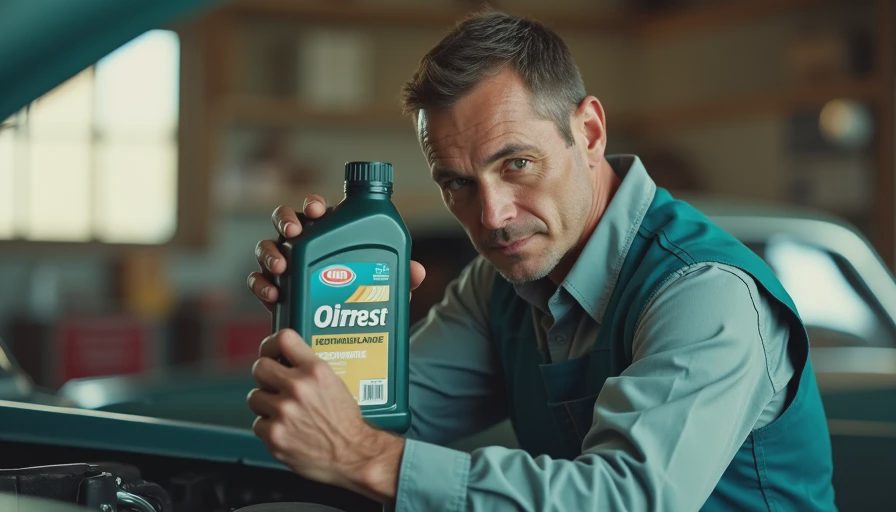
Start with the owner's manual, not the mileage printed on the oil jug. If the manufacturer specifies 0W-20, using 10W-40 because the car is old can slow cold circulation and affect systems designed around low-viscosity oil. Some engines require a particular performance standard because of turbocharging, variable valve timing, or emissions equipment.
Read three parts of the label. First, confirm the viscosity grade, such as 0W-20, 5W-30, or 5W-40. Second, look for the current API service category or another certification listed in the manual. API is the American Petroleum Institute, which establishes performance standards for many engine oils. Third, check whether the bottle says full synthetic, synthetic blend, or conventional.
Full synthetic oil is engineered from more uniform base molecules and generally performs well during cold starts, high temperatures, and extended service. Synthetic blend combines synthetic and conventional components. Conventional oil can still be appropriate when the manual allows it and the owner follows a sensible change interval.
For example, a 2014 Toyota Camry that specifies 0W-20 should generally stay with that grade even after passing 100,000 miles. A 2008 Ford F-150 may call for a different viscosity depending on its engine and climate. The best high mileage oil is the one that satisfies the vehicle's specification while offering an appropriate high-mileage additive package.
Quick Quiz: If two oils both say high mileage but one has the wrong viscosity for your engine, which label matters first? The owner's specified viscosity and performance standard come first; the high mileage claim comes second.
Comparing Popular Options on the Shelf
Valvoline High Mileage, Mobil 1 High Mileage, Pennzoil High Mileage, Castrol GTX High Mileage, and Quaker State High Mileage are familiar choices at major auto parts stores. Each line is available in multiple viscosities, so the brand name alone does not identify the right product. Compare the complete label rather than grabbing the most expensive container.
A typical five-quart jug may cost approximately $25 to $45 for conventional or synthetic-blend high mileage oil and about $35 to $60 for full synthetic, depending on promotions and viscosity. A name-brand filter often adds $7 to $15. That is modest compared with the potential cost of repairing an oil-starved engine, but price is not a substitute for specification matching.
Mobil 1 and Pennzoil often emphasize full synthetic performance. Valvoline and Castrol offer broad high-mileage lineups in conventional, blend, and synthetic versions. Quaker State can be a practical value option when its viscosity and certification match the manual. These are useful starting points, not automatic winners for every car.
If the engine already uses oil between changes, record the level at every fuel stop for a month. A vehicle losing one quart between 3,000-mile changes behaves differently from one losing a quart every 500 miles. That measurement tells you whether an oil change is maintenance or a temporary response to a developing fault.
A Careful Oil Change Procedure
Park on level ground and let the engine cool enough to avoid burns while keeping the oil warm enough to drain efficiently. Gather the specified oil, a compatible filter, a drain-pan large enough for the full capacity, gloves, a funnel, and a safe way to support the vehicle. Never rely on a jack alone; use rated jack stands on solid ground.
Remove the drain plug and allow the old oil to drain fully. Inspect the plug and its gasket. Replace a crushed washer when required, then install the new filter according to its instructions. Many spin-on filters need a thin coat of clean oil on the gasket, but do not over-tighten it. Add most of the specified capacity, wait several minutes, and verify the dipstick on level ground.
Start the engine briefly, shut it off, and inspect underneath for leaks. Wait again before taking the final dipstick reading. Overfilling can cause foaming and crankshaft contact with the oil, so the level should remain between the marked lines. Write down the date, mileage, viscosity, and product used. This simple record makes future decisions much easier.
When High Mileage Oil Is Not Enough
Oil consumption, low oil pressure, and leaks have different causes. A low-pressure warning light is urgent because it can indicate inadequate oil pressure, not merely a low level. Shut the engine off as soon as it is safe and investigate before driving farther.
A burning-oil smell may come from oil leaking onto a hot exhaust component. Wetness around the valve cover suggests one area; oil under the transmission bellhousing can point to a rear main seal, although fluid paths can mislead you. Blue smoke during acceleration can indicate oil entering combustion chambers. A compression test, leak-down test, or professional inspection may be appropriate.
The best high mileage oil can support an aging engine, but it cannot compensate for skipped maintenance. Use the correct filter, inspect for leaks, and follow the manual's service interval. Severe service, frequent short trips, towing, dusty roads, and extreme temperatures can justify a shorter interval than normal highway driving.
System Diagram reference: Trace the cause-and-effect chain from low oil level to reduced pickup flow, lower pressure, bearing damage, and eventually an engine repair bill. Checking the dipstick is a small task that interrupts that chain early.
Quick Quiz: What should you do if the oil-pressure warning light appears while driving? Stop safely, turn off the engine, check the oil level only after conditions are safe, and arrange diagnosis if the warning returns.
A Simple Buying Checklist
Before buying the best high mileage oil for your vehicle, confirm the manual's viscosity, API category, and total fill capacity. Decide whether full synthetic is worth its cost based on cold weather, towing, turbocharging, and your driving pattern. Choose a reputable filter, inspect the old oil for unusual metal or coolant contamination, and record the service.
If you remember one concept from this post, make it this one: high mileage oil is a supporting tool, not a repair product. The right formula can help an older engine manage heat, deposits, and minor seal aging, while accurate diagnosis protects you from spending money on a bottle when the real problem is mechanical. Compare the label, measure your oil use, and choose with evidence rather than mileage anxiety.


No letters yet — be the first to write.