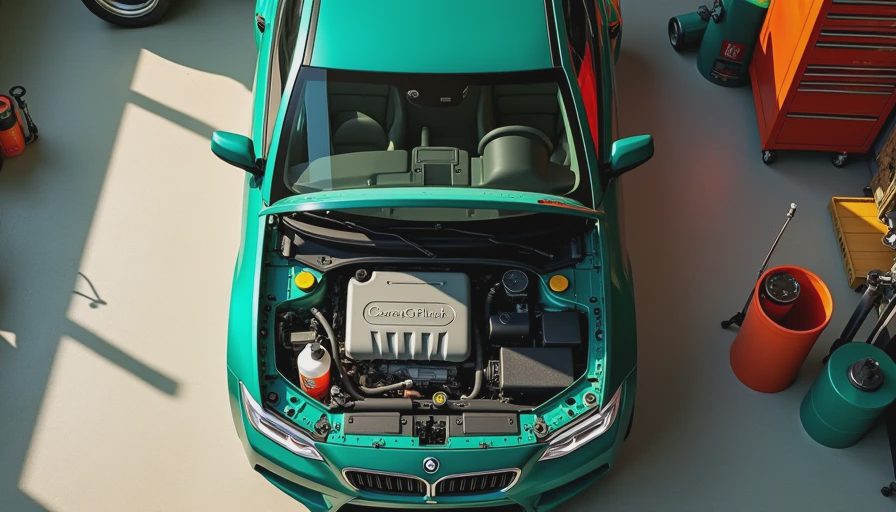
Let's start with the basics and build from there. An engine coolant flush is the process of draining the old coolant from your engine's cooling system, cleaning the system, and refilling it with fresh coolant. It's one of those maintenance tasks that a lot of drivers overlook until something goes wrong. But if you understand what's happening inside your engine, you'll see why a timely engine coolant flush can save you hundreds of dollars in repairs.
What Does Coolant Actually Do?
Coolant—also called antifreeze—is a mixture of ethylene glycol (or propylene glycol) and water. It doesn't just keep your engine from freezing in winter; it also raises the boiling point so your engine doesn't overheat in summer. More importantly, coolant contains corrosion inhibitors that protect your radiator, water pump, and heater core from rust and scale buildup. Over time, those inhibitors break down. That's why an engine coolant flush isn't just a "drain and fill"—it's a chemical cleaning that restores the system's ability to protect itself.
Why Can't I Just Top Off the Coolant?
Topping off might get you to the next oil change, but it doesn't remove the accumulated debris or replenish the depleted additives. Old coolant turns acidic as it ages, and that acidic sludge can eat through gaskets and seals. I've seen plenty of water pump failures and heater core clogs that trace back to years of neglected coolant changes. A proper engine coolant flush removes that acidic fluid and the particles that have settled in the system.
What Happens During an Engine Coolant Flush?
At the shop, a flush machine circulates a cleaning solution through your cooling system, then purges it with water before filling with new coolant. At home, you can do a simplified version—but the principle is the same: you want to replace as much old coolant as possible, not just what drains from the radiator petcock. About 40% of the coolant stays in the engine block and heater core if you only drain the radiator. That's why a full engine coolant flush involves removing the thermostat or using a flush kit to back-flush the system.
When Should You Do an Engine Coolant Flush?
Check your owner's manual, but a general rule is every 30,000 miles or 3 to 5 years. If you see rust-colored or milky coolant, that's a red flag. Also, if your coolant level keeps dropping and you can't find a leak, a flush might reveal a failing head gasket. Quick Quiz: What's the most common sign that your coolant needs changing? Answer: If the fluid looks brown or has particles floating in it.
How to Do an Engine Coolant Flush Yourself
- **Safety first:** Engine must be cold. Coolant is toxic—wear gloves and eye protection. Have a drain pan, new coolant (check your manual for the right type—OAT, HOAT, or IAT), and distilled water.
- **Drain the radiator:** Open the radiator drain valve (usually at the bottom) and let the old coolant drain. Dispose of it at a recycling center.
- **Remove the thermostat (optional but recommended):** This allows water to flow freely through the block. If you leave it in, the thermostat may stay closed and block the flush.
- **Flush with distilled water:** Close the drain, fill the system with distilled water, run the engine with the heater on until it reaches operating temperature, then drain again. Repeat until the water runs clear.
- **Refill with 50/50 mixture:** Use premixed coolant or mix concentrate with distilled water. Add the correct amount, bleed any air pockets, and check for leaks.
System diagram reference: See our cooling system diagram in the resources section.
How Much Does an Engine Coolant Flush Cost?
A shop will charge $100 to $200 depending on your vehicle. Doing it yourself costs about $20 to $40 for coolant and a flush kit if needed. That's a significant saving, and the job takes about an hour once you've done it a couple times. Just make sure you dispose of the old coolant properly—it's hazardous waste.
Quick Quiz
- Why can't you just top off coolant indefinitely?
- What is the proper coolant-to-water ratio?
- How often should you flush the system?
Answers: 1. Additives break down, and coolant becomes acidic. 2. 50/50. 3. Every 30,000 miles or 3–5 years, per manufacturer recommendation.
If you remember one concept from this post, make it this one: An engine coolant flush isn't just about cold weather—it's about preserving your cooling system for the long haul. Regular flushes prevent expensive repairs and keep your engine running at the right temperature.
Frequently Asked Questions
**Q: Can I use water instead of coolant?**
A: Only in an emergency. Water freezes at 32°F and boils at 212°F, while a 50/50 mix protects from -34°F to 265°F. Plus, water lacks corrosion inhibitors.
**Q: Is it okay to mix different colors of coolant?**
A: Usually not. Mixing incompatible types (e.g., green IAT with orange Dex-Cool) can cause gel formation and clog your system. Stick to what your manufacturer specifies.
**Q: Do I need to flush if I'm just replacing a radiator?**
A: Yes. Even a new radiator won't fix old, acidic coolant. Flush the entire system to remove debris from the old radiator.
**Q: How do I know if the flush worked?**
A: After refilling, run the engine with the heater on. The temperature gauge should stay steady, and the heater should blow hot. Check the coolant color—it should be bright (green, orange, or pink depending on type) and clear.
**Q: Can a flush fix a leaking head gasket?**
A: No. A flush won't seal a leak. If you have white smoke or milky oil, you need a mechanic.



No letters yet — be the first to write.