Let's start with the basics and build from there. Engine oil is the barrier between metal-on-metal contact and thousands of dollars in repair bills. Low oil is a common cause of premature engine failure, and it is easy to prevent. Learning how to check oil level in car takes five minutes, needs no special tools, and works in any parking lot. An engine replacement costs several thousand dollars, while a quart of oil costs under ten. By the end, you will know exactly what to do.
What You Need Before You Start
Gather a clean paper towel or shop rag, a pair of disposable gloves, and a funnel if you plan to add oil. You also need your owner's manual, because it tells you the exact oil type and viscosity for your engine. Viscosity is the thickness of the oil, measured by numbers like 5W-30 or 0W-20. Using the wrong viscosity can hurt fuel economy and engine protection.
Now decide whether to check the oil on a cold or warm engine. The oil needs time to drain back into the oil pan for an accurate reading. If you just shut off a hot engine, oil is still up in the valve train, so the dipstick will read low. For this reason, most manufacturers recommend checking a cold engine, ideally after the car has sat overnight. Some engines, however, are designed to be checked warm. The owner's manual will tell you definitively. When in doubt, park on level ground and wait at least 10 minutes after a drive.
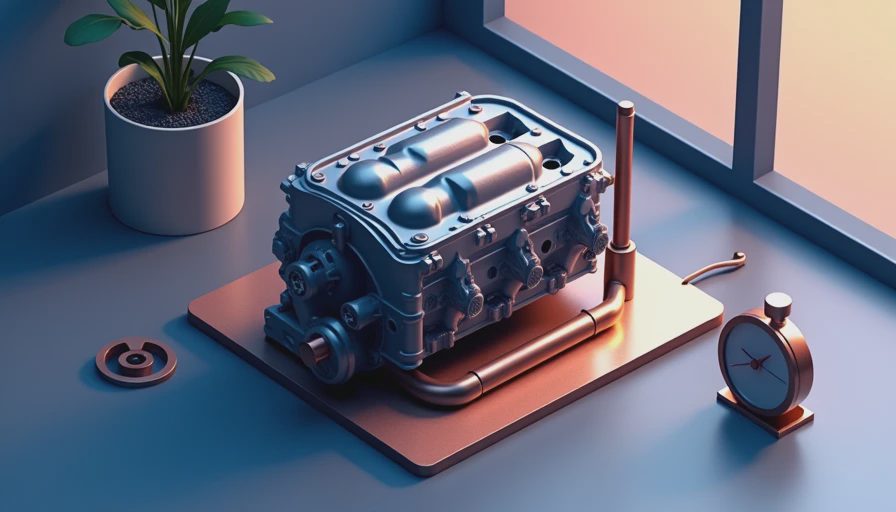
How to Check Oil Level in Car: Step by Step
First, make sure the car is parked on level ground. If the car is tilted, the oil in the pan shifts, and the dipstick will give you a false reading. A completely flat driveway is fine, but even a slight incline can change the reading by a quart.
- Open the hood using the release under the dashboard. On most cars, a secondary latch near the front needs to be lifted.
- Locate the dipstick. It typically has a yellow or orange T-shaped handle and is labeled "Engine Oil." If you cannot find it, the owner's manual has a diagram.
- Pull the dipstick out all the way, wipe it clean with the paper towel, push it back in fully, wait two seconds, then pull it out again.
- Hold the dipstick horizontally at eye level. Look at both sides of the tip. There are two marks: a lower "add" mark and an upper "full" mark, or a crosshatched zone.
- Read the oil level. If the oil line falls between the two marks, you are in the safe zone. If it is at or below the lower mark, you need to add oil. If it is above the upper mark, you have too much oil, which can also cause damage.
This entire process is how to check oil level in car correctly. The dipstick never lies, but you have to wipe and reinsert it each time for an accurate sample. Skipping the wipe step is the most common mistake new students make.

Cold vs. Hot: What the Owner's Manual Says
The cold-versus-hot debate confuses many owners. When the engine is cold, all the oil sits in the pan, giving you the truest reading. When it is hot, some oil is still circulating, so the reading looks lower. If you check a hot engine and the oil sits at the middle mark, you might panic and overfill it.
Overfilling is worse than underfilling in many engines. Excess oil gets whipped into foam, which does not lubricate well. If the oil is at the upper mark on a hot engine, do not add oil. If it is at the lower mark, wait for it to cool and recheck, or add a half-quart and recheck.
Reading the Oil Condition
While the dipstick is out, look at the oil itself. Clean oil is golden to amber. Dark oil is normal with age. Milky oil signals coolant in the oil, often from a head gasket failure. Metal particles mean internal bearing wear. A gasoline smell suggests a leaking injector. None are DIY fixes, but catching them early saves your engine.
How Often Should You Check?
Check monthly and before long trips. Older cars over 100,000 miles may burn a quart between changes, so check every two weeks. Turbocharged engines sometimes use a quart every 5,000 to 7,000 miles. If you add a quart every 1,000 miles, have a mechanic look for leaks.
Quick Quiz
Let's test what you learned.
Q1: Why is level ground important? A tilted car shifts the oil in the pan, giving a false dipstick reading.
Q2: What does milky oil indicate? Coolant is mixing with engine oil, likely from a failed head gasket.
Q3: What should you do if the oil is above the full mark? Do not drive. Excess oil can cause aeration and seal leaks. Have the excess removed.
If you answered all three, you have a solid handle on how to check oil level in car basics. If you missed one, re-read the steps and try again.
When to Call a Mechanic
If the oil pressure light comes on while driving, shut off the engine immediately. It signals dangerously low pressure, not just a low level. Continuing to drive can destroy the engine. Also call a mechanic if the oil level drops persistently or the "check engine" light appears with oil issues.
A typical oil consumption test costs around $100 to $200, but that is a small price compared to an engine replacement.
The final takeaway: The dipstick is your engine's reporting system. Learning to read it takes minutes and costs nothing. Consistent oil checks are the cheapest insurance your engine will ever have.


No letters yet — be the first to write.