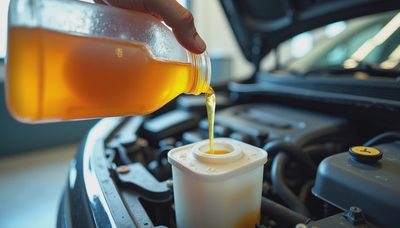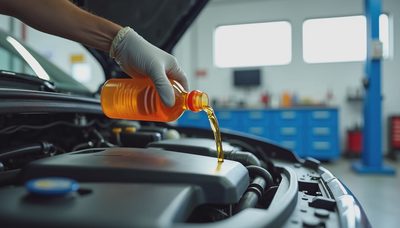
Proper fluid management sits at the core of keeping your motorcycle running at its best. While your background with car maintenance and automotive oils may be helpful, it does not directly apply to motorcycle upkeep. There are numerous subtle distinctions that many riders are completely unaware of.
Generally speaking, the essential fluids for a motorcycle are:
Here is where things get complicated. In certain motorcycles, a single oil serves the clutch, transmission, and fork simultaneously. Put differently, the three most critical motorcycle maintenance areas you should always keep in mind are:
The following is a thorough guide explaining why these three areas of motorcycle maintenance deserve serious attention.
Motorcycle engine oil is the fluid that keeps your bike functional and running smoothly. Motorcycle engine types are defined by their cylinder count, with the most common configurations ranging from 1 to 6 cylinders. A widespread misconception in this area is the belief that stroke count and cylinder count refer to the same thing. In reality, the number of strokes simply describes the engine's work cycle and has no connection to cylinders. A two-stroke engine completes a full power cycle in just two strokes — nothing more. Grasping this concept is essential before you start exploring questions like what is 2-stroke oil. You might be wondering why standard automotive oil cannot simply be poured into a motorcycle engine and expected to perform the same way. The truth is that motorcycle engine oil is engineered to deliver a specific set of benefits over oils designed for four-wheeled vehicles. Some of these advantages include:
Below is a concise overview of each of these factors.
Motorcycle engines generally run at significantly higher speeds than automobile engines. This places greater mechanical stress on engine components, and the protective layer provided by oil becomes even more critical. The load-carrying capacity of motorcycle oil greatly exceeds that of standard automotive oil, which has a substantial impact given the difference in operational speeds. The type of engine also plays a significant role, which is why selecting a quality two-cycle oil can make a tremendous difference.
Heat within the engine directly influences how quickly oil undergoes thermal degradation. Since motorcycle engines operate at considerably higher speeds, temperatures climb much more rapidly than in automobiles. As a result, automotive oil would have a far shorter effective lifespan than oil specifically formulated for motorcycles. Beyond keeping performance optimal, this also lowers your overall oil replacement expenses and makes maintenance intervals less frequent.
While automobile engines typically generate more total horsepower overall, motorcycle engines produce twice the horsepower per cubic inch of displacement. This is largely attributable to the significantly lower total weight of the motorcycle relative to an automobile. This further subjects motorcycle engines to increased mechanical stress and even greater operating temperatures.
Automobiles rely primarily on water-based cooling systems. Motorcycles, however, have no space to accommodate such a system and instead use either air cooling or a combined air/oil cooling system to manage engine temperature. As a consequence, temperature fluctuations are far more extreme and occur in much quicker succession. Elevated temperatures lead to higher oxidation rates, which thin out the oil. Standard automotive oil simply could not endure these conditions for any extended period. When subjected to such an environment, the oil's load-carrying capacity would deteriorate dramatically. The type of fuel a motorcycle uses also plays a role in oil selection. This is precisely why knowing your specific vehicle is so vital to effective maintenance. For example, 2 stroke oil in diesel applications is an entirely different product from its gasoline-engine equivalent.
An automobile is a large piece of machinery with separate, independent systems, each relying on its own dedicated type of oil. When people discuss automobile oil, engine oil is almost always the topic — yet transmission oil, clutch oil, fork oil, and others all have distinct roles. Given their differing functions, these oil types can also vary considerably in their physical properties. In most motorcycles, there is simply no room for this kind of compartmentalization. All of these functions must instead be handled by a single transmission oil. In many motorcycles, the transmission and the frictional clutch share the same oil, which is why the versatility of the lubrication system is so critically important.
By their very nature, motorcycles are used less regularly than automobiles. This is partly because weather and road conditions are far less forgiving for motorcycle riders than they are for drivers of cars. Some owners ride only during certain seasons. Motorcycle oil is formulated to tolerate these extended periods of inactivity. Through the use of special additives, it is engineered to resist both rust and acid corrosion.
Riders who want to further maximize the performance of their motorcycle engine oil need to understand how to select the right additive. Before doing so, they must determine whether they require 2-stroke engine oil or a different type. Diesel engines call for an entirely different range of preferred additives, and understanding these distinctions will help you extract the best possible performance from your engine.
The essential takeaway here is that motorcycles and automobiles differ far more than most people initially assume. Their engines are fundamentally different and operate under distinct conditions. The way oil is used within each differs considerably, and even the frequency and manner of vehicle use influence what properties the oil needs to have.
Selecting the correct motorcycle coolant is also considerably more challenging than most riders expect. As noted earlier, the temperature inside a motorcycle engine rises and falls far more rapidly than in larger vehicles. This makes vehicles lacking proper protection against temperature fluctuations significantly more susceptible to corrosion and general degradation. Products such as antifreeze and coolant can dramatically change this outcome.
To truly appreciate why a proper cooling system is so vital on a motorcycle, it helps to look at the numbers. Temperatures inside a motorcycle's combustion chamber can easily reach 1,500°F (816°C). Bear in mind that these temperatures are influenced by conditions such as:
These figures are striking, but it is equally important to remember that metal expands when heated. Within a motorcycle's mechanical system, unchecked expansion of engine pistons would ultimately result in catastrophic engine failure. This is especially relevant for ATVs and dirt bikes, which operate at significantly higher performance levels. So, even though ATVs share many characteristics with motorcycles, it is safer to use a dedicated ATV coolant rather than searching for a generic alternative.
It is also worth understanding that motorcycle coolant actively combats corrosion. The mechanism is straightforward: various additives in the coolant prevent dissolved minerals and salts from reacting with metal surfaces. Over time, however, the concentration of these inhibitors decreases. This is why monitoring coolant levels and condition on a regular basis is necessary, and why replacing old coolant with fresh fluid is important whenever the time comes. Put simply, high-quality motorcycle coolant can significantly extend the service life of your motorcycle and substantially lower the chances of corrosion taking hold. Additionally, most power sport coolants come pre-mixed 50/50 with highly purified water. This further helps limit the presence of contaminants, slowing the rate of corrosion and reducing the damage it causes.
Motorcycle coolant serves to prevent heat buildup within the engine from destroying the vehicle, while simultaneously working to stop internal corrosion from compromising the structural integrity of the machine. For these reasons, staying on top of coolant levels and ensuring timely refills is absolutely essential.
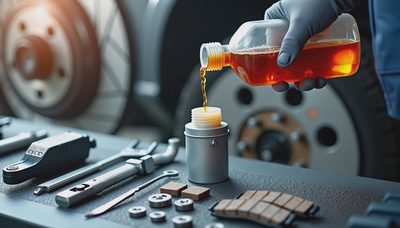
Brake fluid is the medium responsible for transferring the force applied at the brake lever — the one you operate — to the brake pads that actually bring the vehicle to a stop. Without brake fluid, pressing the brake lever would produce no response at all. Given everything discussed so far, it should come as no surprise that motorcycle brake fluid differs in certain respects from automotive brake fluid.
Brake fluid comes in four distinct grades. These are:
In terms of chemical composition, DOT 3, DOT 4, and DOT 5.1 are glycol-based, while DOT 5 is silicone-based. This distinction matters because glycol-based fluids are compatible with one another and can be mixed. The main source of confusion is that DOT 5 stands apart from the others without that difference being immediately obvious from its number alone. There are two reliable methods for identifying which grade your motorcycle requires. The first is to research online or consult the owner's manual before or immediately after acquiring the vehicle. The second is to inspect the master cylinder cover, where the answer is effectively printed out for you.
Why does the glycol versus silicone distinction matter so much? Because glycol is hydrophilic, whereas silicone is hydrophobic. In practical terms, glycol-based fluid draws in moisture from the surrounding air and bonds it to the compound, whereas DOT 5 does not. Since brake fluid continuously heats up and cools down, some water will inevitably find its way into the mixture — but the amount that accumulates makes all the difference.
Another significant distinction lies in the boiling point. A higher boiling point is preferable, as it allows you to push the machine harder without compromising braking performance. It is worth noting that the Department of Transportation sets minimum standards for both the dry and wet boiling points of brake fluids in order to maintain adequate safety levels. Dry refers to the state in which brake fluid contains no moisture whatsoever. The minimum dry boiling point thresholds follow a logical pattern: DOT 3 has the lowest, while DOT 5.1 has the highest, making it the most heat-resistant of the group. It is also important to understand that water content directly affects the boiling point — the more water present, the lower the boiling point drops. This degradation can actually be detected through the brake lever itself, which will feel spongy when pressure is applied.
Taking the time to understand your motorcycle's specific requirements and carefully reading the instructions will ensure you make no errors when it comes time to change the brake fluid.
As is evident, while the fundamental principles governing fluid maintenance are broadly similar between motorcycles and cars, there are meaningful differences that simply cannot be overlooked.
A motorcycle engine, for instance, is remarkably powerful — both in absolute terms and relative to the size and weight of the vehicle. This is why its internal processes are more intense and why even small details carry significant weight. Understanding the type of motorcycle you own and the kind of engine it uses is therefore fundamental to proper maintenance. If your engine operates on a two-stroke cycle, you need two-stroke engine oil — it is that straightforward. A solid grasp of these concepts minimizes the risk of making a serious mistake when purchasing oil.
The same logic applies equally to coolant and brake fluids.
What you should always bear in mind is that purchasing fluids specifically formulated for your vehicle is the surest path to correct maintenance. To get there, do your research, consult a professional when needed, and never skip reading the owner's manual.