Choosing the best car antifreeze is not simply a matter of picking the brightest bottle on a store shelf. The wrong coolant can damage seals, reduce corrosion protection, or create a costly cooling-system problem. The right product matches your vehicle's specifications, protects the engine at local temperatures, and works with the metals and materials inside the system. Let's start with the basics and build from there.
What antifreeze actually does
Antifreeze is the concentrated chemical added to water to create engine coolant. Coolant carries heat from the engine to the radiator, where airflow removes that heat. It also lowers the freezing point, raises the boiling point, and contains additives that slow rust, scale, and corrosion.
A common mixture is 50 percent antifreeze and 50 percent distilled water. This ratio offers useful freeze protection in much of the United States, including Atlanta winters, while still transferring heat effectively. Premixed coolant already contains water, so you should not add another full measure of water. Concentrate requires mixing unless your vehicle manual specifies otherwise.
Most modern coolants fall into three chemistry families. IAT, or inorganic additive technology, is the older formula often associated with conventional green coolant. OAT, or organic acid technology, uses long-life corrosion inhibitors. HOAT, or hybrid organic acid technology, combines organic acids with other inhibitors and is common in many European and Asian applications. Color can provide a clue, but it is not a reliable identification system. Blue, orange, pink, yellow, and green formulas can all represent different specifications.
The best car antifreeze is therefore the one approved for your car, not automatically the one advertised as universal.
How to identify the best car antifreeze for your vehicle
Start with the owner's manual, then look for the coolant specification printed on the reservoir cap, service label, or manufacturer information. Some vehicles call for a brand-specific standard, while others identify a performance specification such as a GM Dex-Cool-type requirement or a European approval. A product that says "all makes, all models" can be convenient, but its claims still need to match your vehicle's requirements.
Before buying, record four details: the vehicle year, make, model, and engine. A 2016 Ford Escape, for example, may require a different coolant specification from a 2016 Ford F-150. Engine swaps, previous repairs, and aftermarket cooling components make the manual more trustworthy than memory.
Brands such as Zerex, Peak, Valvoline, Prestone, and OEM-branded coolant offer products organized around vehicle applications. That does not mean every product from one brand is correct for every car. Read the back label and compare the listed specification. If the label only says "universal" without clearly describing compatibility, I would choose a more specific product.
If your coolant history is unknown, do not casually top off with a different chemistry. A complete drain and refill, or a professional flush, is safer than creating a mixed formula with uncertain additive performance. This is one reason the best car antifreeze decision begins with identification rather than price.
Concentrate, premix, and the correct mixture
Concentrated antifreeze usually costs less per finished gallon, but it requires accurate dilution. Use distilled or deionized water because tap water can contain minerals that contribute to deposits. Measure the mixture in a clean container before adding it to the vehicle. Do not pour concentrate into an empty system and assume water already inside will create the correct ratio; trapped fluid can make the final concentration unpredictable.
Premixed 50/50 coolant is easier for routine top-offs. It is especially useful if you are carrying an emergency bottle in the trunk because there is no need to find clean water beside the road. In very cold climates, a manufacturer may specify a stronger mixture, but increasing antifreeze indefinitely is not better. Pure antifreeze transfers heat less efficiently and can become overly viscous.
Check the owner's manual for the correct capacity. A typical passenger car may hold 1.5 to 3 gallons, while a large truck or diesel can require more. Buy enough to complete the job without switching formulas halfway through. The best car antifreeze performs properly only when the concentration is correct.
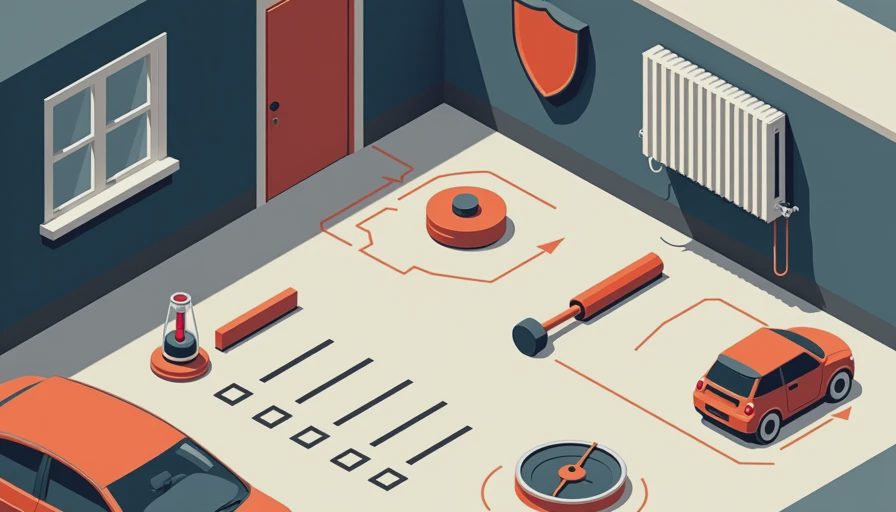
Safe replacement and inspection steps
Never remove a radiator cap or pressure cap on a hot engine. Hot coolant can cause severe burns. Allow the vehicle to cool completely, park on a level surface, and use gloves and eye protection. Keep children and pets away from the work area.
Inspect the reservoir level between the minimum and maximum marks. If it is low, look for wet areas around hose connections, the radiator, water pump, thermostat housing, and heater hoses. A sweet smell, white or colored residue, repeated low levels, or an overheating warning deserves diagnosis rather than repeated top-offs.
For a full change, place a drain pan beneath the vehicle, open the drain point if equipped, and collect the old coolant. Used coolant is hazardous and should be delivered to an approved recycling or waste facility. After draining, refill according to the service procedure. Some cooling systems require bleeding air through a screw or a specific warm-up cycle. Air pockets can prevent circulation and cause overheating even when the reservoir appears full.
After the first drive, let the engine cool and recheck the level. Look for leaks and confirm that the cabin heater produces steady warm air. A temperature gauge that rises above its normal position is a reason to stop driving and investigate.
Testing coolant and avoiding common mistakes
A refractometer or coolant tester can estimate freeze protection, but testing does not prove that the additives are still healthy. A coolant can show an acceptable freezing point while its corrosion inhibitors are depleted. Age, mileage, and the manufacturer's service interval still matter.
Avoid topping off with plain water as a permanent solution. Water can help in an emergency, but it changes the mixture and reduces freeze and boil protection. Also avoid mixing coolant colors based on appearance, using household water for every refill, or adding stop-leak products without understanding the consequences. Stop-leak material can restrict small passages in radiators and heater cores.
A complete flush is not always required at every service interval. If the coolant is clean, compatible, and at the correct level, a scheduled drain and refill may be enough. If it is rusty, oily, sludgy, or visibly contaminated, the system needs a closer inspection. Oil in coolant can indicate a failed gasket or oil cooler, while coolant in engine oil can produce a tan, creamy deposit and serious lubrication damage.
Quick Quiz and final buying checklist
Quick Quiz: Why is coolant color not enough to identify a formula? Because color is not a universal industry standard. The same color can appear in different chemistries, and two different colors can meet related specifications. The label and vehicle requirement are more reliable.
Before purchasing the best car antifreeze, complete this checklist:
- Read the owner's manual and identify the required specification.
- Confirm the vehicle year, engine, and cooling-system capacity.
- Choose concentrate or premix based on your ability to measure accurately.
- Use distilled water with concentrate unless the product says it is already premixed.
- Check for leaks before assuming low coolant is normal.
- Save the receipt and write the product name and service date in your maintenance log.
System Diagram reference: Trace the cooling path from the engine water jacket to the thermostat, radiator, water pump, and expansion tank. Seeing that loop explains why the best car antifreeze must circulate freely and protect every component, not just prevent freezing.
If you remember one concept from this post, make it this one: compatibility comes before color, marketing, or bargain pricing. Match the specification, use the correct mixture, and treat a falling coolant level as a diagnostic clue. That method will serve you better than choosing a bottle based only on the words best car antifreeze on its front label.


No letters yet — be the first to write.