The wrong coolant can leave expensive cooling-system parts without the protection they need. G12 coolant is a Volkswagen Group coolant designation associated with a particular generation of antifreeze chemistry, but it is not a universal label for every pink fluid on the shelf. To choose a safe replacement, match the specification required by your vehicle to the specification stated on the container. Let's start with the basics and build from there.
What coolant actually does
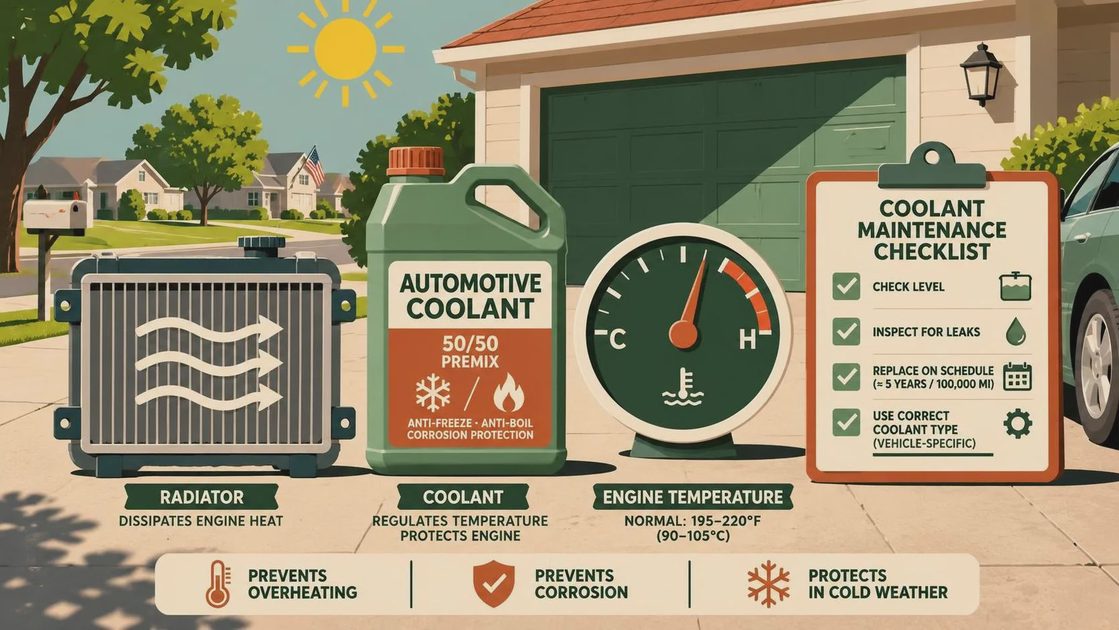
An engine turns some fuel energy into motion and a great deal into heat. Coolant carries heat away from the engine to the radiator, where air flowing across the radiator removes it. The fluid also helps protect against freezing, boiling, corrosion and deposits inside the system.
Most automotive coolant combines water, glycol and additives. Glycol is the antifreeze ingredient that changes the fluid's freezing and boiling behavior. The additives, often called inhibitors, help protect metals and other components from chemical damage. Water carries heat well, but water alone does not provide the full protection the system needs.
System Diagram reference: Picture a loop from the engine to the upper radiator hose, through the radiator, and back to the engine through the lower hose. A pump moves coolant around the system; a thermostat, which is a temperature-controlled valve, regulates flow through the radiator. The expansion tank provides space for fluid to expand as it warms.
G12 coolant is commonly associated with organic acid technology, or OAT. That term describes a family of corrosion-inhibitor chemistry, not a guarantee that every OAT product is interchangeable. Two fluids can use similar chemistry and still have different manufacturer specifications.
How to identify the correct specification
Start with the owner's manual or the manufacturer's service information for your exact vehicle. Look for a VW coolant specification, often written as a code beginning with TL 774, along with any approved replacement specified for the car. Then read the product label or manufacturer's technical information for that same code or an explicitly stated approval.
A distinction matters here: a product claiming to be suitable for a specification is not necessarily the same thing as a product carrying a manufacturer's formal approval. When the vehicle instructions require an approved fluid, look for that approval rather than relying solely on a broad compatibility claim.
G12 coolant belongs to a family of VW Group designations that also includes names such as G12+, G12++ and G13. The similar names do not make them identical. A later designation may be specified as a replacement for an earlier one in a particular application, but do not assume compatibility runs in both directions. Verify the replacement guidance for your vehicle and the fluid you plan to use.
Pink, purple and red dyes are useful visual clues, not proof of chemistry. Dye color can vary by product and change with age or contamination. If the tank contains an unidentified pink liquid, its color alone cannot tell you whether it is suitable or whether it was mixed with something else.
Topping off G12 coolant safely
Work only when the engine and cooling system are completely cool. A hot cooling system is pressurized, meaning the fluid is held under pressure; removing the cap can release scalding liquid and steam. Park on level ground and locate the translucent expansion tank using the owner's manual. Check the level against the cold minimum and maximum marks.
If the level is below the specified range, use a coolant that meets the vehicle's requirement. Check whether the container is premixed or concentrate. Premix is ready to use; concentrate must be diluted with the specified water before use. A 50/50 mixture of concentrate and suitable water is common, but follow the vehicle and product instructions for your climate and system. Do not dilute premix again.
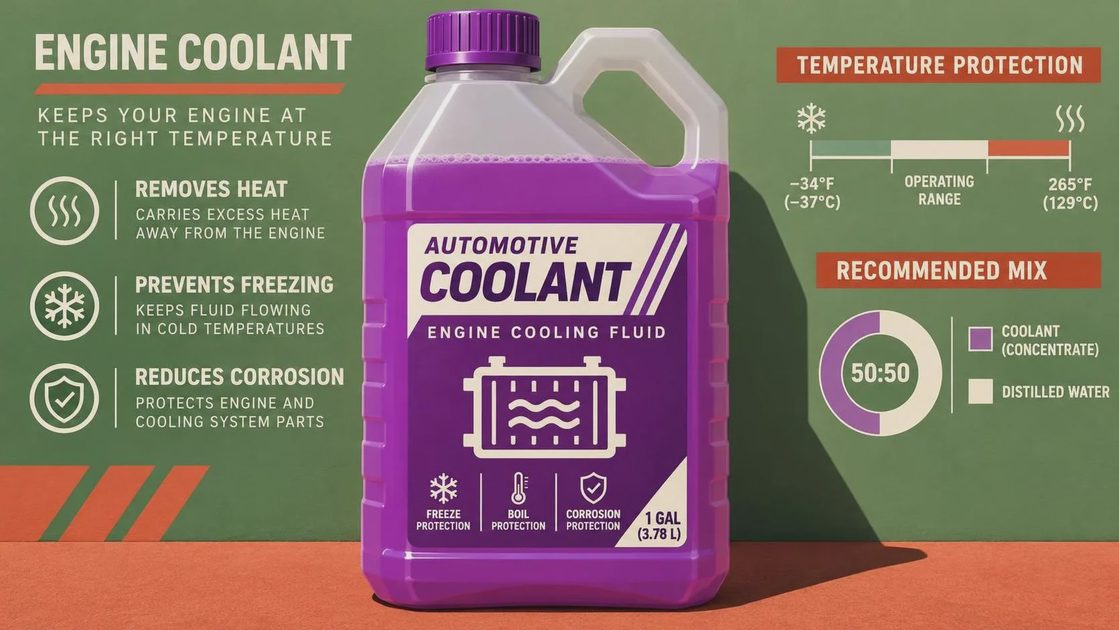
Use the water type specified by the vehicle or coolant manufacturer. Distilled or deionized water is often recommended because it contains fewer dissolved minerals than ordinary tap water, reducing the chance of mineral deposits. Do not fill above the cold maximum mark: the fluid needs room to expand as it heats.
If you cannot identify the fluid already in the tank, do not guess based on color or a universal claim. Consult a qualified shop or the manufacturer's guidance about identifying the correct fluid and whether a drain and refill is appropriate. If the level drops again, investigate the cause rather than making topping off a routine habit. Coolant does not normally get used up like fuel.
When a drain or repair is the better lesson
Coolant inhibitors age, so follow the service interval specified for your vehicle and the coolant used. A coolant tester may indicate freeze protection, but that alone does not establish that the corrosion inhibitors are healthy or that the fluid meets the correct specification.
A drain and refill removes fluid from the portions of the system that drain; it may not remove every drop. A flush uses a procedure to remove more old fluid or contamination. The correct process, fill quantity and air-bleeding procedure depend on the vehicle. Bleeding means removing trapped air, which can interfere with circulation and cause overheating. Some systems require special equipment or a specific sequence, making professional service the sensible choice.
A sweet smell, damp hose connection or repeated low-level warning can point to a leak. Stop driving and seek help if the temperature warning comes on or steam appears; continuing to drive an overheating engine can cause serious damage. Never open the cooling system while it is hot.
G12 coolant and other glycol-based antifreezes can be poisonous to people and animals. Clean spills promptly, keep containers sealed and away from children and pets, and take used coolant to a collection facility that accepts it. Do not pour it onto the ground or into a storm drain.
Quick Quiz
- Can you identify the correct coolant just by its pink color? No. Check the vehicle's required specification and the container's stated specification or approval.
- Why should the engine be cool before you check the tank? A hot system can release pressurized steam and scalding coolant if opened.
- Does good freeze protection prove the inhibitors are still effective? No. Freeze protection is only one part of coolant condition; follow the vehicle's service guidance.
If you remember one concept from this post, make it this one: match the specification, not the color. That small check is easier than repairing a cooling system filled with the wrong fluid.


No letters yet — be the first to write.