The wrong coolant can leave your engine's cooling system without the corrosion protection it needs, even if the liquid looks like the right color. Peak antifreeze can be a suitable choice when the specific product matches your vehicle manufacturer's coolant requirements. Start with the specification in your owner's manual, then compare it with the application information on the bottle. Let's start with the basics and build from there.
What antifreeze actually does
Antifreeze is the concentrated fluid used to make engine coolant. Mixed with water in the appropriate proportion, it helps prevent freezing and raises the liquid's boiling point. It also contains corrosion inhibitors: chemical additives that protect metals and other materials inside the cooling system.
Water carries heat well, but water alone is not a suitable year-round substitute for the specified coolant. It can freeze, boil under demanding conditions, and leave components vulnerable to corrosion. Conversely, more antifreeze is not automatically better. The mixture needs enough water to transfer heat effectively, so follow the product and vehicle instructions for your climate.
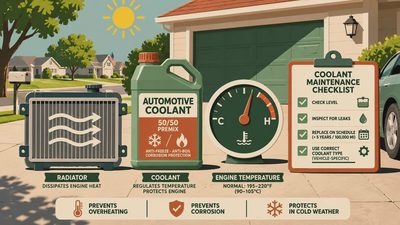
System Diagram reference: Picture a loop from the engine to the radiator and back. The water pump circulates coolant; the radiator releases heat to the air. A thermostat, which is a temperature-controlled valve, regulates flow as the engine warms. The heater core is a small heat exchanger that uses hot coolant to warm the cabin.
How to select Peak antifreeze
First, find the coolant requirement in the owner's manual or the manufacturer's service information. Look for a named specification, coolant type, or approved fluid—not just a color. Then read the complete label on the Peak antifreeze container to see whether the manufacturer lists it as suitable for your vehicle and its required specification.
PEAK markets several coolant formulations, including Original Equipment Technology and Global Lifetime products. A vehicle-specific Original Equipment Technology product may be the place to start when its label lists your make and required application. A broader-application product may be an option when its label explicitly covers your vehicle. These are product families, not a guarantee that every bottle is interchangeable.

Pay attention to the distinction between a product claiming suitability for an application and one carrying a vehicle manufacturer's formal approval. If your manual requires an approved fluid, verify that approval rather than assuming a broad compatibility claim means the same thing. A dealer or the coolant manufacturer can help if the label and manual leave you uncertain.
Color is a clue, not a specification
Coolants can be orange, green, blue, pink, or another color, but dye is not a reliable chemical identification system. Two green fluids can have different inhibitor packages, and a vehicle may contain a different fluid from the one originally installed. Match the written requirement, not the shade in the reservoir.
You may encounter three chemistry abbreviations. IAT means inorganic additive technology, a traditional approach to corrosion protection. OAT means organic acid technology, which uses organic-acid inhibitors. HOAT means hybrid organic acid technology, combining organic-acid inhibitors with certain inorganic additives. These are broad categories; they do not replace an automaker's detailed specification.
Mixing different coolants can change the resulting additive balance and make service life difficult to establish. A bottle of Peak antifreeze may describe compatibility with coolant already in the system, but that claim is not permission to ignore the vehicle's requirements. If the existing fluid is unknown, have the system assessed before adding a different type or arranging a complete coolant replacement.
Premixed or concentrate?
A premixed 50/50 coolant already contains coolant concentrate and water. Use it as supplied; adding more water makes the mixture weaker. Concentrate must be mixed with the appropriate water before use, following the label and the vehicle manufacturer's instructions. Distilled or deionized water is commonly recommended because minerals in tap water can contribute to deposits; check the instructions for your application.
For a straightforward 50/50 mixture, combine equal volumes of concentrate and suitable water. That ratio is common, but it is not a universal instruction for every vehicle or climate. Check the recommended concentration range, especially in severe cold. A coolant tester compatible with the fluid can help assess freeze protection, although a concentration reading alone does not establish whether the corrosion inhibitors are still effective.
Check and top off safely
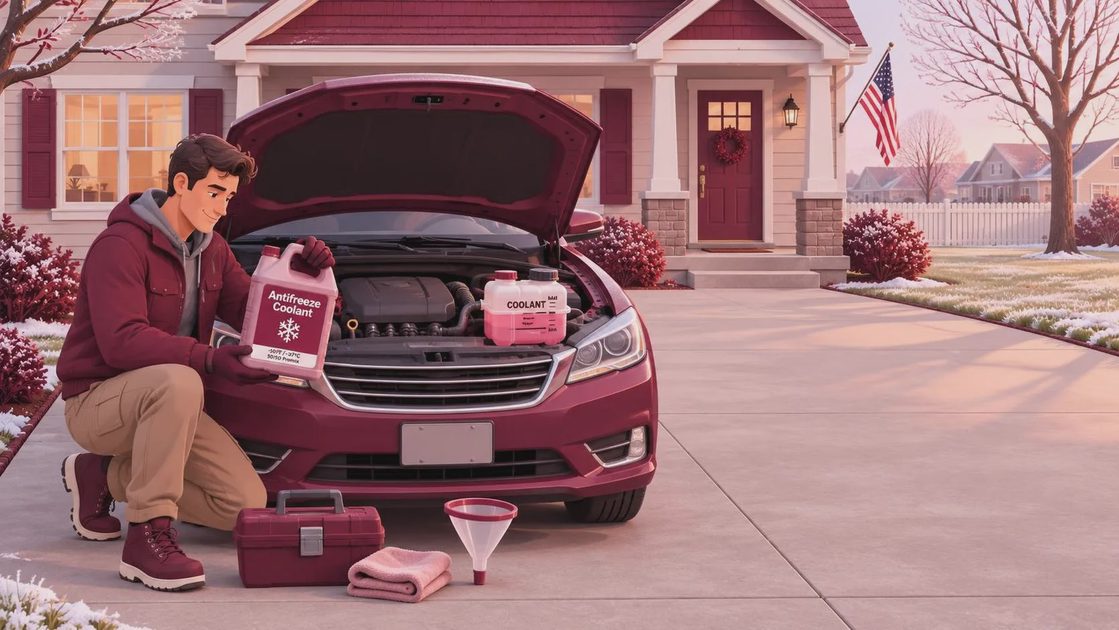
Let the engine cool completely before checking the level. Never remove a radiator or pressure cap from a hot cooling system: pressurized hot coolant can escape and cause serious burns. On many vehicles, a translucent reservoir has cold-level markings. Consult the manual to identify the correct reservoir and cap, because not every container in the engine bay is for coolant.
With the car on level ground and the engine cold, compare the level with the marked range. If it is low, add the correctly specified premix, or properly diluted concentrate, as the manual directs. Do not fill past the indicated cold maximum; coolant expands as it warms.
A level that keeps dropping needs diagnosis, not repeated top-offs. Look for damp connections, residue, puddles, a sweet smell, or an overheating warning, but understand that a leak may not be visible from above. If the temperature gauge climbs into the hot zone or a warning appears, stop safely and shut off the engine. Let it cool and arrange help rather than opening the system while hot.
When replacement makes more sense
Coolant additives wear out over time. Follow the vehicle manufacturer's service interval and any applicable product instructions rather than assuming the fluid lasts indefinitely. If you do not know what is in the system, the fluid is contaminated, or the service history is unclear, a shop can assess whether a drain and refill or a more thorough cleaning is appropriate.
A complete service can involve more than draining the radiator: coolant may remain in the engine and heater circuit, and trapped air must be removed according to the vehicle's procedure. Improper air removal can interfere with circulation and contribute to overheating. Used coolant is hazardous to people and animals, so collect it in a closed container and use a local facility that accepts it; never pour it onto the ground or into a storm drain.
Quick Quiz:
A bottle of Peak antifreeze is the same color as the fluid in your reservoir. Is that enough to establish compatibility? No. Check the vehicle's required specification and the bottle's application and approval information.
Can you add water to a 50/50 premix? Not for a normal top-off. It is already diluted, and extra water weakens the intended concentration.
If you remember one concept from this post, make it this one: the right coolant is defined by the vehicle's requirements, not by its color or the brand name alone.

No letters yet — be the first to write.