Let's start with the basics and build from there. If you drive a Honda automatic, you've probably heard the term atf dw-1 honda transmission fluid — but the letters and numbers may not mean much yet. That's fine. This fluid is the lifeblood of your automatic transmission, and choosing the wrong one can turn a routine service into a $3,000 rebuild. Let's break down what DW-1 is, why Honda made the switch, and how to keep your gearbox shifting smoothly for years.
What Is ATF DW-1 Honda Transmission Fluid, Exactly?
ATF stands for Automatic Transmission Fluid. It does far more than lubricate: it transfers torque, carries heat away from the clutch packs, and provides the hydraulic pressure that shifts the gear sets. DW-1 is the current specification Honda uses for most of its automatic transmissions, replacing the older ATF-Z1. Honda phased in DW-1 around 2009-2011 and now recommends it for nearly all front-wheel-drive automatics, including the Civic, Accord, CR-V, and Odyssey.
The "DW" is just Honda's internal designation for the formulation. What matters is the friction profile. Honda's automatics use lock-up torque converters and clutch discs designed around this fluid's specific friction characteristics. When the right atf dw-1 honda transmission fluid is in the system, shifts feel crisp but smooth, and the torque converter locks up without shuddering.
Why Did Honda Switch From ATF-Z1 to DW-1?
Honda used ATF-Z1 for years, but engineers found it broke down too quickly under high heat. DW-1 offers better oxidation resistance, so it doesn't turn dark and sludge-y as fast. It also has a lower viscosity when cold, letting it reach the valve body faster on winter mornings. That reduces stress on the pump and gives more consistent shifts.
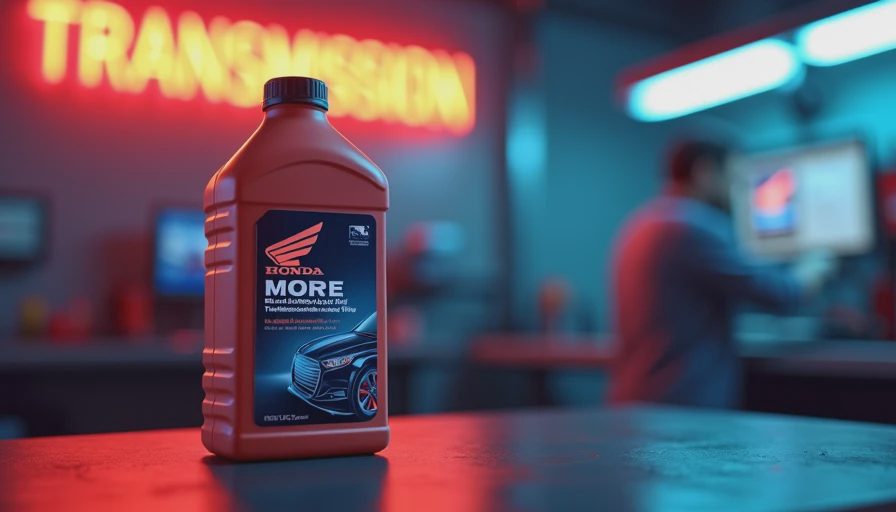
Honda says DW-1 is backward compatible, so you can use it in older cars that originally called for Z-1. But don't add Z-1 to a car already running DW-1. Modern Honda transmissions have tighter tolerances, and the old fluid can cause harsh shifts over time. If your owner's manual calls for DW-1, use DW-1. For older Hondas, switching to DW-1 is a safe, smart upgrade.
Can You Use Generic or Universal ATF Instead?
This is the temptation that leads to broken transmissions. A generic bottle might say "Works in most automatic transmissions," but "most" doesn't mean "your Honda." Honda's automatic relies on the fluid's coefficient of friction to engage the clutch packs. A universal fluid with a different friction modifier package can cause shudder, delayed engagement, and eventually burnt clutches.
Use genuine Honda ATF DW-1 or an approved equivalent that clearly states it meets the Honda DW-1 specification. Idemitsu and AISIN make compatible fluids, but read the label carefully. If it doesn't say "DW-1 spec," don't risk it.
When Should You Change ATF DW-1 Honda Transmission Fluid?
Honda's official interval has varied. Older manuals said around 60,000 miles; more recent schedules call for 30,000 to 40,000 miles under severe service, which includes stop-and-go city driving, frequent freeway use, or hot climates like Georgia summers. A drain and fill replaces roughly a third of the fluid, so repeat it on schedule. Acura owners should follow the same spec, because most Acura automatics use the same Honda transmission.
A dealer will charge $120 to $180 for a Honda ATF drain and fill. Doing it yourself costs about $40 for fluid and some shop rags. If your transmission shifts roughly, smells burnt, or the dipstick looks dark brown, don't wait. Heat destroys clutches, and dirty fluid can't shed heat.
How To Check and Top Off Honda ATF DW-1
Most Honda automatics have a yellow or orange transmission dipstick under the hood. Park on level ground, warm the engine to operating temperature, and shift through each gear with the brake held, pausing two seconds. Put the lever back in Park and leave it running. Pull the dipstick, wipe it clean, reinsert, and pull again. The fluid should be between the upper and lower marks.
If it's low, add a little atf dw-1 honda transmission fluid at a time through the dipstick tube using a funnel with a long, narrow neck. Half a quart is usually enough if you're at the "add" mark. Overfilling causes foaming, which leads to erratic shifts and pressure spikes. Remember: you can always add more, but draining out extra fluid is a mess. If the fluid looks pink and clear, you're in good shape. If it's brown or full of grit, plan a drain and fill soon.
Why Choosing the Right Fluid Matters for Your Wallet
A 10-quart case of genuine Honda DW-1 costs around $70 to $90, and a typical drain and fill needs only 3 to 4 quarts. A full flush at a shop might run $300. Compare that to a rebuilt Honda automatic, which easily lands at $2,500 to $4,000 installed. The right fluid at the right time saves you from a repair that could total the car.
The correct fluid also protects resale value. A buyer would rather see a documented transmission service with the right spec than a "recent flush" with no paperwork. Keep the receipt and note the mileage. That simple habit makes the next owner trust the car, and it helps you stay on schedule too.
Quick Quiz
Time for a quick quiz to make sure the lesson sticks.
- What does ATF stand for?
- Which fluid replaced ATF-Z1?
- True or False: Any universal ATF works fine in a Honda.
Answers: Automatic Transmission Fluid; DW-1; False. If you remember one concept from this post, make it this one: when it comes to your Honda automatic, the spec on the bottle matters more than the price on the shelf.

No letters yet — be the first to write.