A diesel vehicle that displays a DEF warning is not asking for an oil change. It is telling you that an emissions-control fluid is running low, and ignoring the message can eventually limit starting or vehicle performance. DEF diesel exhaust fluid is simple to understand once you follow the path from the tank to the tailpipe. Let's start with the basics and build from there.
What DEF is and why your diesel needs it
DEF stands for diesel exhaust fluid. It is a clear liquid made from roughly one-third high-purity urea and two-thirds deionized water. It is not diesel fuel, motor oil, coolant, or a fuel-system cleaner. Modern diesel vehicles with selective catalytic reduction, commonly called SCR, inject a small amount of DEF into the exhaust stream after combustion.
SCR is an emissions system that uses a chemical reaction to reduce nitrogen oxides, or NOx. NOx gases form when combustion temperatures become high. Inside the SCR catalyst, ammonia produced from DEF helps convert NOx into nitrogen and water vapor. Those final products are much less harmful than the original exhaust pollutants.
The fluid does not mix with diesel inside the engine. A separate DEF tank, pump, heated line, injector, and level sensor handle the system. Depending on the vehicle, the filler may sit beside the diesel fuel door, under the hood, or behind a cap in the trunk or cargo area. Read the owner’s manual before opening any filler cap.
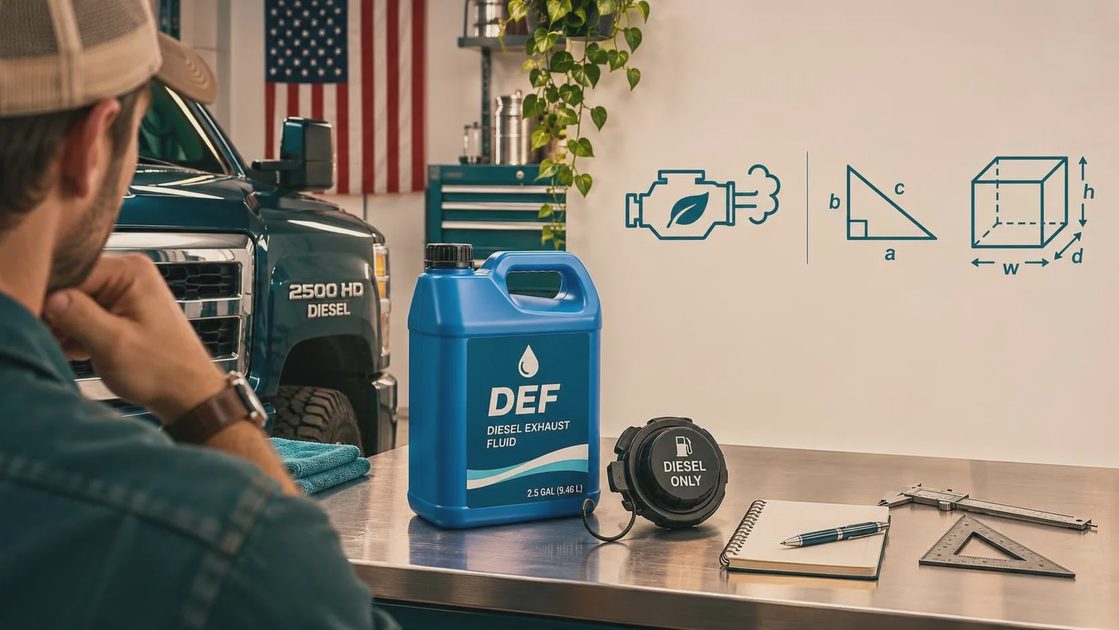
System Diagram reference: picture the process as tank, pump, heated line, exhaust injector, SCR catalyst, then tailpipe. That sequence explains why DEF belongs in its dedicated tank and nowhere else.
Choosing and storing DEF correctly
Buy fluid labeled for use in diesel SCR systems. In the United States, look for the API certification mark or a container that clearly identifies the product as meeting ISO 22241 specifications. Major auto-parts stores, truck stops, dealerships, and retailers commonly sell two-and-a-half-gallon jugs. Examples include Peak BlueDEF and store-brand products carrying the proper certification.
Do not choose a bottle simply because it is inexpensive or blue-colored. The liquid itself is normally clear, and the container label matters more than the color. DEF diesel exhaust fluid has a limited shelf life because heat breaks down the urea solution. Store unopened containers in a cool, dry location away from direct sunlight. Freezing does not automatically ruin it; properly formulated DEF can freeze and expand, then return to usable condition after thawing. Your vehicle’s tank and lines are designed with that possibility in mind.
Avoid pouring DEF through a dirty funnel or transferring it into an old chemical container. Small amounts of oil, fuel, dust, or washer fluid can damage the injector and SCR catalyst. Use a clean, dedicated spout, wipe the filler area first, and close the cap firmly when finished.
How to refill without creating a bigger repair
First, park on level ground and turn the vehicle off. Confirm that you have identified the DEF filler rather than the diesel filler. Many manufacturers use a blue cap, but color is not a substitute for the owner’s manual. If the tank is nearly empty, add the amount recommended in the manual instead of guessing with a full five-gallon container.
A two-and-a-half-gallon jug weighs about 20 pounds, so pour slowly. Some jugs include a locking nozzle; others require an adapter. Hold the container upright, allow air to enter gradually, and stop if fluid backs up. Afterward, wipe away drips with water. Dried DEF can form white crystalline deposits, which are usually removable with warm water, but deposits around an electrical connector or injector deserve prompt attention.
If you accidentally put DEF in the diesel fuel tank, do not start the engine. Starting can circulate the contamination through the high-pressure fuel system, turning a simple drain into a costly repair. If diesel goes into the DEF tank, do not drive or switch on the ignition repeatedly. Arrange professional draining and cleaning. These two mistakes are chemically different, but both reward immediate action.
Understanding warning messages and reduced power
A low-fluid warning often appears well before the tank is empty. The exact distance depends on the vehicle, driving conditions, and calibration. Treat the first warning as a refill reminder, not as a challenge to see how far the vehicle can go. Later messages may say that a restart will be prevented after a certain distance. That language usually refers to the next engine start, not an engine that will suddenly shut off while traveling, but you should not rely on that distinction.
A warning that remains after refilling does not always mean you need more liquid. The system could have detected a faulty level sensor, heater, pump, injector, wiring problem, or quality issue. Some vehicles need several minutes of driving or a specific ignition cycle before the gauge updates. If the warning persists, scan the vehicle for diagnostic trouble codes rather than repeatedly adding fluid.
DEF diesel exhaust fluid is not a performance additive, so adding extra fluid will not improve horsepower or fuel economy. Its job is emissions treatment. A diesel that uses more DEF than expected may be working harder, towing frequently, operating in cold weather, or experiencing an emissions-system fault. Compare the usage with your owner’s manual and service records.
Cost, maintenance, and a useful inspection routine
Retail DEF commonly costs around $5 to $15 for a two-and-a-half-gallon jug, while a dealership refill can cost more because labor and convenience are included. A pickup used for commuting might consume fluid slowly, while a heavy-duty truck towing a trailer can use substantially more. The cost of the liquid is usually small compared with repairs caused by contamination or ignored warnings.
At every oil-change interval, inspect the DEF cap, filler neck, visible lines, and nearby connectors. Look for white crystals, wet spots, cracked plastic, or a strong ammonia-like odor. Do not pressure-wash the tank area or scrape deposits into the filler opening. If a truck sits for months, check the fluid’s age before topping it off with an old jug.
Quick Quiz: Which statement is correct? DEF belongs in the fuel tank, DEF is a fuel additive, or DEF is injected into the exhaust to help reduce NOx? The third answer is correct. Remembering that one separation prevents the most expensive mistake in this system.
What to remember before your next trip
If you remember one concept from this post, make it this one: DEF diesel exhaust fluid is part of a separate exhaust-treatment system, not part of the diesel fuel system. Use certified fluid, protect it from contamination, store it sensibly, and respond to warnings before the tank reaches empty.
Before a long trip, check the dashboard range, locate the correct filler, and carry a sealed, certified jug if your vehicle has limited access to supplies. If you spill a small amount, rinse the area with water. If the wrong liquid enters either tank, do not start the vehicle; call a qualified repair facility. A few careful minutes can protect an SCR system that could cost hundreds or several thousand dollars to replace.


No letters yet — be the first to write.