A cooling-system mistake can turn a routine top-off into a $1,000-plus repair, so understanding G13 coolant protects both your engine and your wallet. This antifreeze is associated mainly with Volkswagen Group vehicles, including Volkswagen, Audi, SEAT, and Skoda models. However, the purple color on the bottle is not enough to prove compatibility. Let's start with the basics and build from there.
What G13 coolant actually does
Coolant is a mixture of antifreeze concentrate and water that moves through the engine, radiator, heater core, and hoses. Its job is broader than preventing freezing. It raises the boiling point, carries heat away from metal components, protects against corrosion, and lubricates the water pump seal.
G13 coolant is a Volkswagen Group specification commonly identified as TL 774-J. It uses a Si-OAT formulation. Si-OAT means silicate-enhanced organic acid technology: long-life organic corrosion inhibitors are combined with a controlled amount of silicate protection. Silicates can help protect aluminum surfaces quickly, while organic additives provide longer-term corrosion control.
Many G13 products also use glycerin as part of their antifreeze package. That does not mean every purple antifreeze is G13. The important evidence is the specification printed on the label, such as VW TL 774-J, and the requirements in your owner's manual or factory service information.
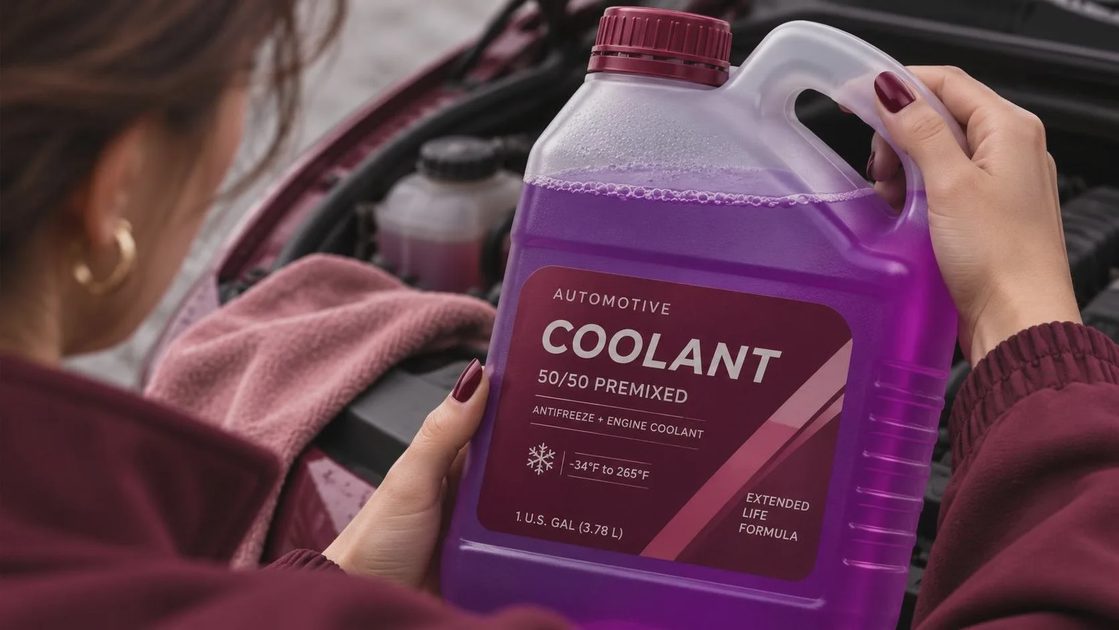
If you remember one concept from this post, make it this one: coolant color is a clue, not a specification. A purple product can belong to a different chemical family, and two products with similar labels can have different additive packages.
Which vehicles use G13 coolant?
G13 coolant was used in many Volkswagen Group vehicles during the 2000s and 2010s, although the exact requirement depends on the engine, model year, production market, and previous service history. A Volkswagen Passat, Audi A4, or Porsche-related application may not all share identical service instructions, even when their coolant reservoirs look similar.
Look for the coolant specification in three places. First, check the owner's manual. Second, inspect the expansion-tank cap or nearby label for a warning or fluid requirement. Third, use the vehicle identification number with a Volkswagen or Audi parts department if the manual is missing. An independent shop familiar with European vehicles can also verify the correct fluid.
Do not assume that a generic “European vehicle coolant” automatically meets the requirement. Some products are designed for multiple specifications, but the bottle should clearly list the relevant VW approval or compatibility statement. A $20 bottle that meets the specification is cheaper than cleaning contaminated coolant from a heater core.
Can G13 coolant be mixed with other antifreeze?
Compatibility is where many DIY repairs become confusing. G13 coolant can often be mixed with certain earlier Volkswagen coolant specifications, including some G12 and G12+ products, but that does not mean every universal or green antifreeze is acceptable. Manufacturer guidance and the product label should control the decision.
The safest approach is to identify what is already in the system before adding anything. If the reservoir contains clean, correctly identified fluid and the level is only slightly low, use the same approved product at the correct concentration. If the fluid is brown, oily, sludgy, or visibly separated, stop topping off and plan a diagnosis and flush.
When the existing fluid is unknown, a complete drain and refill with the specified coolant is usually more reliable than guessing. A flush removes much of the old additive package, although a professional may use additional cleaning steps when oil or stop-leak material is present. Never use tap water for a permanent mixture in areas with hard water; distilled or deionized water is the better choice.
Mixing ratio and safe top-off procedure
Most passenger vehicles use a 50/50 mixture of antifreeze concentrate and distilled water. Premixed coolant is already blended and should not receive another full portion of water. Concentrate requires careful mixing because too much water reduces freeze and corrosion protection, while too much antifreeze can reduce heat-transfer performance.
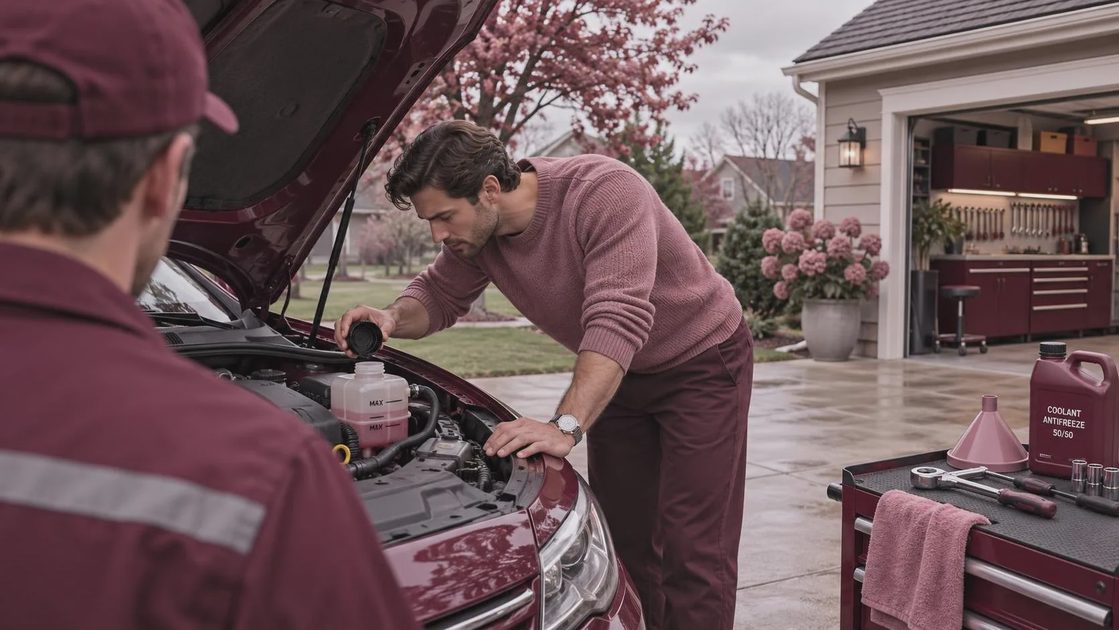
Only open the expansion tank when the engine is completely cool. Hot coolant is pressurized and can cause severe burns. With the vehicle parked level, compare the level with the MIN and MAX marks. Add the correct mixture slowly until the level reaches the cold MAX mark; do not fill the tank to the cap.
Afterward, inspect the ground, hose connections, radiator area, water pump region, and reservoir for leaks. A falling level is not normal maintenance. It usually indicates a leak, trapped air, or an engine problem that requires attention. Some Volkswagen and Audi engines need a specific bleeding procedure, so consult the service instructions rather than repeatedly adding fluid.
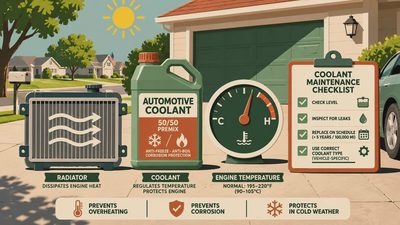
System Diagram reference: trace the path from the expansion tank to the water pump, engine passages, thermostat, radiator, and heater core. Seeing that loop explains why a small amount of contaminated fluid can travel throughout the entire system.
Signs of the wrong coolant or a cooling-system problem
The first warning may be a dashboard coolant-level or temperature warning, but do not wait for the temperature gauge to rise into the red zone. Other clues include a sweet smell after driving, pink or white crust around a hose joint, damp carpet near the passenger footwell, an inconsistent heater, or repeated loss from the reservoir.
Contaminated G13 coolant may appear muddy, brown, cloudy, or gelatinous. That appearance can result from incompatible additives, corrosion, oil contamination, or stop-leak products. A mechanic may use a refractometer to estimate freeze protection and test strips or visual inspection to assess condition, but those tests do not replace identifying the correct specification.
If the temperature warning appears, pull over safely, shut the engine off, and allow it to cool. Do not remove the cap while hot. Continuing to drive an overheating engine can warp an aluminum cylinder head, damage the head gasket, or seize internal components. A tow bill is unpleasant; an engine replacement is far worse.
A practical buying and maintenance checklist
Before buying G13 coolant, record the vehicle year, model, engine, and current coolant specification. Confirm whether you need concentrate or premix. Check that the label names the required Volkswagen specification rather than relying on the color. Buy enough fluid for the job, plus distilled water if concentrate is required. Keep the unopened container and receipt until the service is complete.
For a simple low-level correction, the correct approved fluid is usually all that is needed. For a full replacement, budget roughly $100 to $250 at an independent shop, with more possible at a dealer or when access is difficult. The price increases if technicians must diagnose a water pump, thermostat, radiator, hose, or reservoir leak.
Quick Quiz: What matters more than the coolant color? The answer is the manufacturer specification. Why should you wait before opening the cap? The cooling system is pressurized while hot. What does repeated fluid loss suggest? It suggests a leak or another fault, not a normal need to keep topping off.
G13 coolant is a capable long-life fluid when it matches the vehicle and is mixed correctly. Treat the label as a technical requirement, not a color preference. If the history is unknown or the fluid looks contaminated, have the system identified and serviced instead of experimenting with universal antifreeze.


No letters yet — be the first to write.