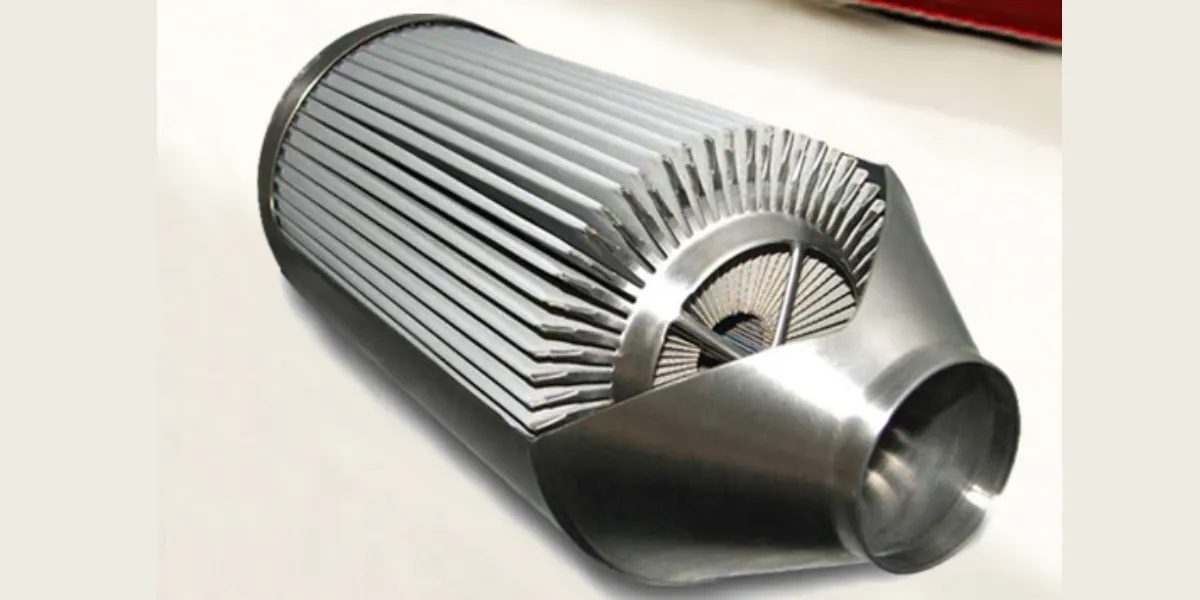
Diesel engines have earned widespread recognition for a host of compelling reasons. When measured against gasoline-powered alternatives, diesel engines deliver superior fuel efficiency and greater sustainability. Beyond their vital role in heavy-duty applications, these engines are equally prevalent in passenger cars and light-duty vehicles.
Yet as the number of diesel-powered vehicles on the road continues to surge, their emissions have come under increasing scrutiny. Engine manufacturers are working hard to minimize environmental impact through advances in fuel formulation and after-treatment technology.
This is precisely where the Diesel Particulate Filter, or DPF, comes into play. What exactly is a DPF, and why does it matter so much?
A diesel particulate filter is among the most essential after-treatment components in any modern vehicle. Its function is to capture and retain exhaust ash particles along with other contaminants, thereby reducing particulate matter emissions from diesel engines.
Diesel particulate filters have been in service for well over a decade, having been invented in 2000 by the French manufacturer Peugeot.
Although DPFs come in several varieties — including silicon carbide, metal fiber, and cordierite types — cellular ceramic honeycomb filters are by far the most widely adopted. Ceramic materials such as cordierite, silicon carbide, and aluminum titanate are favored for their outstanding thermal resistance and stability.
The ceramic honeycomb DPF features channels that are alternately blocked at each end, which compels exhaust gases carrying soot particles to pass through the filter wall. The gas flows through freely, but harmful soot remains trapped within the filter's pores.
That said, a DPF has a finite capacity for storing soot. To maintain proper filter performance, that accumulated soot must be periodically cleared away — a process known as DPF regeneration, during which the excess soot is incinerated. More detail on the regeneration process follows below.
DPF regeneration does not occur spontaneously; it depends on specific conditions being satisfied. Factors that influence the process include engine temperature, vehicle speed, RPM, and exhaust gas temperature. The ideal exhaust gas temperature is approximately 250°C, and achieving that threshold requires the vehicle to be in good working order.
Put differently, any mechanical fault can interfere with DPF regeneration and lead to blockage. This is why, before deciding to replace a DPF outright, a qualified mechanic should first inspect the vehicle to rule out underlying problems that may be inhibiting regeneration.
The following is a brief overview of issues that can directly affect DPF regeneration outcomes:
Now that the common causes of DPF failure are understood, the next question is how to recognize them. Fortunately, several telltale symptoms make it relatively easy to identify a clogged DPF.
Some of the most common signs include:
Modern diesel vehicles are outfitted with an array of sensors that continually assess engine efficiency. When these sensors detect performance irregularities, they relay that information to the vehicle's onboard computer — triggering the illumination of warning symbols on the dashboard.
While a dashboard lighting up like a Christmas tree is hardly a welcome sight, it can actually be quite useful in identifying DPF-related issues early enough to prevent them from worsening.
A sudden spike in fuel consumption is one of the clearest warning signs of DPF failure. The diesel particulate filter's primary job is to eliminate exhaust fumes from the engine while trapping soot particles. When the DPF becomes blocked, exhaust gases are unable to exit the engine at the required rate.
The resulting buildup of exhaust gases degrades overall engine performance, causing the vehicle to feel sluggish. Drivers often respond by pressing harder on the accelerator in an attempt to restore power — but this rarely helps. The engine is forced to consume additional energy to push exhaust gases through the clogged DPF, leaving less energy available for acceleration.
In more severe cases, the accumulation of exhaust gases can prevent the engine from starting altogether. The engine will continue to refuse ignition until the pressure within the system drops to an acceptable level.
While this may seem alarming, it actually represents the vehicle's built-in mechanism for protecting the engine and DPF from catastrophic damage. The appropriate response is to seek mechanical assistance as soon as possible.
A blocked DPF can also trigger a range of turbocharger problems, including gas and oil leaks. With exhaust gases building up and having nowhere to go, they begin escaping through the turbocharger. This can lead to oil leaks and a measurable decline in turbocharger efficiency.
To extend the service life of your diesel particulate filter and preserve its health, it must be able to regenerate when soot accumulation reaches capacity. There are two fundamental modes of DPF regeneration: passive and active.
Passive regeneration takes place when engine temperatures exceed 350°C. At these elevated temperatures, the DPF is able to combust accumulated soot during ordinary driving conditions.
A key advantage of passive regeneration is that it operates entirely automatically — the driver is unaware it is even happening. However, passive regeneration can only occur when the engine sustains the required temperature, which typically happens on longer journeys at higher speeds.
Once soot levels within the DPF climb to 45%, the pressure sensors register this threshold. The engine management system then triggers the injection of raw fuel into the diesel oxidation catalyst, raising exhaust temperatures to create the conditions necessary for active regeneration.
Like passive regeneration, active regeneration is a fully automated process requiring no intervention from the driver. Similarly, it can only take place when the vehicle is driven for an extended period at higher speeds.
As noted earlier, one of the leading contributors to DPF failure is the use of unsuitable engine oil.
Conventional engine oils typically rely on metallic additives that serve as anti-friction, anti-wear, and detergent agents. However, these additives can generate and deposit ash that blocks the substrate wall and disrupts the flow of exhaust gases. Such additives are especially damaging to diesel particulate filters and three-way catalytic converters.
For this reason, any engine oil selected for use in a DPF-equipped vehicle must be compatible with the filter. DPFs call for low-SAPS engine oils — lubricants that contain reduced levels of Sulphated Ash, Phosphorous, and Sulfur. These products are also referred to as low-ash or low-emission oils, owing to their reduced tendency to generate ash deposits. Low-SAPS oils are specifically engineered for vehicles fitted with DPFs and three-way catalytic converters.
So which oils qualify as low-SAPS?
The European Automobile Manufacturers' Association has established guidelines specifying the maximum permissible levels of phosphorus and sulfur in various engine oil categories. These oils are organized into grades: A, B, C, and E.
Engine oils intended for diesel vehicles equipped with three-way catalytic converters and DPFs fall under the C grade classification. Within this grade, C1 and C4 are considered low-SAPS oils, while C2, C3, and C5 are classified as mid-SAPS.
It is important to note that C-grade oils are not interchangeable, as each carries distinct ash emission characteristics. If you are uncertain which grade is appropriate for your diesel vehicle, consulting our Lubricant Advisor for tailored recommendations is a sensible approach.
Valvoline provides an extensive lineup of low-ash engine oils. Formulated with premium base oils and carefully selected additives, these lubricants are engineered to satisfy the latest requirements of both modern diesel engines and DPF systems.
A prime example is the Valvoline Synpower Env C1 SAE 5W-30 and MST C4 Motor Oil SAE 5W-30. These advanced low-ash formulations are purpose-built for passenger and light-duty vehicles with diesel particulate filters, delivering the highest standard of emission control while safeguarding both the DPF and the three-way catalytic converter.
Regrettably, no diesel particulate filter lasts indefinitely. When the time comes to select a replacement, prioritize models that offer superior performance and filtration efficiency. Among the various types available, the latest designs constructed from stainless steel and ceramics represent the best choice.
The price of a new diesel particulate filter can be substantial. Costs vary according to manufacturer, model, and materials, but typically fall somewhere between 200 € and 800 €.
Industry experts note that a complete service — covering both the supply and installation of a DPF — can reach as much as 4,000 €. In some instances, the cost of a DPF replacement may actually exceed the market value of the vehicle itself.
At first glance, removing a DPF might appear to be an attractive option — a cost-effective solution that simplifies engine operation. The internet is certainly full of removal guides, advice, and service providers claiming there are no consequences to worry about.
Let us be unequivocal on this point: if you are considering removing your DPF, the answer is definitively no. While DPF removal may offer modest short-term advantages, the long-term consequences of that decision can be severe.
Diesel particulate filters serve a critical environmental function by reducing harmful emissions and contributing to public health. In Europe, their installation became a legal requirement for all diesel car owners in 2009.
To put it plainly, removing a diesel particulate filter is against the law. Such a modification causes the vehicle to fall out of compliance with the stringent EPA 2007 emission regulations, potentially resulting in substantial fines — and the possible forfeiture of your vehicle insurance.
There is yet another reason to leave the DPF in place: a vehicle without one will not pass its annual roadworthiness inspection.
A diesel particulate filter is one of the most critical components of the exhaust system, engineered to reduce diesel particulate matter emissions by as much as 80%. Nevertheless, this component is susceptible to wear over time. Its finite capacity means that soot must be periodically cleared through regeneration for the filter to continue functioning effectively. Regeneration occurs when soot particle levels hit the threshold — but only when the right conditions are present. If those conditions are not met, regeneration is delayed, which can cause lasting damage to the filter.
To support continuous DPF regeneration, follow the guidance outlined above — including the use of a high-quality engine oil with low sulfur and phosphorus content.
Do you have further questions about diesel particulate filters? Reach out to us today or locate your nearest Valvoline distributor!


No letters yet — be the first to write.