Pouring an oil stabilizer into an engine may seem cheaper than a repair, but it can also change how the oil flows without fixing the underlying problem. For most passenger vehicles, start with the oil grade and specifications in the owner's manual, not an extra additive. If the engine burns oil, leaks, or has a low-pressure warning, investigate the cause. Let's start with the basics and build from there.
What an oil stabilizer actually does
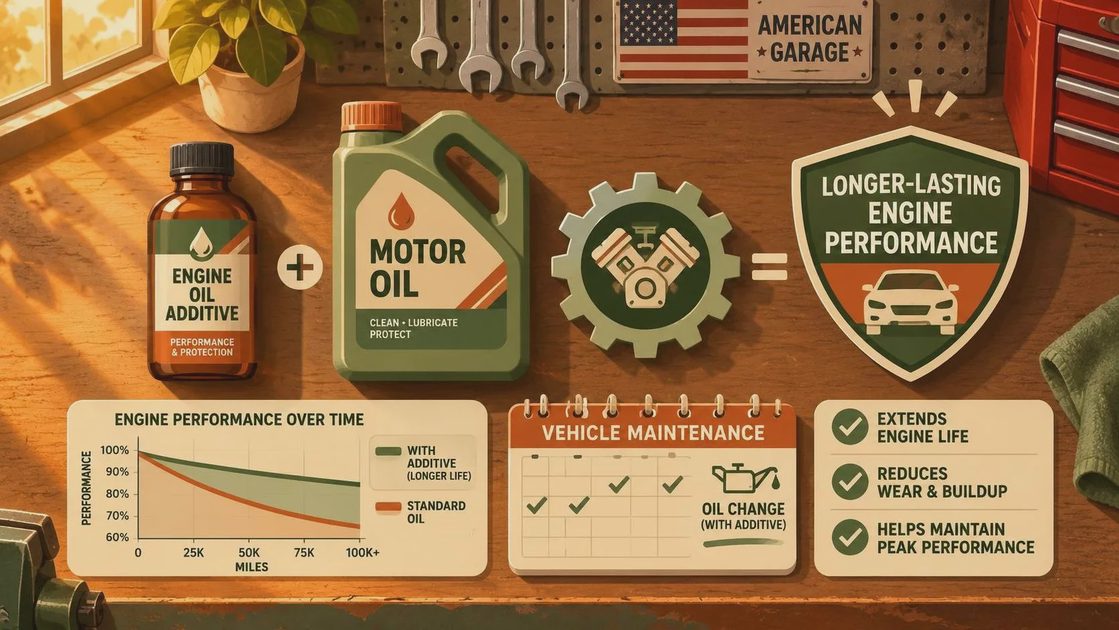
An oil stabilizer is an aftermarket product mixed with engine oil. Its intended effects depend on its formulation: some products are marketed to increase oil thickness or reduce consumption, while others emphasize protection against wear. The name does not describe a single standardized formula, so read the label rather than assuming two bottles work the same way.
The central idea is viscosity, a fluid's resistance to flow. Honey has a higher viscosity than water. Engine oil needs enough viscosity to help maintain a protective film between moving surfaces, but it also needs to flow readily when the engine is cold. The manufacturer chooses an oil grade to balance those needs across the engine's operating conditions.
An oil stabilizer that thickens the mixture can change that balance. A thicker fluid may reduce leakage past worn components in some circumstances, but it may also flow less readily during cold starts. It is not safe to assume the mixture still meets the viscosity grade or performance specifications printed on the original oil container.
System Diagram reference: Picture the lubrication path as oil pan to pickup tube to pump to filter to engine passages, then back to the pan. The pump moves oil through that circuit; the passages deliver it to parts such as bearings, which support rotating shafts. Anything that changes the fluid affects the whole circuit, not just the noisy part you hope to quiet.
Oil pressure is not the same as engine health
Oil pressure is the resistance to oil flow measured within the lubrication system. It depends on several factors, including pump operation, oil temperature, viscosity, and the clearances between engine parts. Clearance is the small space between components that allows oil to flow and form a lubricating film.
A thicker mixture can raise a pressure reading under some conditions. That does not prove a worn bearing has been repaired or that every part is getting the flow it needs. Think of it as a change in a measurement, not a diagnosis of the cause.
If the red oil-pressure warning comes on while driving, pull over safely, shut off the engine, and check the owner's manual. Check the oil level when it is safe to do so, following the manual's procedure. If the level is low, add the specified oil as directed; if the warning remains on, do not continue driving. Arrange a tow or professional diagnosis. A bottle of oil stabilizer is not an appropriate response to a pressure warning.
What to check before adding anything
First, confirm the oil level with the dipstick or the vehicle's electronic level display, using the procedure in the manual. Too little oil can leave components inadequately lubricated; too much can cause problems too. Add oil in small amounts and recheck rather than pouring in an entire bottle on assumption.
Next, look for the required viscosity grade, such as SAE 0W-20, and any manufacturer-specific oil specification. SAE is a grading system for viscosity; the letters and numbers describe flow characteristics, including cold-temperature performance. The specification is a separate requirement covering performance tests or manufacturer approvals. The right grade alone does not guarantee that an oil meets the required specification.
Then identify the symptom. Oil spots under the vehicle suggest an external leak. A falling oil level without obvious spots can have other causes, including internal consumption. Blue-gray exhaust smoke can be a clue, but it does not identify the exact failed component. Record the mileage and how much oil you add, and share that information with a technician.
The trade-offs of using an oil stabilizer
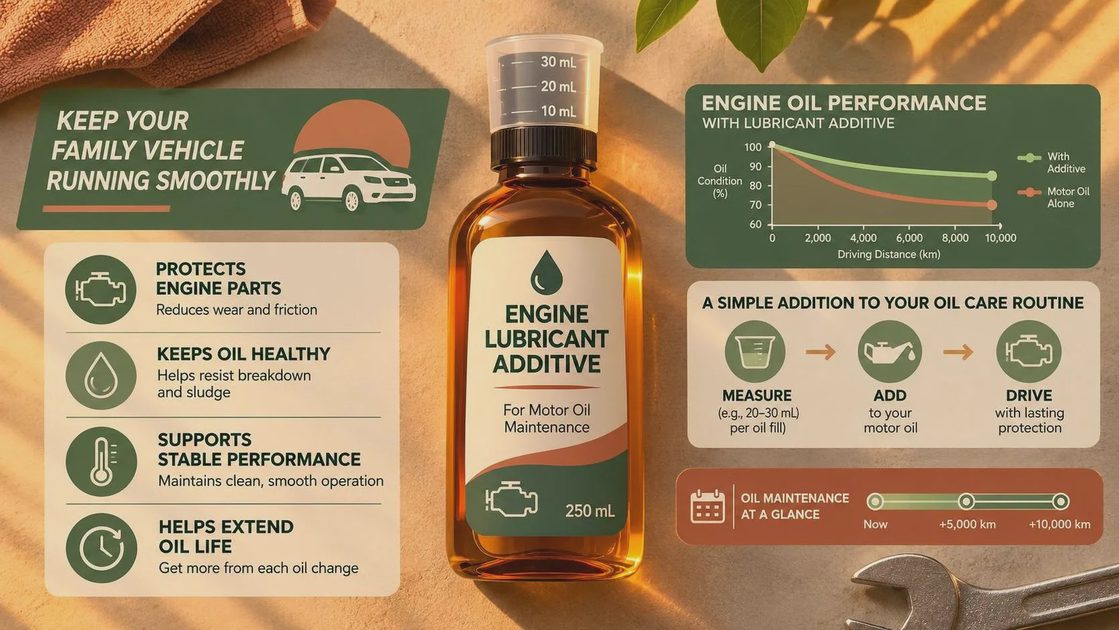
Finished engine oil already contains an additive package: a blend of chemicals selected to help control wear, deposits, corrosion, and other operating problems. Adding another product changes the proportions in that blend. The resulting mixture has not necessarily passed the same tests as the original oil, even if both products sound compatible on their labels.
There is also a capacity issue. Engine oil capacity is the amount specified for a service, usually including the filter when it is changed. Adding a stabilizer on top of a full crankcase can overfill it. The crankcase is the lower part of the engine that contains the oil reservoir. Do not exceed the level indicated by the manufacturer's checking procedure.
Warranty language deserves attention as well. An aftermarket additive does not automatically void an entire vehicle warranty, but a manufacturer may dispute coverage for damage it determines was caused by an unsuitable product. Read the owner's manual and keep service records, including oil specifications and receipts.
If you are considering an additive for an older engine, ask a qualified technician what problem it is meant to address and what evidence supports using it in that engine. A high-mileage oil that meets the vehicle's required specifications may be an option, but it is still not a substitute for finding a leak or repairing mechanical wear.
A practical next step
For a healthy engine, use the specified oil and filter and follow the appropriate maintenance schedule. For a problem engine, document the symptom before spending money: note when a noise occurs, how quickly the level falls, or where a leak appears. That gives a technician a starting point and helps distinguish a maintenance issue from a repair.
If you remember one concept from this post, make it this one: a change in oil thickness can change a symptom without correcting its cause.
Quick Quiz:
Question 1: Does a higher oil-pressure reading after adding a thick product prove that an engine's bearings are healthy?
Answer: No. Pressure can change with viscosity, temperature, and other conditions; it does not by itself establish bearing condition.
Question 2: What should you check before buying an oil stabilizer for a falling oil level?
Answer: Verify the level using the manufacturer's procedure, look for signs of a leak, and track oil added against mileage. Have persistent consumption or leaks diagnosed.

No letters yet — be the first to write.