
Let's start with the basics and build from there. **Transfer case fluid** is the lifeblood of your four-wheel-drive (4WD) or all-wheel-drive (AWD) vehicle's transfer case. If you own a truck, SUV, or crossover that sends power to both front and rear axles, you have a transfer case. And that transfer case relies on a specific fluid to do its job. Skip this fluid, and you risk expensive driveline repairs.
What Is Transfer Case Fluid and Why Does It Matter?
The transfer case sits between your transmission and the front/rear differentials. Its job is to split engine torque to both axles and, in many vehicles, provide a low-range gear for off-road crawling. Inside, there are gears, bearings, chains (in some designs), and clutches (in on-demand systems). All these moving parts generate heat and friction. **Transfer case fluid** lubricates, cools, and protects them. Without the right fluid at the right level, metal grinds against metal, heat builds, and components fail.
System Diagram reference: Imagine the drivetrain as a relay race. The transmission hands power to the transfer case, which then passes it to the front and rear differentials. The fluid is the team's hydration—without it, everyone cramps up.
Most transfer cases use either automatic transmission fluid (ATF) or a dedicated gear oil, depending on the make and model. Always check your owner's manual or the manufacturer's specification. Never guess.

When Should You Check or Change Transfer Case Fluid?
This is one of the most neglected fluids in U.S. vehicles. A 2023 survey by a major auto parts chain suggested that over 60% of 4WD owners have never checked their transfer case fluid. That's a problem.
**Check interval:** Every 30,000 miles or once a year—whichever comes first. If you frequently drive in mud, sand, or deep water, check more often. Water contamination is a silent killer.
**Change interval:** Most manufacturers recommend changing **transfer case fluid** every 60,000 to 100,000 miles. Some modern sealed units claim “lifetime” fill—but “lifetime” usually means the warranty period. After that, consider changing it. I tell my students: “Lifetime fluid is a marketing term, not a maintenance plan.”
Symptoms that it's time to check or change:
- Whining, grinding, or clunking from the center of the vehicle, especially during turns or when engaging 4WD.
- Difficulty shifting into or out of 4WD.
- Leaks under the vehicle (look for red or amber fluid near the transfer case).
- The fluid on the dipstick looks dark, smells burnt, or contains metal particles.
How to Check and Add Transfer Case Fluid
Let's walk through a basic check. Always make sure the vehicle is on level ground, engine off (unless your vehicle requires it running—check the manual).
- **Locate the transfer case.** It's usually behind the transmission, roughly under the center console. Follow the driveline from the transmission back; the transfer case is the box between the transmission and the rear driveshaft.
- **Find the fill plug.** Many transfer cases have a fill plug (and sometimes a separate drain plug) on the side. The fill plug is typically a square or hex head bolt. Clean around it before removing.
- **Check the fluid level.** With the fill plug removed, stick your pinky or a clean finger inside. The fluid should be level with the bottom of the hole. If nothing comes out, you're low. If it trickles out, it's full.
- **Add fluid if needed.** Use a hand pump or squeeze bottle to add fluid through the fill hole. Add slowly until it starts to dribble out. Then reinstall the plug.
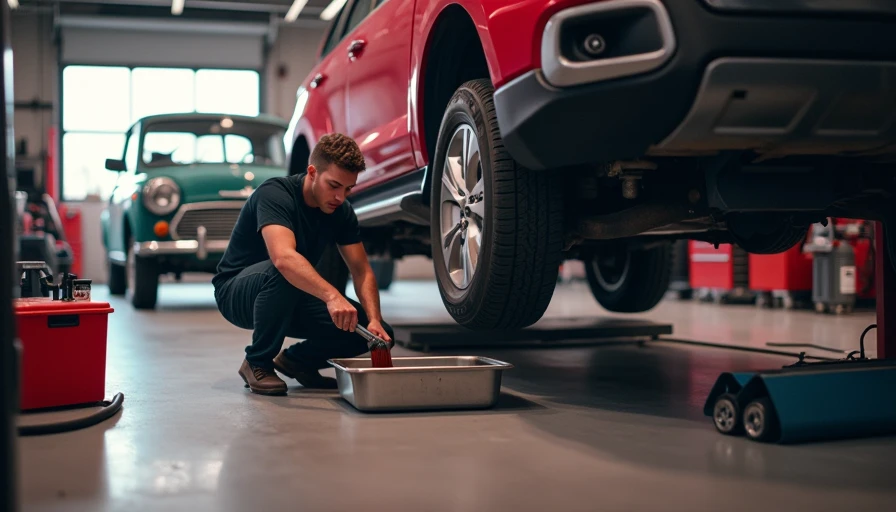
- **Inspect fluid condition.** Smell it and look at its color. Fresh **transfer case fluid** is usually red (if ATF) or amber (if gear oil). Dark brown or black means it's oxidized. Metallic sparkles mean wear—time for a drain and refill.
What Happens If You Neglect Transfer Case Fluid?
The consequences are ugly. Insufficient or degraded **transfer case fluid** leads to:
- **Bearing failure.** The input and output shaft bearings rely on fluid splash lubrication. Without it, they overheat and seize.
- **Chain stretch (in chain-driven cases).** The drive chain loses lubrication, stretches, and can snap.
- **Clutch pack damage (in on-demand systems).** The clutch discs overheat and glaze, causing slippage and loss of torque transfer.
- **Complete transfer case seizure.** Worst-case: the case locks up, potentially breaking the transmission case or driveshaft. Repair cost: $1,500–$3,500 for a replacement.
If you remember one concept from this post, make it this one: **Transfer case fluid** is cheap insurance against a very expensive breakdown.
Quick Quiz
Test your understanding:
- What lubricates and cools the internal components of a transfer case?
- How often should you check the fluid level?
- Name one symptom of low or degraded **transfer case fluid**.
Answers: 1. Transfer case fluid. 2. Every 30,000 miles. 3. Whining noise, difficulty shifting, or leaks.
Final Takeaway
Whether you drive a Jeep Wrangler, Ford F-150, or Toyota RAV4, your 4WD or AWD system depends on clean, adequate **transfer case fluid**. Don't let it be the forgotten fluid in your maintenance routine. Check it, change it per your manual, and keep your drivetrain healthy for years of reliable service.
*— Kevin Park, your community-college automotive instructor*

No letters yet — be the first to write.