A rear differential can quietly transfer hundreds of pound-feet of torque while you drive, but the wrong lubricant can turn that quiet work into noise, heat, and an expensive repair. Choosing the best rear differential fluid starts with understanding what the differential does, what its gears require, and whether your vehicle has a limited-slip mechanism. Let's start with the basics and build from there.
What the rear differential fluid does
A differential is the gear assembly that sends engine power to the drive wheels while allowing the left and right wheels to rotate at different speeds during a turn. In a turn, the outside tire travels farther than the inside tire. Without a differential, the tires would scrub across the pavement and the axle would experience severe stress.
Inside the housing, ring and pinion gears mesh under heavy pressure. Gear oil creates a protective film between those metal teeth. It also carries heat away from the contact surfaces and suspends tiny wear particles until the fluid is changed. A hypoid gear set, which uses offset spiral gears common in rear axles, needs an extreme-pressure additive package because the sliding action is especially demanding.
The best rear differential fluid is therefore not simply the thickest oil on a store shelf. It is the fluid that matches the manufacturer’s viscosity, performance rating, and friction requirements. A 75W-90 oil is common, but some trucks and performance cars specify 75W-140, 80W-90, or another grade. The owner’s manual and differential cover label take priority over general advice.
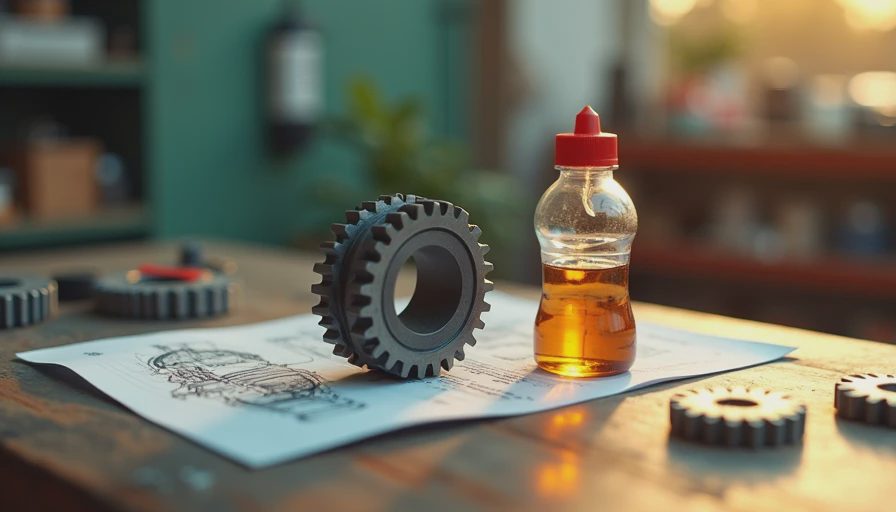
System Diagram reference: Picture the power path as engine, transmission, driveshaft, pinion gear, ring gear, axle shafts, and wheels. Fluid lives around the ring and pinion gears, not in the brake or engine-oil system.
How to identify the right specification
Start by finding three pieces of information: viscosity, API service rating, and limited-slip compatibility. Viscosity describes how readily the oil flows at different temperatures. The first number, such as 75W, relates to cold performance; the second, such as 90, describes the oil when hot. A heavier 140-grade oil can suit a loaded towing axle, but it can also create unnecessary drag in an application designed for 90-grade oil.
API GL-5 is the gear-oil performance category commonly specified for automotive differentials. GL-5 oil contains additives designed for high-pressure gear contact. Do not automatically substitute manual-transmission fluid or engine oil. Those products have different chemistry and may not protect hypoid gears.
A limited-slip differential uses clutch packs or another mechanism to reduce one-wheel spin. Its friction surfaces need controlled slip rather than constant chatter. Some gear oils include limited-slip friction modifier; others require a separate additive. The best rear differential fluid for a limited-slip axle is the exact oil or oil-plus-additive combination specified by the vehicle maker. Adding extra modifier to a fluid that already contains it can sometimes make clutch engagement too soft.
Read the label carefully. A bottle can say “for limited-slip differentials” without being the correct viscosity for your axle. Product families from Mobil 1, Valvoline, Royal Purple, and Amsoil include useful gear oils, but brand recognition does not replace the specification printed in your manual.
Quick Quiz: Why is 75W-140 not automatically better than 75W-90? Because thicker oil is not a universal upgrade; the axle was designed around a particular flow rate, temperature range, and gear clearance.
Comparing fluid choices in real driving
For a daily-driven sedan or crossover with a conventional open differential, a full-synthetic 75W-90 GL-5 oil is often a sensible choice when the manual calls for it. Synthetic base oils generally handle temperature swings well, which matters in Atlanta traffic, Minnesota winters, and long highway trips. They can also make cold operation easier than an older mineral-based formulation of the same grade.
For a half-ton pickup that regularly tows, the best rear differential fluid may be a full-synthetic 75W-140 if the manufacturer specifies that grade. The heavier hot viscosity can maintain a protective film during sustained load, but it should not be poured into every axle simply because towing is part of the vehicle’s future. A truck designed for 75W-90 still needs 75W-90 unless an approved alternative is documented.
Performance cars present another variation. A limited-slip unit may require a specific friction modifier, and some electronically controlled systems use a special lubricant rather than ordinary axle oil. A 2006 Mustang, a Jeep Wrangler, and a Ford F-150 can all have different requirements even when each has a rear differential. Match the axle code and service specification, not just the vehicle name.
If you are comparing the best rear differential fluid options at a parts store, compare the label line by line: viscosity, GL rating, limited-slip statement, synthetic formulation, and approval language. A $15 bottle that is wrong for the axle is more expensive than a $25 bottle that prevents noise and premature gear wear.
Changing the fluid without creating a leak
A differential service begins with safety. Park on a level surface, support the vehicle with properly rated jack stands, and allow a hot housing to cool enough to handle safely. Locate the fill plug before removing the drain plug. If the fill plug is seized, you do not want an empty differential that cannot be refilled.
Place a drain pan underneath, remove the fill plug, then remove the drain plug if the housing has one. Inspect the old fluid for a strong burnt odor, metallic glitter, or large chips. A fine gray paste on a magnetic plug can be normal wear material; chunks or bright fragments deserve professional inspection.
Clean the plug, replace its sealing washer when required, and reinstall it to the manufacturer’s torque specification. Pump in the specified oil until it reaches the bottom of the fill opening, unless the service manual gives another measurement. Do not guess by bottle count because axle capacity varies widely. Wipe the housing clean and check for seepage after a short drive.

Symptoms that point to the wrong fluid or low level
A whining sound that changes with acceleration can indicate ring-and-pinion wear, insufficient lubrication, or incorrect gear setup. Chatter or shudder during slow, tight turns often points toward limited-slip friction issues, although worn clutch packs and other faults can produce similar symptoms. A wet area around the axle tube or pinion seal indicates a leak that can lower the fluid level over time.
Do not diagnose by sound alone. First check the fluid level and specification, then look for seal damage, bearing play, or a loose pinion flange. If the oil is milky, water has entered the housing, often through deep-water exposure or a damaged vent. Water contamination reduces lubrication and can rust internal parts.
Service intervals depend on the vehicle, use, and fluid condition. Severe towing, repeated off-road water crossings, racing, and heavy payloads justify more frequent inspections than normal commuting. A fluid change cannot repair damaged gears, but it can prevent a small maintenance issue from becoming a differential rebuild costing well over $1,000.
A practical buying checklist
Before purchasing, write down the year, make, model, engine, drivetrain, and axle code if available. Confirm whether the vehicle has an open, limited-slip, locking, or electronically controlled differential. Then verify the required viscosity and GL rating in the owner’s manual. Check whether friction modifier is built into the product or must be added separately.
Choose a sealed, clearly labeled bottle from a reputable automotive-fluid manufacturer. Keep the receipt, because the label and vehicle specification are useful if a parts counter gives conflicting advice. If the differential has a service fill procedure involving a pump, special adapter, or electronic calibration, a repair shop may be the efficient choice.
Quick Quiz: What should you check before the drain plug? The fill plug. This simple sequence prevents a frustrating no-refill situation.
If you remember one concept from this post, make it this one: the best rear differential fluid is the correctly specified fluid, not the most expensive or thickest product. Confirm the grade, protect limited-slip components with the right friction control, inspect for contamination, and keep the housing full. Those steps preserve quiet gear operation and protect one of the drivetrain’s most costly assemblies.


No letters yet — be the first to write.