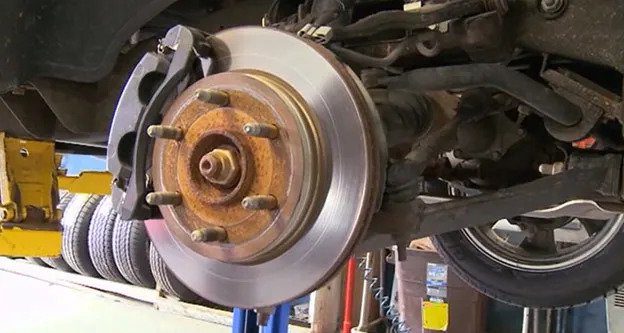
The braking system is among the most critical components on any vehicle, governing your ability to decelerate and come to a complete stop. Its importance to the safety of drivers, passengers, and everyone sharing the road cannot be overstated. What many drivers overlook, however, is that even well-maintained brakes can fail when brake fluid is compromised.
Selecting a high-quality product — whether mineral oil brake fluid or an equivalent DOT formulation — can reduce the likelihood of problems, but no fluid lasts indefinitely. Proper replacement at the appropriate service interval remains a non-negotiable part of responsible vehicle ownership.
Although human error accounts for the vast majority of traffic collisions, a meaningful share of accidents stem directly from mechanical failure. Brake system problems rank among the leading vehicle-related causes. Understanding how to keep your braking system in top condition is one of the most valuable things a driver can do.
Speed is critical during brake fluid replacement because this fluid is highly susceptible to air contamination. Allowing air to enter the system during the process can ruin the new fluid entirely. This sensitivity is one of the strongest reasons to entrust brake fluid servicing to qualified professionals rather than attempting it as a home repair.
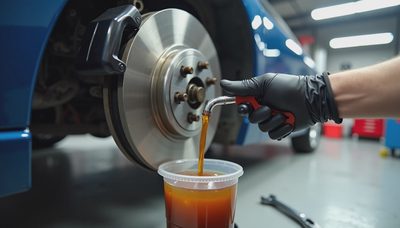
The most demanding step in the procedure is the brake fluid flush, a task that is genuinely difficult to execute correctly outside of a professional workshop. The going rate for this service typically falls between €70 and €100. Considering that a failed DIY attempt can have serious safety consequences — and that this job only needs doing once every four to five years — that price represents solid value.
The four-to-five-year guideline is a useful starting point, but the full picture is more nuanced. Total mileage accumulated and individual braking habits both factor into how quickly fluid degrades. Because driving behavior is difficult to quantify, knowing how to evaluate your brake system's condition through regular testing is an essential skill.
Low brake fluid will commonly trigger the ABS warning light as an early indicator. While driving, you may also notice unusual pedal feel or resistance. Beyond these specific signs, brake fluid problems often present identically to other brake faults — including worn brake pads and audible squealing or screeching. When in doubt, the most dependable course of action is a direct visit to a qualified mechanic.
Selecting a replacement fluid adds another layer of complexity, given the variety of formulations on the market. During normal operation, brake fluid is exposed to significant heat, making the boiling point one of the most important performance differentiators between product types.
DOT 3 and DOT 4 are the most widely used classifications, with DOT 4 steadily gaining ground among European automakers. DOT 5 and DOT 5.1 round out the main options. As a general rule, a higher DOT number corresponds to a higher boiling point — a straightforward way to understand how these grades relate to one another.
It is worth noting that the priciest option on the shelf does not automatically translate to the best fit for your specific vehicle.
Before committing to a particular fluid type, consulting a mechanic or reviewing your owner's manual is strongly advisable. The right answer depends heavily on context. Certain vehicles are engineered from the outset to run on mineral oil rather than any DOT-rated fluid.
Depending on your vehicle's manufacturer specifications, mineral oil brake fluid may be the required choice. It is essential to understand that DOT fluids and mineral oil are entirely incompatible — brake systems are engineered for one or the other, and mixing them is not an option. A key property of mineral oil is that it is hydrophobic, meaning it does not absorb atmospheric moisture.
In terms of thermal performance, mineral oil generally boasts a higher boiling point of 260 degrees Celsius compared to most DOT fluids — with the sole exception of DOT 5.1, which edges ahead at 270 degrees Celsius.
Perhaps the most significant practical advantage mineral oil holds over DOT fluids is that it is non-corrosive. DOT brake fluid, by contrast, is corrosive, making an accidental spill a genuine hazard to surrounding vehicle components. This characteristic demands extra care and attentiveness whenever DOT fluid is being handled.
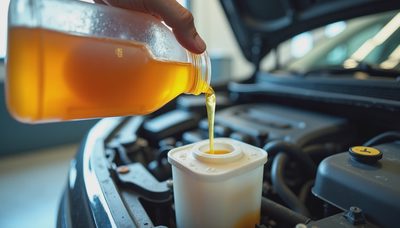
Neglecting brake fluid replacement allows moisture to accumulate in the brake reservoir over time. The inevitable outcome is a noticeable decline in braking performance that can, under certain conditions, lead to catastrophic results. This is not an area where cutting corners makes sense. Always use the best available mineral oil brake fluid or DOT alternative, and have the fluid change carried out by trained specialists.
No letters yet — be the first to write.