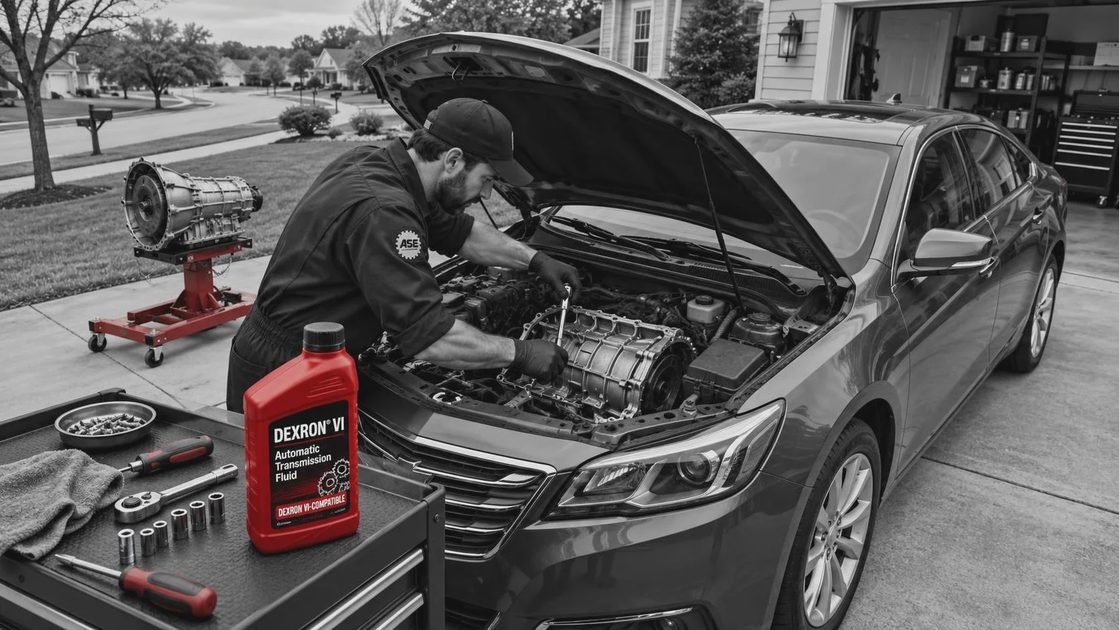
The wrong transmission fluid can turn a routine service into an expensive problem. Dexron VI ATF is an automatic transmission fluid made to a General Motors specification, and it is the right starting point when your vehicle’s manual calls for DEXRON-VI. It is not automatically right for every automatic transmission, even if the bottle says it works in many vehicles. Let’s start with the basics and build from there.
ACDelco DEXRON-VI and Mobil DEXRON-VI are two product lines to consider when your vehicle requires this specification. Either can suit an owner looking for the specified fluid; compare the bottle’s license information and the exact requirement in the manual rather than choosing by brand alone. Packaging can change, so inspect the actual container before buying.
What the fluid does inside a transmission
ATF stands for automatic transmission fluid. It does more than lubricate moving parts: it also transfers hydraulic pressure, helps cool components, and provides controlled friction for shifting. Hydraulic pressure is force transmitted through a liquid; the transmission uses it to apply internal clutches that engage different gear ratios.
Those clutches need a particular amount of friction, or resistance to sliding. Too little or too much friction can change how a clutch engages. The fluid’s additives, which are chemicals blended into the base oil, help create the friction behavior the transmission was designed to use. They also help protect against wear and oxidation, a chemical reaction that degrades oil over time.
Viscosity means a fluid’s resistance to flow. Dexron VI ATF is formulated to meet a specification that includes viscosity and performance requirements; it is not simply a color or a generic weight of oil. A transmission’s controls, seals, and clutch materials all matter when a manufacturer selects a fluid.
System Diagram reference: Picture a loop from the transmission pan to a pump, through control passages and clutches, then through a cooler before returning to the pan. A service manual’s transmission hydraulic diagram can show the actual path for your vehicle.
How to check compatibility
Start with the owner’s manual under maintenance, specifications, or fluid capacities. Record the exact fluid designation and any notes about the transmission. If the manual is unclear, a dealer can look up the application using the vehicle identification number, or VIN, the unique identifier assigned to the vehicle.
Dexron VI ATF is generally suitable for many older GM automatic transmissions that originally specified earlier DEXRON fluids, but there are exceptions. Older vehicles may also have had a transmission replaced. Check the applicable GM service information for the actual transmission before treating an earlier specification as interchangeable.
Do not assume the same rule applies to a continuously variable transmission, commonly called a CVT. A CVT changes its drive ratio differently from a conventional stepped-gear automatic and may need its own fluid. Dual-clutch transmissions and manual transmissions can have different requirements, too. A shared brand name does not make their fluids interchangeable.
A power-steering pump or transfer case may also call for an ATF, but that does not mean every ATF is suitable. Check the specification for that particular component. A transfer case distributes power between axles in many four-wheel-drive and all-wheel-drive vehicles; it is separate from the transmission.
Reading the bottle
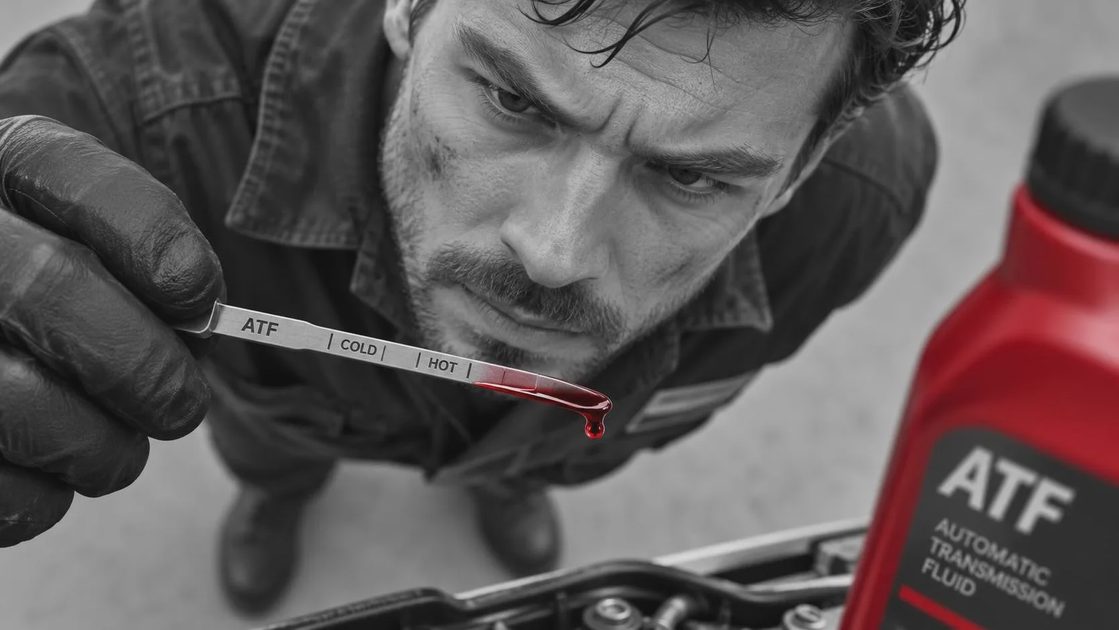
Look for the DEXRON-VI designation and a statement that the product is licensed by GM. A licensed fluid is one authorized under GM’s licensing program; a manufacturer’s claim that a fluid is “suitable for” an application is a different statement. When in doubt, verify the license through GM’s licensing resources or ask the fluid manufacturer for the license information.
The word “synthetic” describes the type of base oil or formulation, not a vehicle approval by itself. Likewise, red dye is not proof of compatibility. Use the specification and license information, not appearance or a broad “multi-vehicle” claim, to make the decision.
If your manual calls for Dexron VI ATF, buy enough for the specific service you plan. A drain-and-fill replaces only the fluid that drains out; some remains inside the transmission and associated passages. A dry-fill capacity, the amount for an empty system, is not necessarily the amount needed for routine service.
Checking and changing the fluid safely
First, find the manufacturer’s level-check procedure. Some vehicles have a dipstick; others use a check plug and require the fluid to be within a specified temperature range. The procedure may call for the engine to be running and the vehicle to be level. Follow the vehicle-specific instructions rather than guessing from another model.
Hot fluid and exhaust components can burn skin. A vehicle raised for access must be supported properly on rated stands or a suitable lift, never by a jack alone. If the check requires working underneath a running vehicle and you lack the equipment or experience, have a qualified shop do it.
Use the maintenance schedule that applies to your driving. Frequent towing, stop-and-go traffic, or other demanding use may put a vehicle under a severe-service schedule with shorter intervals. The manual defines the conditions and interval for your model; there is no single mileage that fits every transmission.
When arranging service, ask whether the shop will perform a drain-and-fill or a fluid exchange, and confirm the exact fluid it will use. A fluid exchange replaces more of the old fluid through a service process, but the appropriate method depends on the vehicle and its condition. If the transmission is already slipping, leaking, or shifting harshly, ask for diagnosis rather than expecting fresh fluid alone to repair worn parts.
Mixing, leaks, and disposal
A small top-off with the specified fluid is different from correcting an unknown fill. If you accidentally add an incompatible fluid, avoid driving if practical and contact a qualified transmission shop for advice. The quantity and type added affect the next step; blindly adding more correct fluid does not reliably fix the mixture.
Red or brown fluid under a vehicle can be a clue, not a diagnosis. Engine oil, power-steering fluid, and other fluids can also leak, and color changes with age. Note where the puddle forms and have the source identified. Low transmission fluid can cause poor operation, but repeated top-offs do not fix a leak.
Collect drained fluid in a clean, sealed container and take it to a local used-oil or automotive-fluid collection site that accepts ATF. Ask first whether the site accepts it separately or mixed with used motor oil; local collection rules vary. Never pour it onto the ground or into a drain.
Quick Quiz
Quick Quiz: If a bottle is red and says “automatic transmission fluid,” is that enough to choose it? No. Match the vehicle’s specified fluid and check the label’s licensing information.
If you remember one concept from this post, make it this one: Dexron VI ATF is a performance specification, not a universal synonym for transmission fluid. The manual tells you whether it belongs in your vehicle.
No letters yet — be the first to write.