The wrong transmission fluid or an incorrect fill level can turn routine maintenance into an expensive repair. For Subaru CVT fluid, the safest choice is the exact specification Subaru lists for your vehicle and transmission—not a bottle chosen by color or a generic “automatic transmission” label. Service timing depends on the model, driving conditions, and applicable maintenance schedule. Let's start with the basics and build from there.
What the fluid does inside a CVT
A continuously variable transmission, or CVT, changes its drive ratio continuously rather than moving through a fixed set of gears. The drive ratio describes the relationship between engine speed and wheel speed. In a typical Subaru belt or chain CVT, two variable-width pulleys and a metal chain work together to change that ratio.
Subaru CVT fluid does several jobs at once. It carries hydraulic pressure, which is pressure created by a liquid and used to control parts inside the transmission. It also lubricates components, carries heat away, and provides carefully controlled friction where the chain contacts the pulleys. Too much slip or the wrong friction behavior can interfere with power transfer.
System Diagram reference: Picture the engine sending power to a first pulley, a metal chain connecting that pulley to a second pulley, and the second pulley sending power toward the wheels. A fluid pump and control system manage hydraulic pressure around those components. This is a simplified teaching diagram, not a map for locating service plugs.
Unlike engine oil, this fluid is not normally consumed as part of operation. A low level points to a possible leak or an earlier filling error; simply adding fluid without finding the cause can leave the underlying problem unresolved.
How to identify the correct Subaru CVT fluid
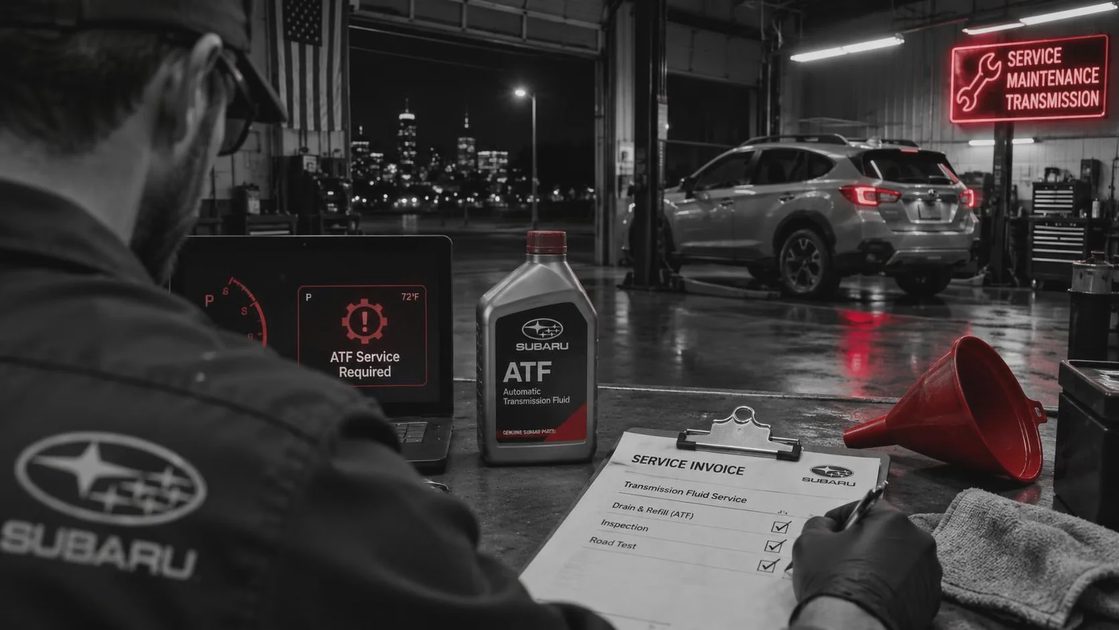
Start with your owner's manual and maintenance information for the specific model year, engine, and transmission. Subaru has used different CVT fluid specifications, including fluids identified as CVTF-II and High Torque CVTF. Those names are not interchangeable just because both bottles say Subaru.
If the manual does not clearly identify the fluid, give a Subaru parts department your vehicle identification number, or VIN, and ask for the specified fluid and part number. The VIN is the unique identifier visible on your registration and typically at the base of the windshield. Confirm the required quantity and the procedure separately; knowing the bottle does not tell you how to set the level.
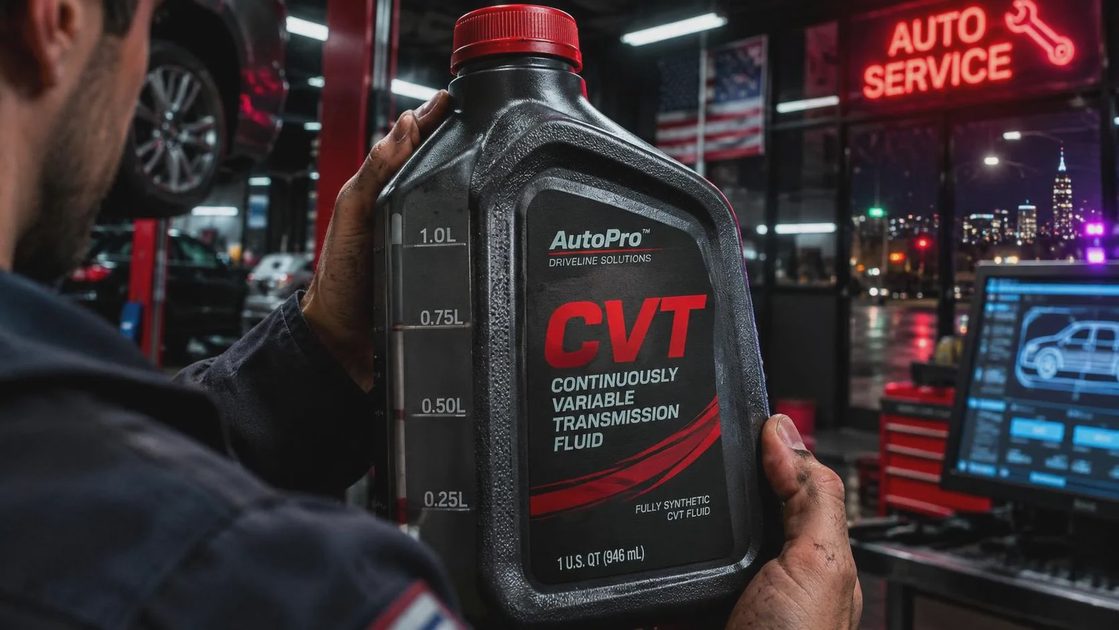
Some aftermarket products claim compatibility with particular Subaru applications. Read the exact application claim, not just “CVT” on the front. If a label is vague, ask the fluid manufacturer for written confirmation that it covers your specific transmission. An original-equipment Subaru fluid matching the specified part number is the straightforward choice when you want to avoid interpreting a broad compatibility claim.
Do not substitute ordinary automatic transmission fluid, often abbreviated ATF, or differential gear oil. A differential is a separate gear assembly that allows driven wheels to turn at different speeds. Its lubricant is not necessarily shared with the CVT, even when the components are packaged close together. Fluid color alone cannot identify the correct product.
When should you service it?
There is no single Subaru CVT fluid interval that fits every model and use. Check the maintenance schedule for your exact vehicle, paying attention to its instructions for inspection, replacement, and severe driving. An inspection is a check of condition or leaks; it is not the same as replacing the fluid.
Repeated towing, sustained stop-and-go driving, steep terrain, and frequent high-load operation can put additional heat and stress into a transmission. Your vehicle's schedule determines which conditions matter and what action is specified. If your driving fits one of those categories, ask a qualified shop or dealer how the schedule applies rather than assuming a universal mileage figure.
Age and service history matter, too. If you bought a used Subaru and cannot document a fluid change, ask for an inspection and a service recommendation based on the transmission's condition. A fluid change is maintenance, not a guaranteed cure for an existing mechanical problem. If the car already slips or shudders, describe the symptoms before authorizing routine service so the shop can diagnose them first.
Drain-and-fill, level checks, and shop questions
A drain-and-fill removes the fluid that drains from the transmission and replaces it with fresh fluid. It generally does not exchange every drop because some remains inside components and passages. A full exchange is a different service; ask the shop exactly what method it proposes and why, rather than assuming either term describes the same work.
Many Subaru CVTs do not have a conventional owner-serviceable dipstick. The correct level-setting procedure can depend on fluid temperature, the vehicle being level, and a specified engine-running or selector-position sequence. Those details vary by transmission. An overfill can be harmful, and an underfill can interfere with fluid pressure and lubrication.
Unless you have the correct vehicle-specific procedure, temperature-reading equipment, and a safe way to keep the vehicle level, this is a sensible job for a qualified shop. Never work beneath a vehicle supported only by a jack. Also, do not loosen a plug based on its appearance: a nearby plug may serve a different compartment.
Before booking, ask the shop to identify the fluid specification, explain how it verifies fill temperature and level, and state whether its quote includes the fluid and any required sealing parts. Keep the invoice with the fluid name, part number, date, and mileage. That record makes the next maintenance decision much easier.
Warning signs and the next step
A new leak, delayed engagement when selecting drive, unusual whining, shuddering, or a transmission warning light deserves attention. These symptoms do not identify a single cause: fluid level, controls, and mechanical components are among the possibilities. Avoid towing or hard acceleration while arranging a diagnosis. If the vehicle will not move normally or a warning indicates you should stop, pull over safely and consult the owner's manual or a qualified technician.
If you remember one concept from this post, make it this one: matching the fluid specification and setting the level correctly are separate requirements. Get both right, then follow the schedule that applies to your vehicle.
Quick Quiz:
Can you choose Subaru CVT fluid by its color? No. Match the specification to the vehicle and transmission.
Does a drain-and-fill replace every drop? Generally, no. Some fluid remains inside the transmission.
Is a low level normal consumption? No. Have a possible leak or previous filling error investigated.
No letters yet — be the first to write.