A transmission repair can turn a routine maintenance task into a bill of $2,000 to $6,000 or more. Choosing the right Valvoline transmission fluid will not guarantee that a transmission lasts forever, but using the wrong fluid can create shifting problems, clutch wear, and expensive damage. Let's start with the basics and build from there.
Transmission fluid is both a lubricant and a hydraulic working fluid. Lubrication reduces metal-to-metal contact, while hydraulic pressure allows an automatic transmission to apply clutches and change gears. The fluid also carries heat away from the transmission. That combination explains why the bottle on the shelf is not just generic oil.
What Valvoline transmission fluid actually does
Valvoline makes several fluid families because transmissions use different friction materials, pressure controls, and operating temperatures. A traditional automatic transmission usually uses automatic transmission fluid, or ATF. ATF is a specialized oil with additives that control friction, resist oxidation, prevent corrosion, and keep small passages clean.
A continuously variable transmission, called a CVT, does not shift through fixed gear pairs in the same way. It uses pulleys and a steel belt or chain, so it needs a fluid designed for that contact pattern. CVT fluid is not interchangeable with ordinary Dexron or Mercon ATF. A dual-clutch transmission can require yet another formulation, sometimes with separate fluid circuits for the gears and the clutch assembly.
Valvoline transmission fluid products commonly include multi-vehicle ATF, full-synthetic ATF, CVT fluid, and specialty fluids for particular manufacturers. The label matters, but the vehicle owner's manual matters more. “Compatible with” language is useful only when it matches the specification listed for your transmission.
System Diagram reference: Picture the system as a loop. The pump draws fluid from the pan, sends it through the valve body and cooler, and returns it to lubricate and control the transmission. A clogged filter, low level, or incorrect viscosity interrupts that loop.
Quick Quiz: Which job does ATF perform? The best answer is all three: it lubricates components, transfers hydraulic pressure, and removes heat.
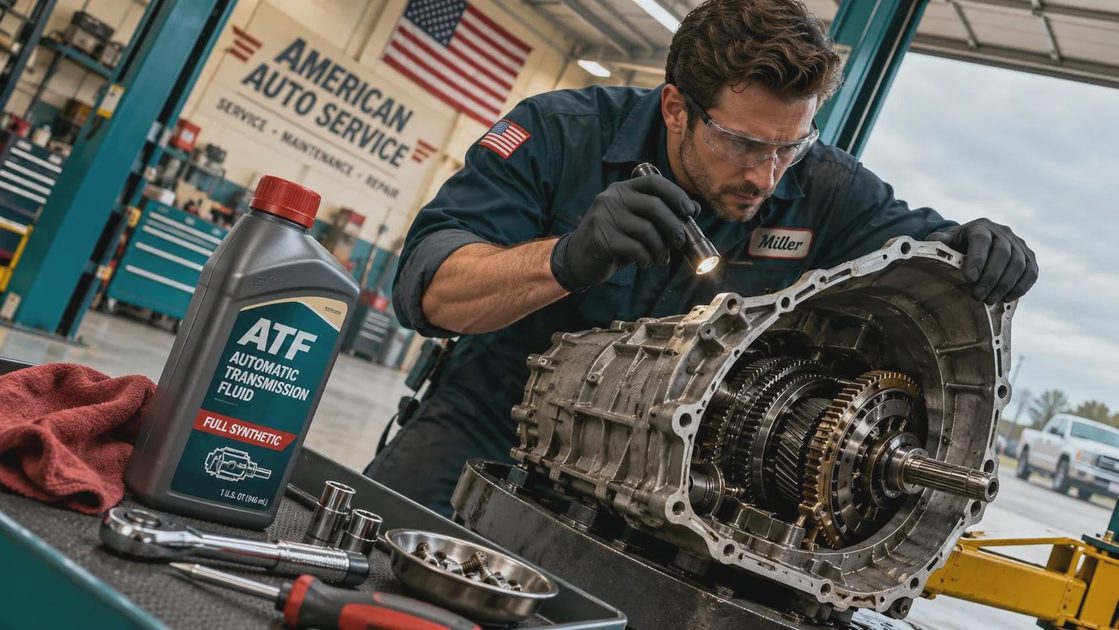
Matching the fluid to your vehicle
Before buying Valvoline transmission fluid, identify the transmission type and required specification. Start with the owner's manual, then verify the service information on the transmission dipstick, fill cap, or manufacturer parts catalog. The vehicle identification number can help a parts counter identify the exact powertrain, especially when one model was sold with several transmissions.
Do not rely on color. New ATF may be red, amber, or another shade, and color does not prove compatibility. Also avoid the assumption that “full synthetic” means “universal.” Synthetic describes the base oil and performance approach; it does not erase the need for the correct friction and seal requirements.
For example, a vehicle calling for Toyota WS fluid should receive a product that specifically lists that requirement. A Ford transmission requiring Mercon LV should not automatically receive an older Mercon formulation. Honda, Subaru, Nissan, Hyundai, and General Motors vehicles can also have distinct requirements. Valvoline transmission fluid can be a practical option when the bottle clearly lists the exact specification your vehicle needs.
If your manual says a fluid is not approved for a CVT, do not use it in a CVT simply because the bottle says “multi-vehicle.” CVT systems are especially sensitive to friction behavior. Shudder during acceleration, delayed engagement, or a whining sound after a fluid mistake deserves prompt professional diagnosis.
Change intervals and fluid condition
There is no single change interval for every vehicle. Some manufacturers specify a mileage interval, such as 30,000 to 60,000 miles under severe service. Severe service can include frequent towing, stop-and-go driving, mountainous roads, very hot weather, or repeated short trips. Other manufacturers describe the fluid as long-life and provide inspection guidance instead.
The correct interval is determined by the transmission design, operating conditions, and service history. A fluid change is not a cure for worn clutches or a damaged valve body. It can, however, remove degraded fluid and replenish additive protection when performed according to the vehicle procedure.
Watch for warning signs: a burnt odor, unusual darkening, delayed engagement, slipping, harsh shifts, or red fluid under the vehicle. A leak lowers fluid level, and low fluid can cause aeration. Aeration means air bubbles enter the fluid, reducing the pump's ability to build stable pressure. That is a mechanical problem, not merely a dirty-fluid problem.
Quick Quiz: Does dark fluid alone prove that a transmission needs replacement? No. Fluid appearance is one clue. Symptoms, level, leak location, diagnostic codes, and service history provide the larger picture.

A careful DIY fluid-check procedure
Park on a level surface and follow the owner's manual for temperature, engine-running, and gear-selection requirements. Some transmissions have a dipstick; many modern units have a sealed design with a level plug. Never crawl under a vehicle supported only by a jack. Use properly rated jack stands and keep clear of hot exhaust components.
For a dipstick-equipped transmission, pull the dipstick, wipe it with a lint-free cloth, reinsert it fully, and check the reading. The level marks often differ for hot and cold conditions. Add fluid through the correct tube in small amounts, usually a few ounces at a time, then recheck. Overfilling can be harmful because rotating parts whip excess fluid into foam.
A drain-and-fill service typically replaces only part of the fluid because some remains in the torque converter and cooler. That is normal. Remove the drain plug or pan according to the service procedure, inspect the magnet if present, replace the gasket or filter when required, and refill with the specified amount. Measure what came out, but use the final level-check procedure rather than trusting volume alone.
Avoid a forceful power flush when the manufacturer does not recommend it. A machine exchange can be appropriate in some service programs, but the method, fluid, and equipment must suit the transmission. Valvoline transmission fluid should be poured from a clean, sealed container; mixing unknown fluids makes future diagnosis harder.
Buying and comparing Valvoline products
When comparing Valvoline transmission fluid, consider specification first, formulation second, and price third. A one-gallon container may cost roughly $25 to $45 for common ATF, while specialty CVT or premium synthetic products can cost more. A professional drain-and-fill often runs about $150 to $300, depending on access, fluid capacity, filter requirements, and local labor rates.
A product with the correct approval is more valuable than a cheaper bottle that only looks similar. Save the receipt, photograph the label, and record the date, mileage, product name, and amount installed. That small log helps the next technician understand what is in the transmission.
If you are comparing Valvoline, Castrol, Pennzoil, or an automaker-branded fluid, compare the listed specifications rather than marketing adjectives. “Premium,” “advanced,” and “high mileage” are not substitutes for the required transmission standard. High-mileage formulas can be useful for older vehicles, but they still need to match the application.
Final classroom takeaway
The safest way to use Valvoline transmission fluid is to identify the exact transmission, read the required specification, follow the correct temperature and level procedure, and document the service. Never choose by color alone, and never assume one ATF works in every automatic, CVT, or dual-clutch unit.
If you remember one concept from this post, make it this one: transmission fluid is part of the transmission's control system, not just a lubricant. The correct Valvoline transmission fluid supports predictable hydraulic pressure, friction control, and heat management. If the label and owner's manual agree, you have made an informed maintenance decision. If they do not, pause before opening the bottle and confirm the application with a qualified technician.
No letters yet — be the first to write.