Transmission repairs can turn a routine service mistake into a $2,000 to $6,000 problem. That is why Toyota WS transmission fluid deserves more attention than a generic bottle of automatic transmission fluid. WS means World Standard, Toyota’s designation for a specific low-viscosity automatic transmission fluid, or ATF. The chemistry, friction behavior, and viscosity are selected for particular Toyota and Lexus transmissions. Let’s start with the basics and build from there.
What Toyota WS transmission fluid does
An automatic transmission uses fluid for three jobs. First, it transfers hydraulic pressure through small passages and valves so the transmission can engage gears. Second, it lubricates gears, bearings, and clutch components. Third, it carries heat away from those parts and toward the transmission cooler.
Viscosity describes how easily a fluid flows. Toyota WS transmission fluid is designed to flow differently from older Toyota fluids such as Type T-IV. That difference matters because modern transmissions use narrow hydraulic passages, electronically controlled shift valves, and carefully calibrated clutch engagement. The control computer expects a certain pressure response from the fluid. Changing that friction behavior can produce delayed shifts, shudder, harsh engagement, or clutch wear.
The fluid is usually red when new, although color alone cannot prove that a fluid is correct or healthy. Aged ATF can darken from heat and oxidation. A burnt odor, visible debris, or repeated slipping is more concerning than color by itself.
System Diagram reference: Picture the transmission as a hydraulic machine. The pump moves fluid, the valve body routes pressure, clutch packs lock selected gearsets, and the cooler removes heat. Correct fluid helps every part of that chain work as designed.

Which vehicles use it?
Toyota WS transmission fluid appears in many Toyota and Lexus vehicles from the mid-2000s onward, but model year alone is not enough to identify the correct fluid. Camry, Corolla, RAV4, Highlander, Sienna, Avalon, Tacoma, and Lexus models can use different transmissions across different years, engines, and markets. Some vehicles use Toyota WS, while others use a different Toyota specification or a continuously variable transmission fluid, commonly called CVT fluid.
The owner’s manual is the first source to check. A transmission service label, repair manual, or VIN-based parts lookup can provide a second confirmation. Do not assume that a fluid labeled “Toyota compatible” is automatically suitable. Read the product data sheet and confirm that it specifically lists Toyota WS compatibility.
Toyota Genuine ATF WS is the direct factory-branded option. Valvoline, Idemitsu, Castrol, and other manufacturers sell products that can be formulated for applications calling for Toyota WS, but the bottle must state that application clearly. “Multi-vehicle” is not the same as universally correct.
Quick Quiz: If your Toyota has a CVT, should you automatically pour Toyota WS into it? No. A CVT may require Toyota CVT Fluid FE or another specified CVT fluid. The transmission design determines the fluid, not the vehicle badge alone.
When should the fluid be changed?
Some Toyota maintenance schedules describe certain automatic transmissions as sealed or filled for normal service. That wording does not mean the fluid never changes condition. Heat, towing, stop-and-go traffic, mountainous driving, and high mileage all place extra stress on ATF. A vehicle used for delivery work in Atlanta traffic experiences a different thermal load from one driven gently on open highways.
A fluid change can be reasonable when the maintenance schedule calls for it, when the vehicle has severe-use conditions, or when a qualified technician finds evidence of contamination or degradation. A practical inspection includes checking for leaks, reviewing service history, scanning for transmission codes, and evaluating shift quality before opening the system.
Symptoms such as delayed engagement, a flare between gears, shudder during light acceleration, or a new whining sound deserve diagnosis rather than a blind fluid exchange. Low fluid level can create similar symptoms, and adding fluid without finding a leak only postpones the repair.
If a transmission has very high mileage and severely degraded fluid, a technician may recommend a drain-and-fill instead of an aggressive machine flush. A drain-and-fill replaces only the fluid that comes out of the pan or drain plug, while a flush exchanges more of the system. The correct choice depends on the transmission’s condition and service history.
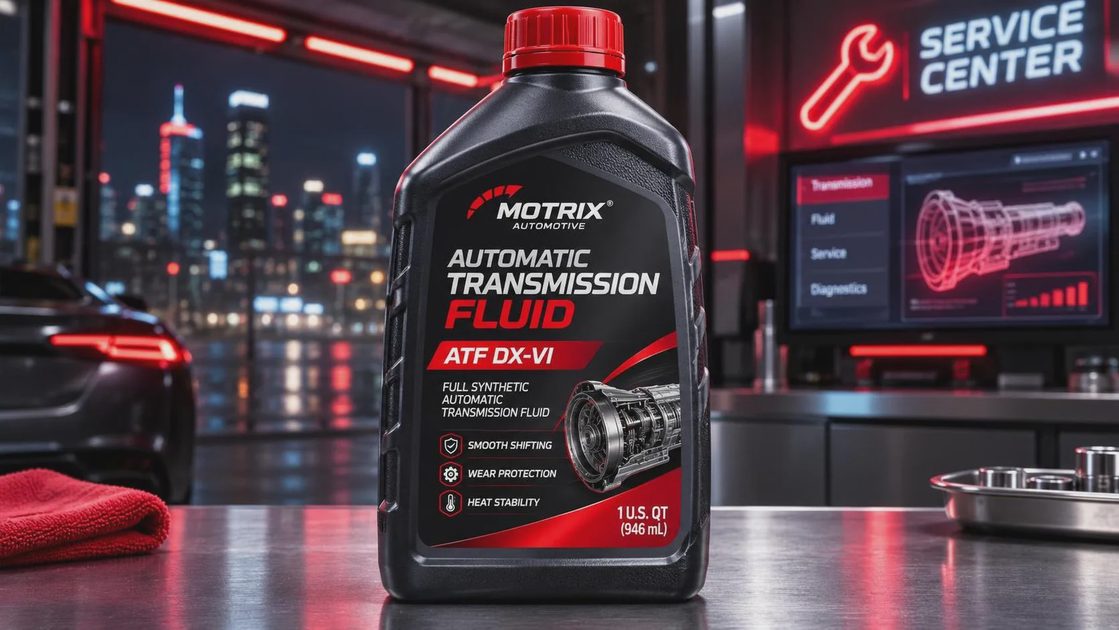
How a proper service works
The procedure begins with the vehicle level and safely supported. The technician identifies the transmission, confirms the specification, and measures the drained fluid. Some Toyota transmissions have a drain plug and an overflow or level-check tube rather than a conventional dipstick. That design requires fluid temperature to be within a specified range during the final level check.
This temperature step is important. ATF expands as it warms, so checking it cold can leave the transmission overfilled, while checking it too hot can result in an underfill. The exact temperature range and method differ by transmission. A scan tool may be needed to read transmission temperature accurately.
A typical service includes replacing a drain-plug gasket when required, installing the correct amount of Toyota WS transmission fluid, cycling the selector through the gears, and performing the final level check. A pan gasket or filter service is not automatically required for every model. Some transmissions use an internal filter that is not changed during a basic drain-and-fill.
Afterward, inspect the driveway and transmission case for leaks. The first road test should include gentle acceleration, steady cruising, and several normal gear changes. Smooth operation is the goal; a dramatic “flush” is not proof of a successful repair.
Choosing the right product and avoiding mistakes
The most common mistake is substituting older Toyota Type T-IV because the car is a Toyota. Type T-IV and WS have different specifications and should not be treated as interchangeable simply because both are automatic transmission fluids. Another error is using universal ATF without checking its formal application list.
Read the entire label. Look for Toyota WS or Toyota World Standard application language, not just “works in many vehicles.” Keep the receipt and record the brand, product name, mileage, date, and amount installed. That information helps the next technician determine whether the transmission received the intended fluid.
Avoid additives marketed as instant transmission repairs. A friction modifier can change clutch behavior, and an additive cannot repair a worn bearing, damaged solenoid, leaking seal, or failing clutch pack. If the fluid contains metal flakes or smells sharply burnt, diagnosis is more valuable than experimentation.
For many owners, a professional service costs roughly $150 to $350 for a drain-and-fill, depending on vehicle access, fluid quantity, and local labor rates. A transmission rebuild costs far more, so confirming the specification before service is inexpensive risk management.
Final checklist and Quick Quiz
Before buying Toyota WS transmission fluid, confirm the exact vehicle, model year, engine, transmission type, and owner’s manual specification. Confirm whether the service uses a dipstick or a temperature-based overflow procedure. Buy enough fluid for the stated service, but do not pour in the entire container without measuring. Record the service and watch for leaks or shift changes during the next week.
Quick Quiz: What does viscosity mean? It describes a fluid’s resistance to flow. Why does temperature matter during a level check? Because ATF expands as it heats. Why is a bottle labeled “multi-vehicle” not automatically safe? Because different transmissions require different friction and flow characteristics.
If you remember one concept from this post, make it this one: the correct fluid is part of the transmission’s design, not a generic lubricant chosen by color or price. Toyota WS transmission fluid can protect shift quality and hydraulic control when it matches the exact transmission. Confirm the specification first, use the correct service procedure, and ask for a diagnosis when symptoms suggest a mechanical problem rather than ordinary fluid aging.
No letters yet — be the first to write.