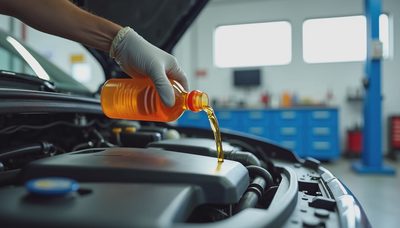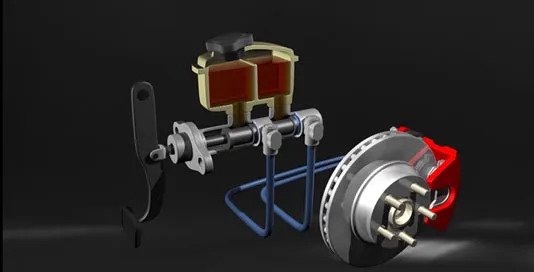
The braking system ranks among the most critical components of any vehicle, responsible for regulating speed and bringing the vehicle to a stop. Brake fluid is the specialized fluid at the heart of this system, transmitting the force applied to the brake pedal directly to the brake pads. Beyond force transfer, it provides lubrication and anti-corrosion protection that preserve the brake system's performance and extend its service life. Given these essential roles, selecting the right brake fluid is one of the most consequential decisions in vehicle maintenance.
Not every brake fluid is suited to every braking system. The types most widely used today are DOT 3, DOT 4, DOT 5, and DOT 5.1.
So are all brake fluids interchangeable? If not, what distinguishes these specialized fluids from one another?
Here is what every driver and technician should know.
Braking systems operate under extreme thermal conditions, which means brake fluid must possess specific characteristics to function reliably in those environments. Its key properties include the following:
DOT stands for the US Department of Transportation. The designation also identifies brake fluid grades established under the Federal Motor Vehicle Safety Standards (FMVSS) — namely DOT 3, DOT 4, DOT 5, and DOT 5.1.
These same brake fluid grades are recognized under alternative classification systems: the SAE standards J1703, J1704, and J1705 published by the Society of Automotive Engineers, and Classes 3, 4, 5, and 5.1 defined by the International Standards Organisation under ISO 4925.
The composition of brake fluid includes a solvent (60 to 90%), lubricating agents (5–30%), and additives (2–5%). The additive package typically contains corrosion inhibitors, which guard metal brake components against corrosion, and antioxidants, which prevent solvent degradation and the buildup of deposits.
DOT 3 brake fluid relies on glycol ether as its solvent and represents the conventional brake fluid formulation used in vehicles manufactured through the 1990s. It is compatible with all brake system types and suitable for all driving conditions.
DOT 4 brake fluid incorporates glycol ether along with borate ester compounds, delivering improved performance relative to DOT 3. It became the standard fluid for vehicles produced after 2006. Like DOT 3, it is compatible with all brake system types and driving conditions.
DOT 5.1 brake fluid also uses glycol ether and borate ester compounds, but achieves a performance level comparable to the silicone-based DOT 5. In practical terms, it functions as a non-silicone equivalent of DOT 5 while remaining fully compatible with DOT 3 and DOT 4 braking systems and fluids.
All glycol-based brake fluids require careful handling, as they are capable of damaging the paintwork on both vehicles and motorcycles.
DOT 5 is a silicone-based formulation, which makes it incompatible with anti-lock braking systems. It cannot be blended with any other brake fluid type. Unlike glycol-based fluids, however, DOT 5 poses no risk to vehicle or motorcycle paint.
This fluid is purpose-built for demanding applications such as military vehicles and operation in extremely cold climates.
In most cases, yes — but with specific exceptions that must be observed.
Brake fluids may only be mixed when the fluid being added to the system is of a higher grade than what is already present.
As an example, a braking system specifying DOT 3 can accept DOT 4 or DOT 5.1. Similarly, a system filled with DOT 4 can be topped up with DOT 5.1 without requiring a full system bleed.
Under no circumstances, however, should a DOT 4 system be topped up with DOT 3. The lower dry and wet boiling points of DOT 3 mean it cannot satisfy the temperature demands of a system designed for DOT 4.
As noted above, DOT 5 must never be mixed with any other brake fluid type due to its silicone-based composition.
For the best possible braking system performance and fluid longevity, the recommended approach is to bleed the system completely and refill it with fresh brake fluid.
What fundamentally differentiates brake fluids from one another are their dry and wet boiling points — the temperatures at which the fluid transitions to vapor under operating conditions.
The dry boiling point is the temperature threshold before the fluid has absorbed any moisture or become contaminated. The wet boiling point reflects the fluid's behavior after it has been in service for some time and exposed to atmospheric conditions.
DOT 3, DOT 4, and DOT 5.1 are hygroscopic fluids, meaning they absorb water — which is precisely why they are characterized by two separate boiling point values. DOT 5, by contrast, is a highly hydrophobic silicone formulation that repels water, resulting in more stable boiling points: a dry boiling point of 260 °C and a wet boiling point of 180 °C.
Boiling point values can vary between products from different automotive fluid manufacturers. The table below reflects the specific values for Valvoline™ brake fluids.
Dry and wet boiling point values for Valvoline™ brake fluids
Most vehicle manufacturers recommend replacing brake fluid every 2 to 3 years or every 30,000 to 40,000 km, though these intervals vary by manufacturer. For this reason, it is always advisable to consult and follow the recommendations specific to your vehicle.