A small coolant leak can become an expensive engine problem if the fluid level drops far enough to cause overheating. Coolant stop leak may help with a minor seep, but it is not a substitute for identifying the failed part. A split hose, major leak, or overheating engine calls for repair, not a bottle of sealant. Let’s start with the basics and build from there.
What coolant stop leak does
Coolant is the liquid mixture that carries heat away from the engine. It circulates through passages in the engine and radiator, where heat is released to the air. A leak allows coolant to escape and can eventually leave the system unable to control engine temperature.
Coolant stop leak is an additive designed to circulate with that liquid and seal some small openings. Formulas differ, but some use fine particles or fibers that collect at a leak site. Think of it as an attempt to plug a tiny escape route from the inside—not a way to restore a damaged component to its original strength.
A slow radiator seep might respond. A large crack, loose hose connection, failed water pump, or badly damaged gasket is a much less suitable candidate. Even when a leak slows, the underlying corrosion, worn seal, or other cause remains. I would treat a sealant as a temporary measure until the system can be inspected and repaired.
System Diagram reference: Picture a loop from the engine to the radiator and back, with a smaller branch passing through the heater core. The heater core is a small heat exchanger that warms the cabin. The additive travels with the coolant, so it can reach more than just the leaking spot.
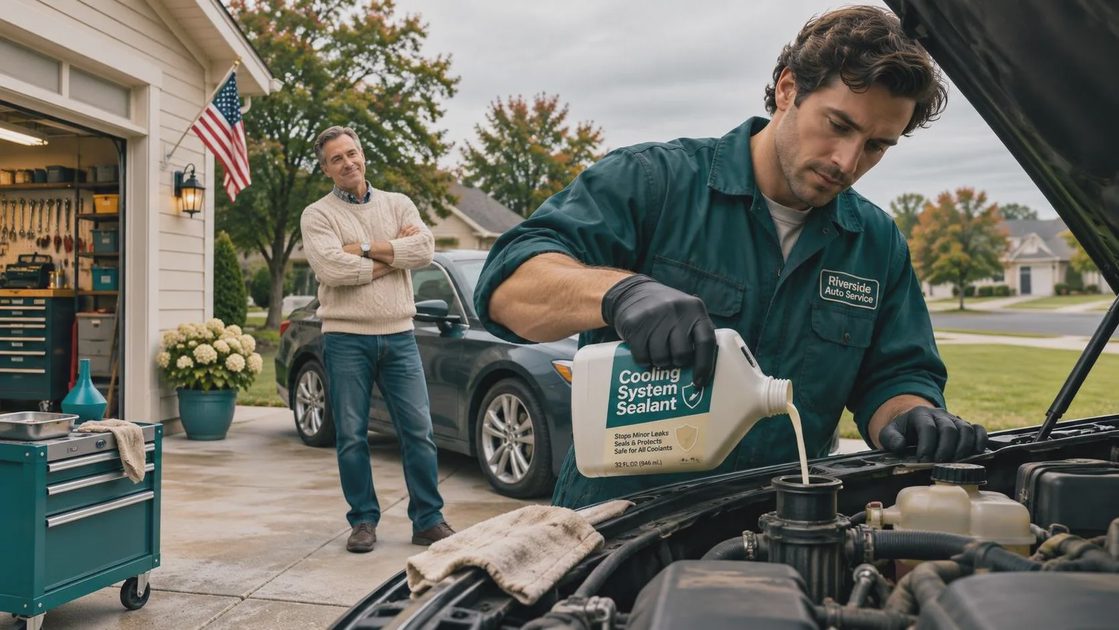
Find the leak before choosing a fix
Start with the engine completely cool. Look for a low level in the coolant reservoir, the translucent tank that holds coolant, using the cold-level marks if your vehicle has them. Check for wet spots or dried residue around accessible hose connections, the radiator, and the water pump area. Coolant can be several colors, so color alone cannot confirm its identity.
A damp connection may need a hose or clamp rather than coolant stop leak. A puddle under the vehicle does not necessarily identify the source: fluid can run along a panel before it drips. A repair shop can perform a cooling-system pressure test, which uses a tool to pressurize the cooled system and help reveal a leak.
Some leaks are harder to see. A sweet smell inside the cabin, damp carpet, or a film on the inside of the windshield can point toward a leaking heater core. Persistent coolant loss without an obvious external leak also deserves diagnosis. A head gasket, the seal between the engine block and cylinder head, can fail internally; bubbling in the reservoir or white exhaust vapor after warm-up can be warning signs, but neither proves the cause by itself.
Never remove a radiator or pressurized reservoir cap while the system is hot. Hot coolant and steam can escape under pressure and cause severe burns. If the temperature gauge enters the hot range or a warning appears, turn off the air conditioning, pull over safely, and shut off the engine. Let it cool completely; arrange a tow if it is overheating or losing coolant rapidly.
Risks of adding coolant stop leak
The same material intended to collect at a leak can contribute to restricted flow elsewhere. Narrow passages in a radiator or heater core are particular concerns, especially in a dirty cooling system or when a product is overdosed. Restricted flow can reduce cabin heat or make cooling problems worse. Different formulas behave differently, so a claim that one product will not clog a system is not a guarantee for every vehicle or condition.
Check your owner’s manual and any applicable manufacturer guidance before adding a sealant. Some vehicles or components may have restrictions. Also check whether the product is compatible with your coolant and cooling-system capacity. Do not assume that every bottle uses the same dose or procedure.
Coolant stop leak cannot replace missing coolant. If the level is low, use the coolant specified for your vehicle and the correct premix or dilution described in the manual. Do not choose a coolant solely by color. Keep spills away from children and pets, and collect used coolant for proper disposal rather than pouring it onto the ground or into a drain.
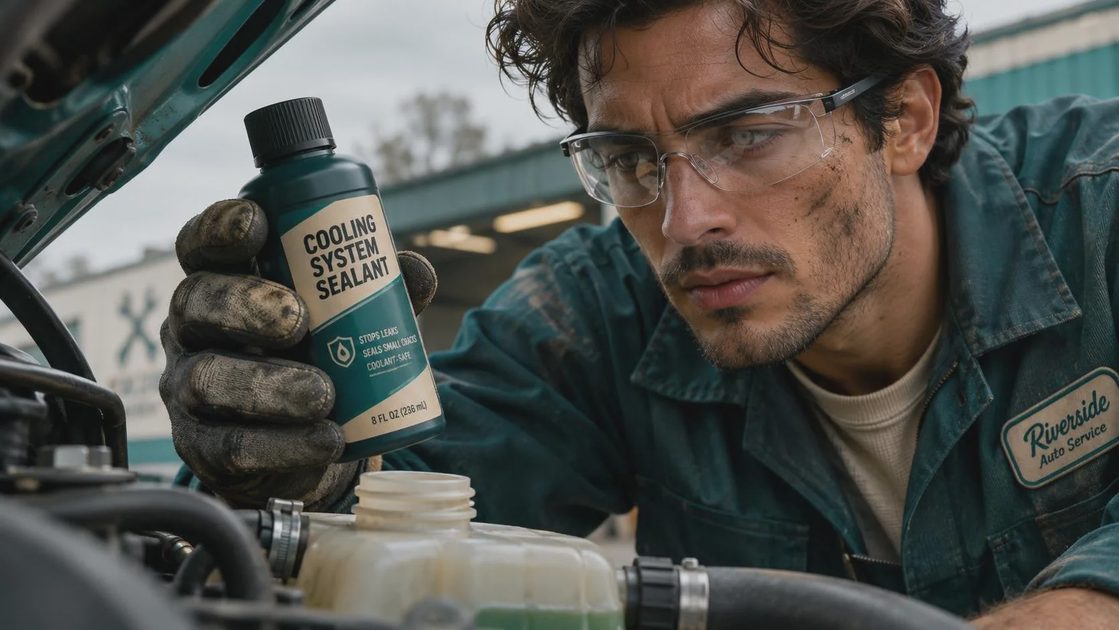
If you decide to use a sealant
Use it only when the engine is cool, the leak is minor, and the vehicle can run without overheating. Read the entire product label first: some formulas require particular preparation, a specific fill point, or a prescribed running time. The correct fill point matters because an overflow bottle is not necessarily the same as a pressurized fill reservoir. Your owner’s manual can help identify the components.
Measure the amount specified for your system; more is not better. Add it only as directed, restore the coolant level with the specified mixture, and secure the cap. Follow the label’s instructions for circulating the product, including any heater setting. Run the engine only in a well-ventilated outdoor area, never in a closed garage. If the temperature rises abnormally or coolant escapes rapidly, shut it down.
Afterward, let the engine cool completely before checking the level again. Watch for renewed drips, a falling cold level, weak cabin heat, or a rising temperature gauge. Arrange a proper inspection even if the visible seep stops, and tell the technician what you added. That information can help with diagnosis and any later cleaning or repair.
Quick Quiz: Check the cause, not just the puddle
Question: If coolant stop leak stops a small radiator seep, has it repaired the corrosion that caused the opening?
Answer: No. It may seal the opening, but it does not reverse the damage around it. The radiator still needs evaluation.
Question: When is it safe to open a pressurized cooling-system cap?
Answer: Only after the engine and cooling system have cooled completely. If you remember one concept from this post, make it this one: keeping coolant inside the system protects the engine, but finding out why it escaped is what leads to a dependable repair.

No letters yet — be the first to write.