The wrong coolant can leave expensive engine parts vulnerable to corrosion, even when the liquid looks clean and colorful. HOAT coolant is a hybrid antifreeze formulation that combines organic corrosion inhibitors with selected inorganic inhibitors. It may be right for your vehicle, but only if it meets the specification in your owner's manual. Let's start with the basics and build from there.
What coolant does inside an engine
Coolant carries heat away from the engine to the radiator, where that heat passes into the air. It also helps protect against freezing and boiling. Most automotive coolants use a glycol base, commonly ethylene glycol, mixed with water. Glycol is the antifreeze ingredient; water is good at carrying heat.
The fluid has another job: protecting the metals and other materials it contacts. A corrosion inhibitor is an additive that slows chemical damage to those surfaces. Without a suitable inhibitor package, the cooling system can suffer corrosion, deposits, or damage to components such as the radiator and water pump.
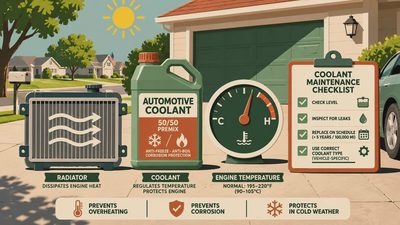
System Diagram reference: Picture a loop connecting the engine, thermostat, radiator, and water pump. The pump circulates coolant, the thermostat regulates flow as the engine warms, and the radiator releases heat. The heater core is another small heat exchanger that can use engine heat to warm the cabin.
How HOAT coolant differs from other types
The acronym stands for hybrid organic acid technology. Organic acid technology, or OAT, uses organic-acid-based inhibitors. Inorganic additive technology, or IAT, relies mainly on inorganic inhibitors. A hybrid combines organic inhibitors with one or more inorganic types, such as silicates or phosphates, depending on the formula.
Think of those names as families, not interchangeable recipes. Two hybrid coolants can use different additives and meet different vehicle-maker requirements. Likewise, a longer advertised service life does not mean the fluid is suitable for every engine or can stay in service indefinitely.
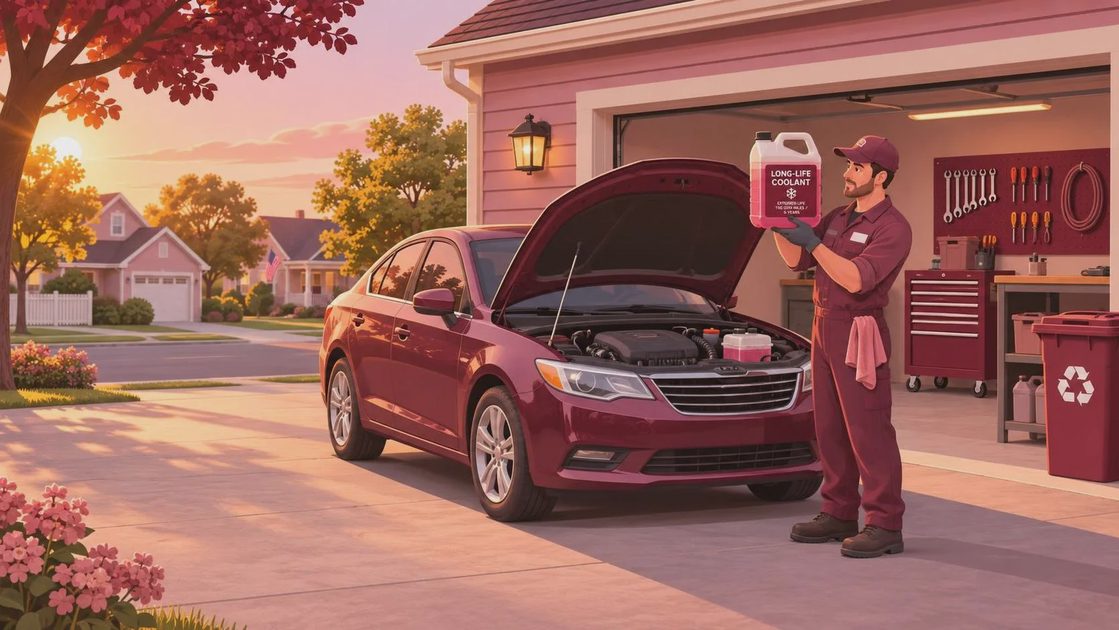
Color is not a chemistry test. Manufacturers can dye different formulas the same color, and the color in your reservoir may not tell you what a previous owner added. A yellow, orange, pink, or blue liquid is not enough evidence to choose a replacement.
The practical distinction is the specification: a manufacturer-defined set of requirements for a fluid. It matters more than whether the front of the bottle says hybrid, long-life, or universal. The owner's manual or the vehicle manufacturer's service information is the starting point.
How to select HOAT coolant for your car
Find the cooling-system section of the owner's manual and write down the exact coolant specification. Then read the bottle carefully. Look for that specification and whether the label says the product is approved by the vehicle manufacturer or merely claims to meet its requirements. Those are different claims; if the distinction matters to you, verify an approval with the vehicle manufacturer.
Don't choose solely by make, either. A manufacturer may specify different formulations across models, engines, and production years. If a store's lookup tool conflicts with the manual, check the manufacturer's service information or ask a dealer to verify the requirement using the vehicle identification number, or VIN.
Check whether the bottle is premixed or concentrate. Premixed coolant is ready to use; adding water changes its intended concentration. Concentrate must be diluted according to the vehicle and coolant instructions. A 50/50 coolant-and-water mixture is common, but follow the specified ratio and water-quality requirements for your vehicle. Distilled or deionized water is often recommended because minerals in tap water can contribute to deposits.
Mixing, topping off, and changing coolant
Avoid mixing HOAT coolant with an unknown fluid just because both are described as antifreeze. Different inhibitor packages may not work as intended together, and mixing can make the resulting service life uncertain. If you don't know what's in the system, identify the correct specification before adding anything. A shop can help assess whether a complete coolant exchange is appropriate.
For a routine top-off, park on level ground and let the engine cool completely. Find the coolant reservoir and compare its level with the cold markings. Add the correct premixed fluid to the indicated level, without overfilling. Never open a radiator or pressurized reservoir cap on a hot engine: hot fluid and steam can escape under pressure and cause serious burns.

If the reservoir repeatedly drops, treat that as a symptom, not a maintenance schedule. Look for visible wetness or dried residue around hoses, the radiator, and the water pump, but don't assume a leak must be external. An unexplained loss, overheating, or a temperature warning deserves prompt diagnosis. If the engine is overheating, stop safely and shut it off; don't keep driving to see whether it recovers.
Use the vehicle manufacturer's time and mileage intervals for replacement, whichever comes first. Draining the radiator alone may leave old fluid in the engine and heater core, and some vehicles require a specific filling and air-bleeding procedure. Air bleeding means removing trapped air so coolant can circulate properly. If the procedure or disposal requirements are unclear, have a qualified shop handle the change.
Used coolant is hazardous to people and animals. Collect it in a sealed, labeled container, keep it away from children and pets, and take it to a facility that accepts used antifreeze. Don't pour it onto the ground or into a storm drain.
Quick Quiz: Check your understanding
Question 1: Can you identify HOAT coolant just by looking at its color?
Answer: No. Dye color does not reliably identify the inhibitor package or the vehicle specification a fluid meets.
Question 2: Your manual calls for a specific coolant, but the bottle says only "universal." Is that enough?
Answer: No. Check the exact specification and the product's stated compatibility or approval before using it.
Question 3: Can you open the pressure cap as soon as the engine is switched off?
Answer: No. Allow the system to cool completely first; it can remain hot and pressurized after shutdown.
If you remember one concept from this post, make it this one: the correct specification connects the chemistry in the bottle to the materials in your vehicle. Start there, and the color and marketing claims become much less distracting.

No letters yet — be the first to write.