Choosing the wrong transmission fluid can turn a routine maintenance job into a repair bill that reaches several thousand dollars. Understanding ATF fluid types helps you protect the transmission, avoid shifting problems, and buy the correct product the first time. Let's start with the basics and build from there.
ATF stands for automatic transmission fluid. It is a specially engineered liquid that transfers hydraulic pressure, lubricates gears and bearings, carries heat to a cooler, and helps wet clutches engage smoothly. Those jobs require a precise balance of friction modifiers, detergents, anti-wear additives, and viscosity control. Engine oil and ATF are not interchangeable, even if both products look similar on a store shelf.
What automatic transmission fluid actually does
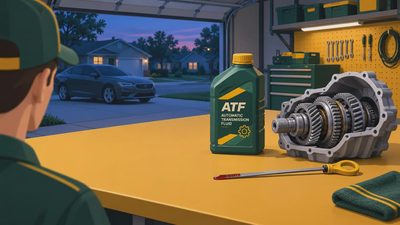
Inside a traditional automatic transmission, a pump sends fluid through narrow passages and valves. That pressure operates clutch packs and bands, which connect different gearsets to create first, second, third, and higher gears. A torque converter, the fluid coupling between the engine and transmission, also relies on ATF to transfer power smoothly.
Fluid viscosity describes how easily a liquid flows. A low-viscosity fluid moves efficiently through modern passages and can improve cold-weather operation, while a thicker fluid can provide a different cushion between moving parts. Engineers choose the viscosity and friction behavior for a specific transmission design, so a bottle labeled “automatic transmission fluid” is not automatically suitable for every vehicle.
Heat is another important factor. Transmission fluid operating near its intended temperature can protect components for many miles. Overheating oxidizes the fluid, darkens it, and reduces additive performance. Towing, stop-and-go driving, steep hills, and heavy loads can all increase transmission heat.
System Diagram reference: Picture the route as pan, pump, valve body, clutch circuits, torque converter, cooler, and return line. The fluid must work correctly at every point in that loop.
Quick Quiz: Which component uses fluid pressure to engage gear-changing clutches? The answer is the transmission’s hydraulic control system, including the pump and valve body.

The main ATF fluid types you will encounter
The most common ATF fluid types are conventional multi-vehicle ATF, manufacturer-specific synthetic ATF, CVT fluid, and dual-clutch transmission fluid. Conventional products were common in older designs, but many current vehicles use synthetic or synthetic-blend formulas because they handle heat and long service intervals more effectively.
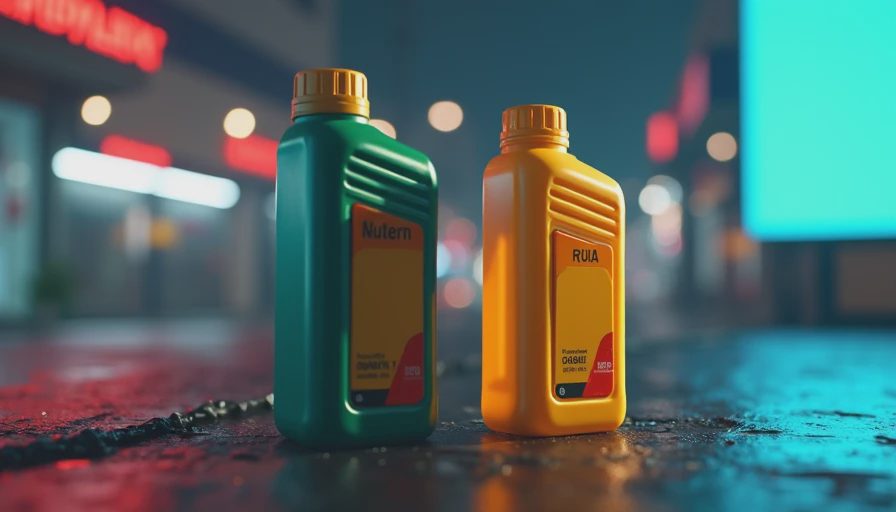
Multi-vehicle ATF is designed to meet several published performance requirements. It can be convenient, but the label must specifically list the specification required by your vehicle. “Multi-vehicle” does not mean universal. For example, a product suitable for Dexron-VI applications may not be approved for a Ford transmission requiring Mercon LV, and neither should be assumed suitable for a CVT.
Manufacturer-specific fluids often carry names such as Toyota Type T-IV, Toyota WS, Honda DW-1, Ford Mercon LV, or Chrysler ATF+4. These names identify performance requirements, not merely marketing preferences. Some fluids have similar appearances but different friction characteristics, so color is not a reliable compatibility test.
CVT fluid belongs in a continuously variable transmission. A CVT uses pulleys and a belt or chain rather than conventional fixed gearsets. Its fluid must provide carefully controlled friction and protection for those components. Dual-clutch transmission fluid is also specialized because it serves clutch packs and hydraulic controls in a different operating environment.
How to identify the correct specification
Start with the owner’s manual. Look under “capacities,” “maintenance,” or “automatic transmission.” The manual may name a fluid specification, part number, or approval rather than simply saying ATF. If the manual calls for a particular standard, match that wording on the bottle or use the vehicle manufacturer’s branded fluid.
The transmission identification label can help when a vehicle has several engine and transmission options. A VIN lookup at a dealership parts counter is useful for confirming the exact configuration. Reputable brands such as Valvoline, Mobil, Castrol, Pennzoil, and ACDelco often publish application guides, but an application guide should support the vehicle manual, not replace it.
Be careful with phrases such as “recommended for” and “meets the requirements of.” The strongest wording is an explicit specification or approval that matches your vehicle. When the label lists only a broad family of ATF fluid types without your required standard, choose another product.
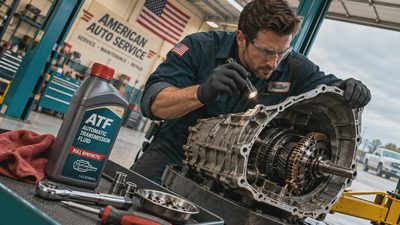
A drain-and-fill service usually replaces only part of the fluid because some remains in the torque converter and cooler. A professional exchange may replace more, but aggressive flushing is not automatically better, especially on a neglected transmission. The service procedure should follow the manufacturer’s temperature, level, and fill instructions.
Symptoms of incompatible or worn fluid
Incorrect fluid can cause delayed engagement, harsh shifts, slipping, shuddering, or unusual noise. These symptoms do not prove that fluid is the only problem; low level, a failing solenoid, worn clutch material, or internal damage can create similar behavior. That is why diagnosis matters before adding a random bottle of fluid.
Worn fluid may smell sharply burnt or appear unusually dark. A small amount of darkening is not a complete diagnosis, because some fluids are formulated with dye and naturally change color. Metallic particles, thick debris, or a heavy burnt odor deserve professional inspection. Never use color alone to select among ATF fluid types.
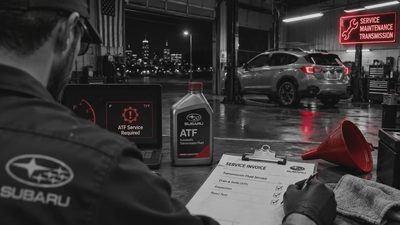
If the transmission is slipping, stop treating fluid as a cure-all. Check for leaks, verify the level using the correct procedure, and scan for diagnostic trouble codes. Driving while the fluid is low can quickly damage clutches and bearings. A repair shop may charge roughly $100 to $200 for diagnosis, while a complete transmission replacement can cost several thousand dollars, making correct fluid selection inexpensive insurance.
A practical buying and service procedure
Before shopping, write down the vehicle year, make, model, engine, mileage, and transmission type. Photograph the manual’s fluid specification. Then compare that requirement with the product label, not just the front-label words “automatic transmission fluid.” Buy enough for the specified service, plus a little extra if the procedure includes a filter replacement.
Use the correct filter, pan gasket, funnel, and measuring container. Keep dirt away from the fill tube and plug. If the vehicle requires a temperature-based level check, use a scan tool or follow the specified warm-up procedure. Overfilling can aerate the fluid, while underfilling can starve the pump. Both conditions can create shifting problems.
Record the date, mileage, brand, specification, and quantity installed. This small maintenance note helps the next technician and prevents mixing up products during future service. If a transmission has an unknown history, a shop can inspect the pan and fluid before recommending a service plan.
Quick review: choosing among ATF fluid types
Remember the decision sequence. First identify whether the vehicle has a conventional automatic, CVT, or dual-clutch transmission. Next find the exact specification in the manual or verified service information. Then select a product that explicitly matches that specification. Finally, use the required fill and level-check procedure.
If you remember one concept from this post, make it this one: transmission fluid is a designed component, not a generic lubricant. The safest choice among ATF fluid types is the one that matches the transmission maker’s specification, even if another bottle costs less or claims broader coverage.
Quick Quiz: Is synthetic ATF automatically compatible with every automatic transmission? No. Synthetic describes the base oil technology; compatibility still depends on the required performance specification. When in doubt, compare the manual, product label, and vehicle identification before servicing. That disciplined process protects your wallet and gives your transmission the best chance of long, smooth operation.
No letters yet — be the first to write.